Saint Paddy’s Day has always meant more to me than just wearing green. My family roots trace back to Ireland in the 1800s, long before I ever began writing about Sasquatch and the strange patterns that appear across global cultures. Growing up, Irish heritage was a constant in our family conversations,stories of the landscape and its legends were passed down like pieces of living memory.
The more I studied cryptids and unexplained encounters later in life, the more I noticed a fascinating overlap. Ireland has always been a land of stories, but some of those stories describe beings that sound surprisingly familiar to anyone who researches forest spirits, “wild men,” or Sasquatch itself. With Saint Paddy’s Day approaching, it’s the perfect time to look behind the parades and green beer to explore the deep tradition of creatures that inhabited the wild places of the ancient world.
- Saint Paddy’s Day Vs Saint Patty’s Day Which One Is Actually Correct?
- People Also Ask: Legends of Ireland FAQ: Myths, Monsters, and St. Patrick
- Did Saint Patrick Really Drive Snakes Out of Ireland?
- Ireland: A Land of Legends and Ancient Creatures
- The Oilliphéist→Ireland’s Ancient Water Monster
- The Dullahan → Ireland’s Headless Horseman
- The Púca → Ireland’s Shape-Shifting Trickster
- Ireland’s Wild Man Tradition → From the Geilt to the European Wild Man
- Ancient Irish Giants →The Fomorians
- Why These Legends Still Matter
- The Wildfoot Perspective
- Happy Saint Paddy’s Day From Wildfoot Explores
- Explore the Wildfoot Library
- Wildfoot Gear
Saint Paddy’s Day Vs Saint Patty’s Day
Which One Is Actually Correct?
One of the most common questions people search every March is:
The correct name is Saint Paddy’s Day.
The name Patrick comes from the Irish name Pádraig, which naturally shortens to Paddy.
“Patty” is traditionally a nickname for Patricia, not Patrick.
Saint Patrick himself is believed to have died on March 17th, which is why the holiday is celebrated on that day.
The celebration originally honored the patron saint of Ireland, but over time it evolved into a global celebration of Irish culture, heritage, and tradition.
And those traditions are deeply connected to Ireland’s folklore.
People Also Ask: Legends of Ireland FAQ: Myths, Monsters, and St. Patrick
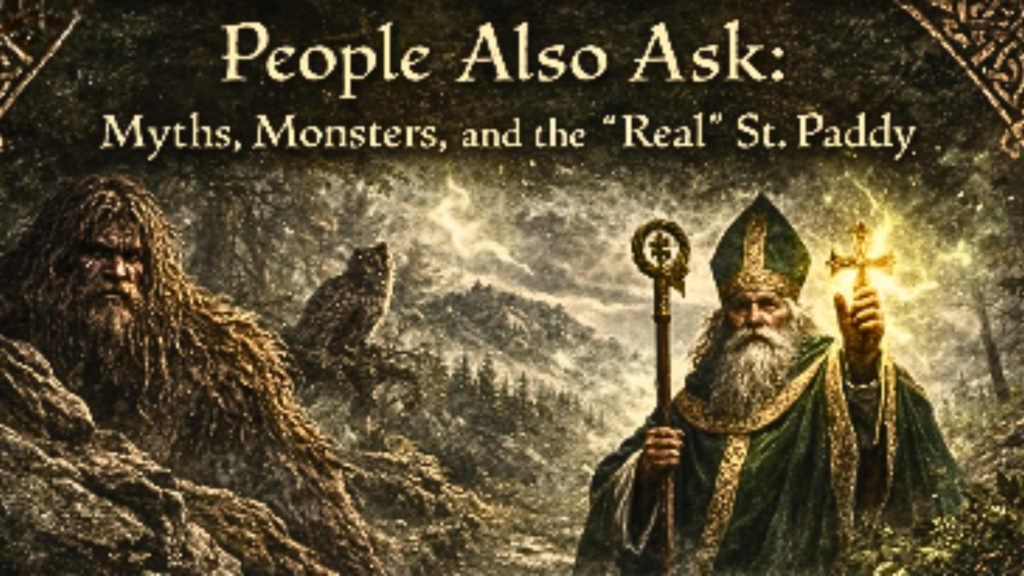
Is there a Bigfoot in Irish folklore?
While the name “Bigfoot” is modern, Irish folklore has described the Gruagach (The Hairy One) for centuries. These beings are described as large, incredibly strong, hair-covered humanoids living in remote caves and glens. Much like the Sasquatch of North America, the Gruagach was a creature of the wilderness that existed on the fringes of human civilization.
What is a “Geilt” and why did they live in the woods?
In ancient Ireland, a Geilt was a person driven “mad” by the horrors of battle who fled into the forest to live as a wild man. The most famous was King Suibhne (Sweeney), who was said to have grown feathers, gained the ability to leap great distances, and lived entirely in the treetops. This “Wild Man of the Woods” tradition is a primary link between ancient myth and modern cryptid reports.
Did St. Patrick really banish snakes, or was it a metaphor?
Biologically, Ireland has been snake-free since the last Ice Age. Most historians agree that the “snakes” St. Patrick banished were a metaphor for the Druids and pagan traditions he sought to replace. However, some folklorists point to the Oilliphéist, ancient Irish water monsters, as the “serpents” that truly fled before the Saint’s arrival.
What is the difference between a Leprechaun and a Púca?
While both are tricksters, they represent different sides of the wild. Leprechauns are solitary craftsmen (shoemakers) of the hidden world, focused on guarding treasure. The Púca is a powerful shapeshifter that takes the form of dark animals to lead travelers astray. If you see a “black horse” with glowing eyes in the Irish wild, it’s a Púca, not a Leprechaun.
Why do people say “St. Paddy’s” instead of “St. Patty’s”?
“Paddy” is derived from Pádraig, the Irish spelling of Patrick. In Ireland, “Patty” is strictly a nickname for Patricia. Using “St. Paddy’s Day” is the historically and culturally accurate way to honor the patron saint.
Did Saint Patrick Really Drive Snakes Out of Ireland?
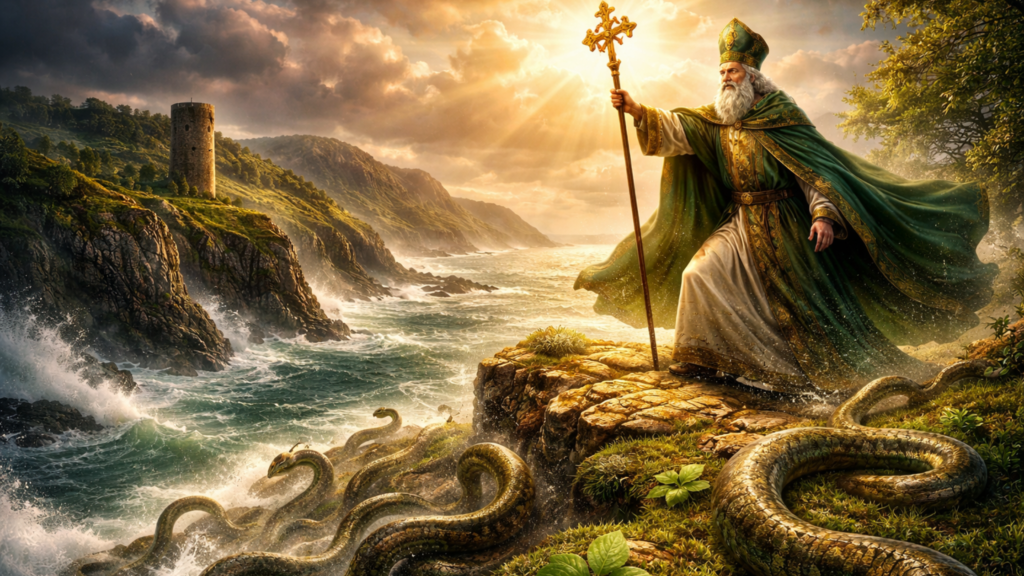
Another famous story tied to Saint Patrick is the legend that he drove the snakes out of Ireland.
But historians and biologists agree on something interesting.
Ireland likely never had snakes after the last Ice Age.
After the glaciers retreated roughly 10,000 years ago, Ireland became separated from mainland Europe before snakes could migrate back.
Because of this, many scholars believe the story of Saint Patrick driving snakes out of Ireland is actually symbolic.
The “snakes” may represent pagan traditions and Druids, which were gradually replaced as Christianity spread through Ireland.
That means many of Ireland’s oldest legends existed long before Saint Patrick arrived.
And those legends are still fascinating today.

Ireland: A Land of Legends and Ancient Creatures
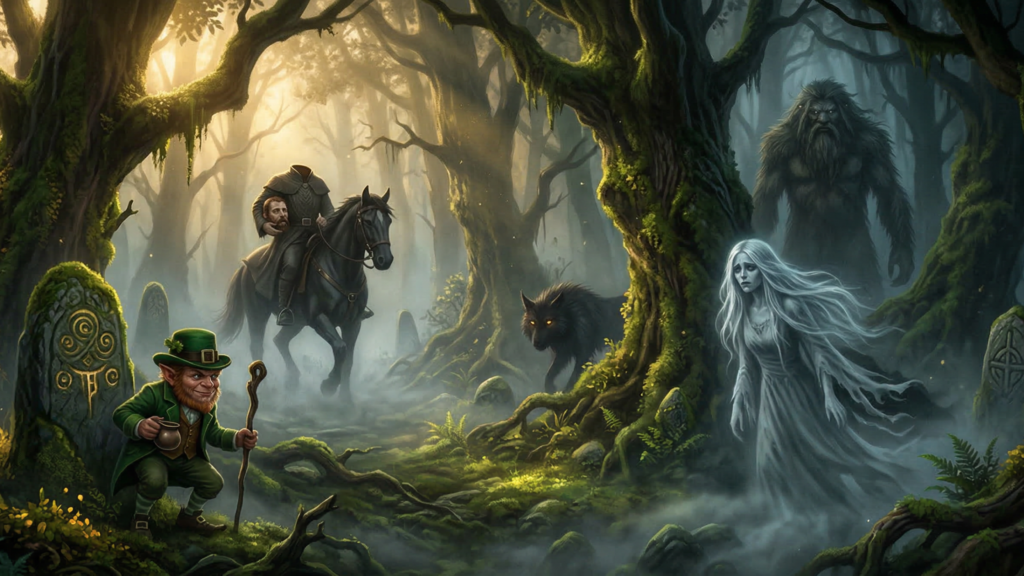
Irish folklore is filled with mysterious beings that lived in forests, lakes, mountains, and wild landscapes.
Some were playful.
Some were terrifying.
And some may represent ancient memories of creatures people believed were real.
Let’s explore a few of the most famous.
The Oilliphéist→Ireland’s Ancient Water Monster
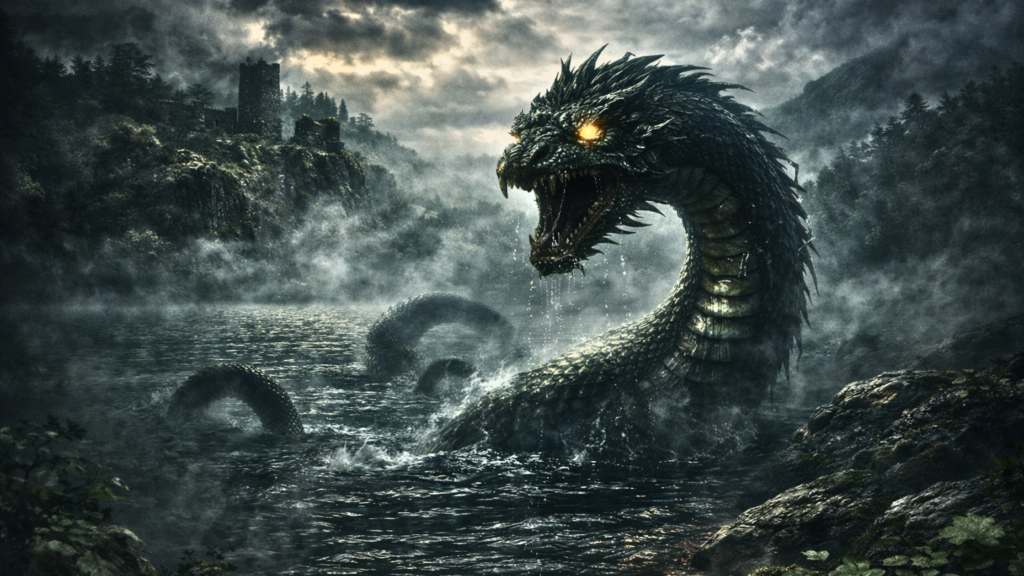
One of the oldest creatures in Irish mythology is the Oilliphéist, a name that roughly translates to “great serpent” or “great beast.” According to legend, these massive, dragon-like creatures lived in deep lakes and rivers, capable of reshaping the very landscape of the countryside. One famous account claims that as an Oilliphéist fled in terror from Saint Patrick, it carved a giant trench that eventually became the River Shannon, Ireland’s longest river. While these tales are clearly mythical, they follow a pattern we see in modern cryptid research: rare sightings of massive, mysterious creatures in remote wilderness areas.
The Dullahan → Ireland’s Headless Horseman
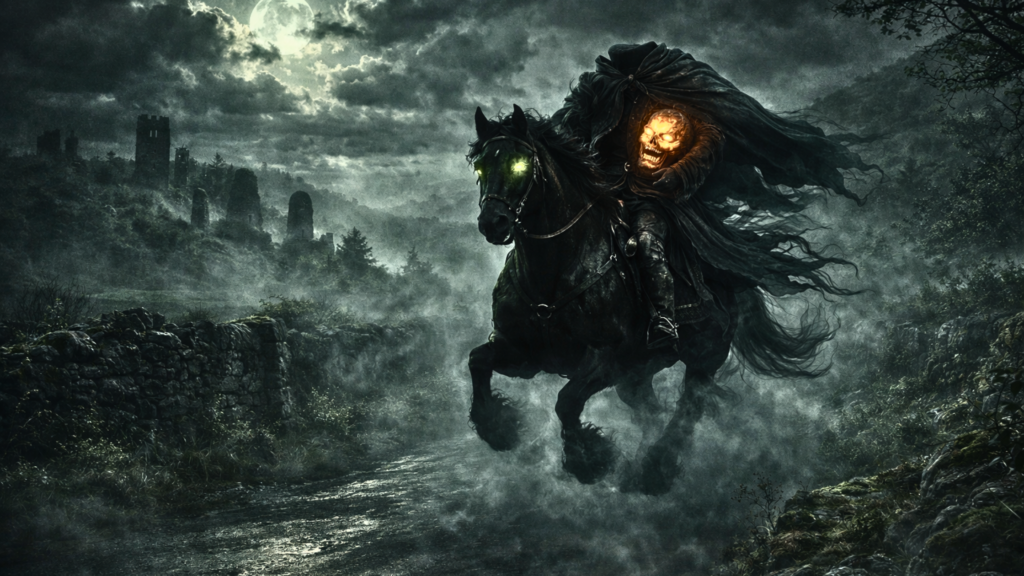
Perhaps one of the most chilling figures in Irish folklore is the Dullahan.
Often described as a headless rider on a black horse, the Dullahan carries his own severed head beneath his arm.
His eyes glow in the darkness and his grin stretches from ear to ear.
Legend says when the Dullahan stops riding and calls out a name, someone nearby is about to die.
Interestingly, there is only one known defense against the Dullahan.
Gold.
Even a small gold coin or pin thrown toward him is said to make the spirit vanish instantly.
The Púca → Ireland’s Shape-Shifting Trickster
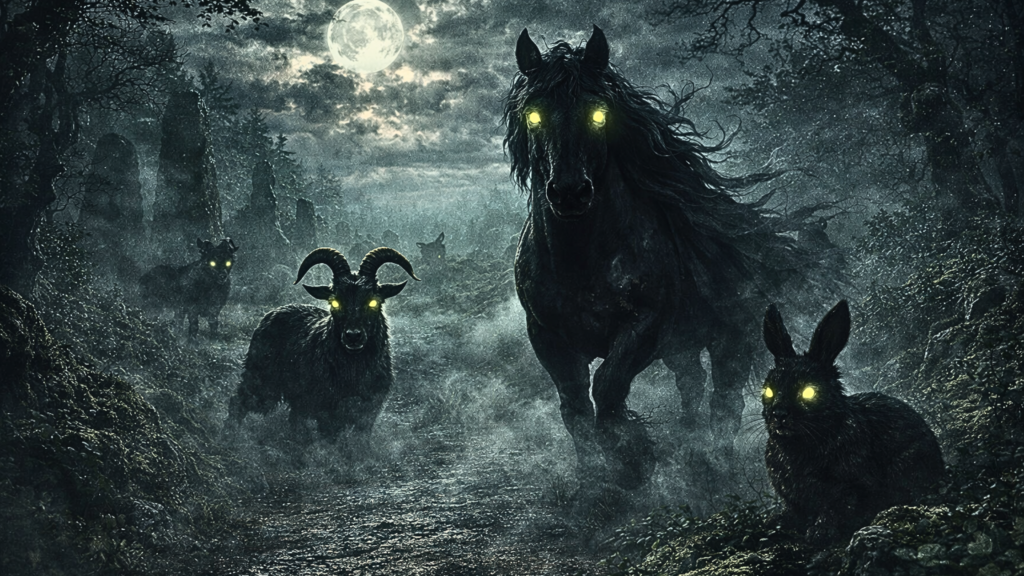
The Púca is a shapeshifting spirit of the night, often appearing as a black horse, goat, or dog with haunting, glowing eyes. Known for its mischievous nature, the Púca was said to lead travelers off established roads and deep into the remote wilderness. It is considered a “liminal” creature, existing on the thin boundary between the human world and the untamed wild. This description is remarkably similar to how many people describe modern encounters with unexplained beings, they appear at the edges of our perception and vanish just as quickly back into the shadows.
Ireland’s Wild Man Tradition → From the Geilt to the European Wild Man
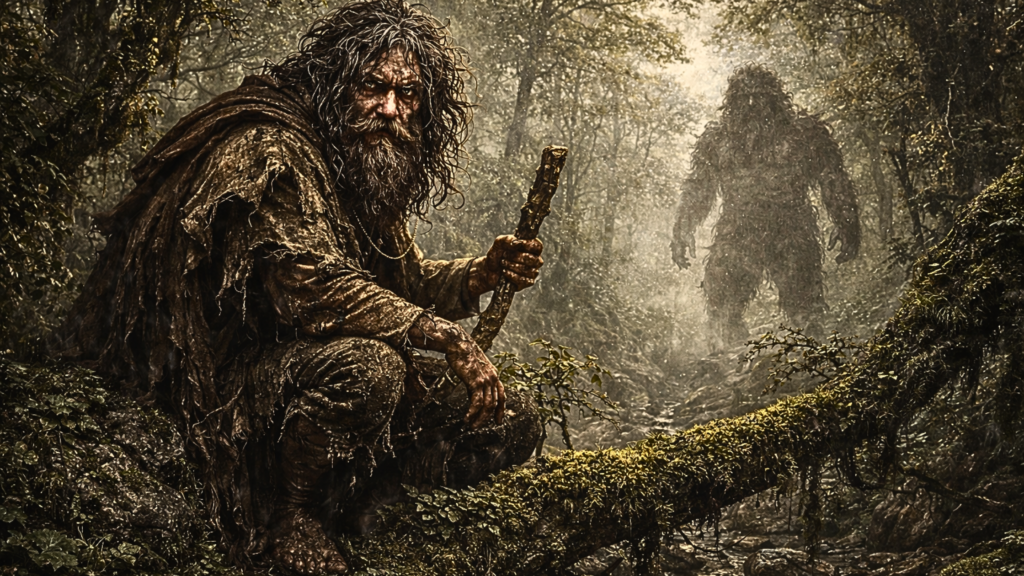
Irish tradition preserves some of the earliest accounts of what historians call the “Wild Man” tradition of Europe. Central to this are the Geilt, a word translating to “madman of the woods.” These were individuals, like the famous King Suibhne (Sweeney), who fled the horrors of battle to live entirely within the forest. Legend says Suibhne grew feathers, lived in the treetops, and could leap extraordinary distances. He became more creature than man, crossing the boundary between human society and the untamed world.
This Irish tradition connects deeply to the broader European folklore of the Woodwose or Forest Giants—large, hairy figures living deep in the mountains, existing far from human settlements. But the most striking parallel to modern Sasquatch reports is the Gruagach. In Gaelic, the name literally means “The Hairy One.”
The Gruagach was described as a powerful, hair-covered being that inhabited caves and rocky glens across Ireland and Scotland. These beings possessed enormous strength, lived in total isolation, and were known to move massive stones or guard remote territories. When you look at these descriptions—thick hair, incredible strength, and a deep-seated avoidance of humans—the similarities to modern Bigfoot reports are impossible to ignore. It’s the same pattern, just wearing a different name from a different century.
Ancient Irish Giants →The Fomorians
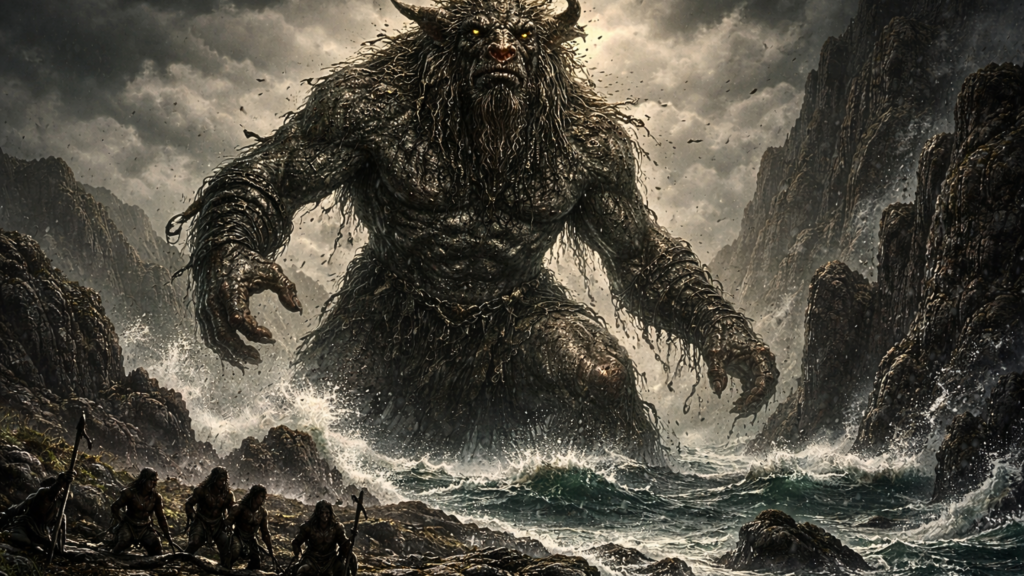
Irish mythology also preserves stories of ancient giant beings known as the Fomorians.
These figures appear in early medieval Irish texts, most notably the Lebor Gabála Érenn (often translated as The Book of Invasions), a compilation of Ireland’s mythological history written between the 11th and 12th centuries.
In these accounts, the Fomorians were powerful and often monstrous beings associated with the untamed forces of nature. They are sometimes described as giants, sometimes as misshapen or otherworldly beings who lived on the edges of the known world.
Many of the stories place them beyond the boundaries of human civilization, dwelling in remote islands, dark waters, or wild landscapes that existed outside the organized societies of early Ireland.
The Fomorians are most famous for their conflict with the Tuatha Dé Danann, the mythological people who eventually came to rule Ireland in legend.
While these stories are clearly mythological in nature, they reveal a pattern that appears across many ancient cultures.
Again and again, old traditions describe powerful beings living outside human society, often tied to wilderness, mountains, forests, or remote lands.
Different cultures told the stories in different ways.
But the idea of giant or powerful beings living beyond the boundaries of civilization appears throughout human folklore.
Leprechauns → Ireland’s Hidden Tricksters
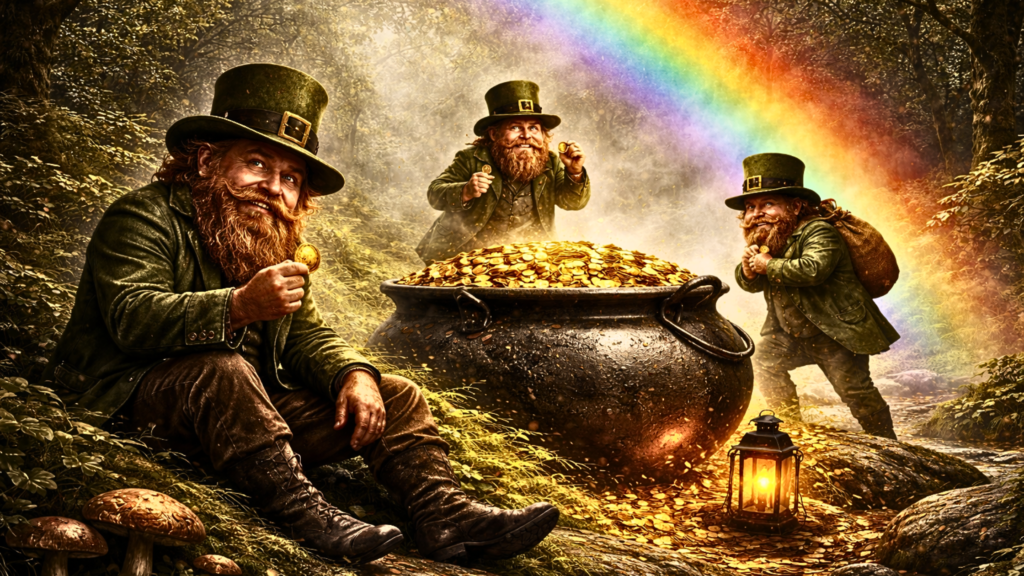
While Irish mythology contains stories about towering giants and wild men of the forests, it also preserves legends about beings at the opposite end of the spectrum.
These are the Leprechauns, perhaps the most famous figures in Irish folklore.
In traditional stories, Leprechauns were not the cheerful cartoon characters often seen on Saint Patrick’s Day decorations. Instead, they were mysterious and sometimes mischievous beings connected to the hidden world of the fae, or fairy folk.
Most legends describe Leprechauns as small, solitary figures who lived in remote places such as hollow trees, underground burrows, or hidden corners of the countryside.
They were often said to be skilled craftsmen, especially shoemakers, quietly working away deep in the Irish hills.
According to folklore, Leprechauns guarded small hoards of gold and treasures hidden throughout the land.
But capturing one was never easy.
Stories say that if a person managed to catch a Leprechaun, the creature might reveal the location of its treasure. However, the moment the captor looked away”even for a second“the Leprechaun would vanish.
These tales were less about literal treasure and more about something deeper within Irish storytelling traditions.
Leprechauns represented the idea that mystery and magic existed just beyond human sight, hidden within the landscapes of Ireland.
While these stories are clearly rooted in folklore, they reflect something that appears across many cultures.
People have long told stories about unseen beings living quietly alongside the human world.
Sometimes large.
Sometimes small.
But always just out of reach.
Why These Legends Still Matter
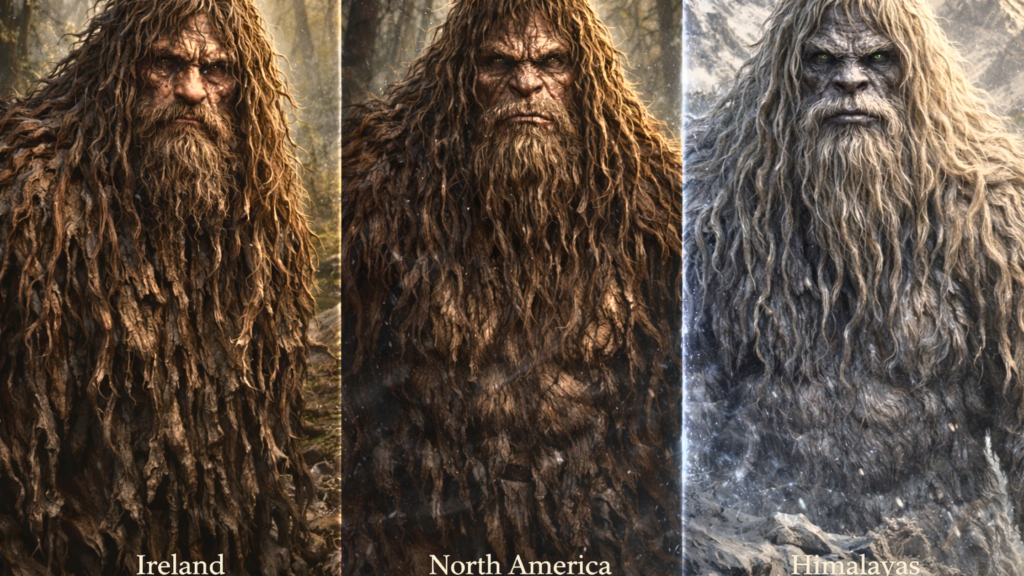
One thing I’ve learned from studying Sasquatch is that every culture preserves its mysteries through storytelling.
Stories become legends.
Legends become folklore.
And folklore becomes part of cultural identity.
Ireland is one of the richest storytelling cultures on Earth.
Its myths continue to influence how people think about the unknown.
And when you compare those stories to modern cryptid reports, interesting patterns begin to appear.
The Wildfoot Perspective
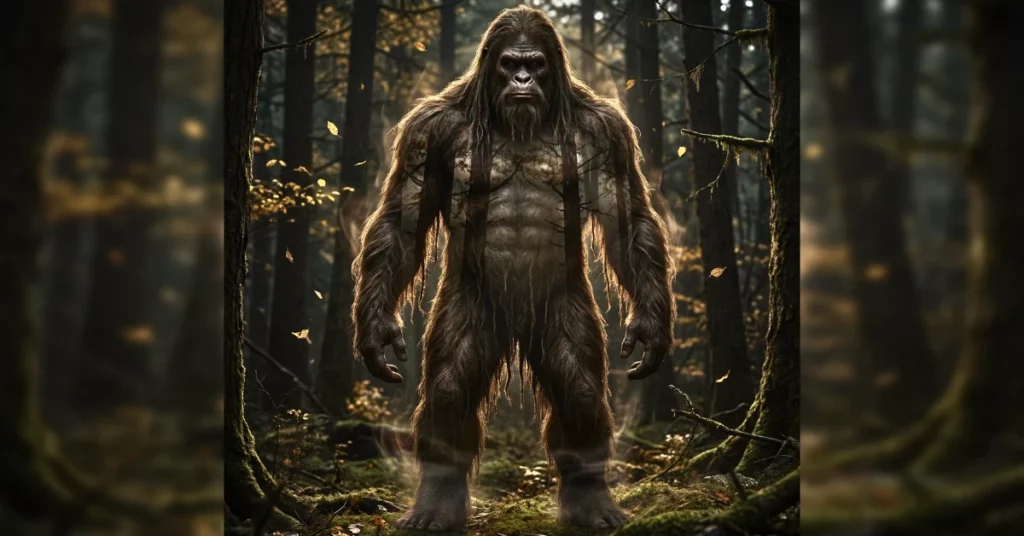
When I look at ancient folklore and modern Sasquatch reports side by side, a clear reality emerges: humanity has been describing the same being for thousands of years. We call it “Bigfoot” or “Sasquatch” today, but the ancient Irish knew it as the Gruagach or the Geilt.
These aren’t just campfire stories; they are a cross-cultural record of a large, hairy, elusive being that avoids human contact and thrives in the deep wild. Whether these stories represent a biological reality, an ancient memory, or a symbolic warning about the unknown, they prove that our curiosity about the woods is hardwired into our DNA. Ireland’s legends remind us that when we look into the forest and wonder “what else is out there,” we aren’t the first ones to ask that question—and we certainly won’t be the last.
Happy Saint Paddy’s Day From Wildfoot Explores
However you celebrate Saint Paddy’s Day this year, I hope you take a moment to appreciate the deeper history behind the traditions.
Ireland’s legends are more than just myths.
They are reminders that humanity has always looked into the forests, mountains, and rivers of the world and wondered:
What else might be out there?
And sometimes…
The oldest stories are the ones that still make us curious.
Explore the Wildfoot Library
If you enjoy exploring mysteries like these, you can check out my books here.
Wildfoot Gear
Celebrate Saint Paddy’s Day the Wildfoot way.
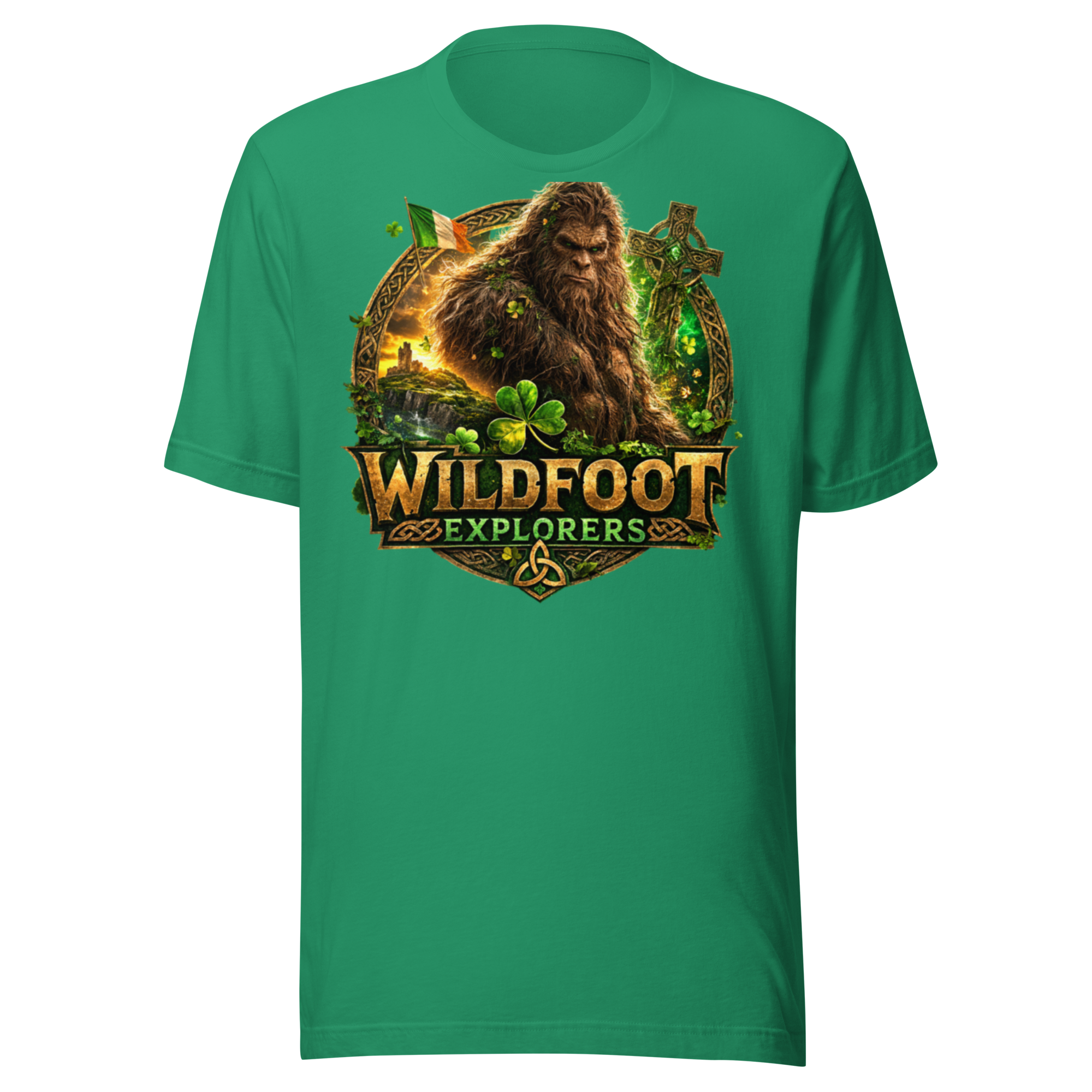
Check out the Wildfoot Irish Sasquatch mug and shirt inspired by the legends of Ireland.


Heads-Up: Affiliate Disclosure
As an Amazon Associate I earn from qualifying purchases.
Most of the links on the Wildfoot Gear Page are affiliate links to Amazon. This means I may earn a small commission if you decide to make a purchase, at no extra cost to you. All links are here to explore freely, with no obligation.
The gear featured here is part of my personal field kit tools I’ve tested, researched, or used while exploring the wild, tracking cryptids, or just surviving off-grid. Whether you’re building your own pack or browsing trusted gear, every link is meant to support your curiosity and rugged independence.
I only share tools and products I genuinely believe in or have used myself. You’ll also find items tied to my other platforms, including Paranormal Curiosities Realm and TrailForge Gear.
Thanks for visiting and supporting independent fieldwork and storytelling.
Thanks for supporting independent research and storytelling.
Shawn Thomas
Amazon Author & Creator
Founder of Wildfoot Explores and Wildfoot Explores Apparel shop
The legends surrounding Saint Patrick’s Day are always fascinating! I love how Ireland’s rich mythology intertwines with its cultural traditions.
Stories of leprechauns, banshees, and ancient warriors add so much depth to the holiday beyond just the usual celebrations.
Are there any lesser-known Irish myths that have ties to Saint Patrick’s Day but don’t get as much attention? And how much of these legends are rooted in actual historical events versus pure folklore?
Absolutely! Ireland’s mythology is so rich, and there’s so much more to Saint Patrick’s Day than just the usual celebrations. While leprechauns and banshees are well-known, lesser-known myths like the Cóiste Bodhar (the silent death coach) or the Pooka also have deep cultural roots.
As for Saint Patrick himself, the story of him banishing snakes from Ireland is often debated—many believe it’s symbolic of driving out pagan beliefs rather than an actual event. A lot of these legends blend history with folklore, making it tough to separate fact from myth!
Thanks for your awesome comment! Have you come across any unique Irish legends that fascinated you?
I absolutely loved this deep dive into Ireland’s rich folklore leading up to Saint Paddy’s Day! The way you intertwined history, mythology, and tradition made for such an engaging read. It’s fascinating how these legends have shaped modern celebrations, and I especially enjoyed learning more about the lesser-known myths. It’s amazing how storytelling continues to connect us to the past. Do you think any of these Irish legends could have real historical origins, or are they purely the work of imagination? I’d love to hear what others think about the link between folklore and history! Debra
Thanks so much, Debra! I really appreciate that. Ireland’s folklore is such a fascinating mix of history, mythology, and tradition, and it’s amazing how these stories continue to shape our modern celebrations.
When it comes to the historical origins of these legends, there’s definitely some truth woven into them. For example, Saint Patrick himself was a real historical figure, but over time, his story became mythologized—like the tale of him driving out snakes, which many believe symbolizes the transition from paganism to Christianity. Some warrior legends also have roots in real historical battles but were later enhanced with mystical elements.
Folklore often blurs the line between history and imagination, which makes it all the more intriguing! What are your thoughts—do you think some of these myths hold hidden truths?”
This article offers a glimpse into Irish mythology like The Drunken Trickster and Oilliphéist but my very best is always The Dullahan (The Headless Horseman) introducing the eerie Dullahan as a chilling counterpart to the more familiar Headless Horseman the grim appearance and his connection to death adds a thrilling layer to Irish Myths.
Thanks, Ravin! The Dullahan is definitely one of the most chilling figures in Irish mythology. Unlike the more well-known Headless Horseman of Sleepy Hollow, the Dullahan isn’t just a wandering spirit—he’s a true harbinger of death! His eerie presence, the glowing eyes, and the way he calls out names before someone passes make him one of the most terrifying figures in folklore.
The Drunken Trickster and Oilliphéist are also fantastic picks! Ireland’s myths have such a great mix of mischief and mystery. Do you have a favorite story or legend about the Dullahan that really stands out to you?
This is a fun and informative dive into Irish folklore, connecting legends to the spirit of Saint Paddy’s Day! The breakdown of mythical creatures, from the Oilliphéist to the mischievous Clurichaun, adds an exciting layer to the holiday’s history. I especially enjoyed the connection between the Clurichaun and modern-day celebrations—an entertaining way to explain the festive drinking culture. The playful yet educational tone makes this a great read. Looking forward to more legendary tales from Wildfoot Myths!
Thanks so much, Andrejs! I’m really glad you enjoyed the deep dive into Irish folklore. The Clurichaun is such an entertaining figure—mischievous, unpredictable, and definitely fitting for Saint Paddy’s Day celebrations! It’s always fascinating to see how these old legends still influence modern traditions.
There’s plenty more legendary tales coming from Wildfoot Myths, so stay tuned! Do you have a favorite Irish myth or creature that stands out to you?