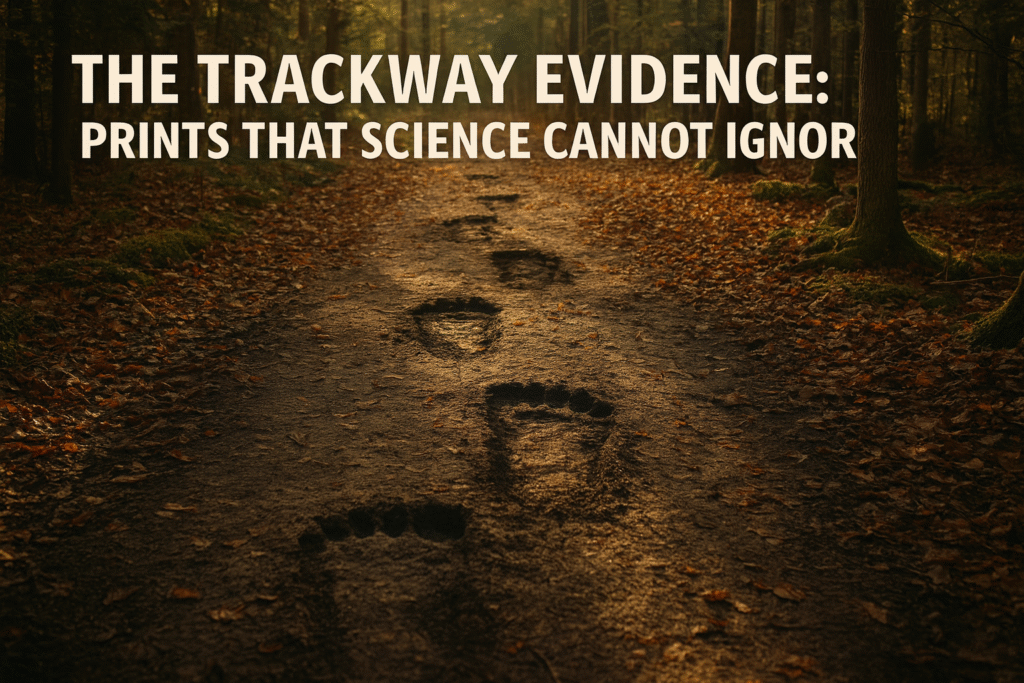
There’s a point where you stop arguing theories and you start looking at the dirt.
Because the ground doesn’t lie.
The ground doesn’t get confused.
The ground doesn’t have imagination or bias.
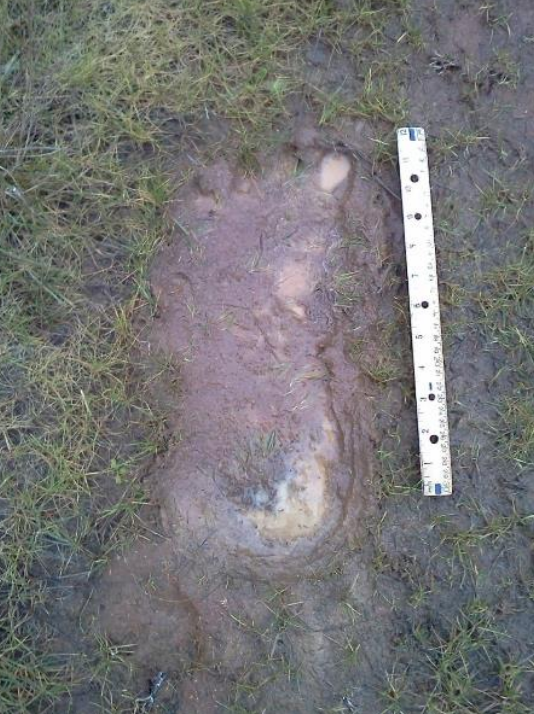
If you want the most physical, undeniable, consistent proof of Bigfoot it’s the footprints.
Not one footprint.
Not a single cast hanging on a researcher’s wall.
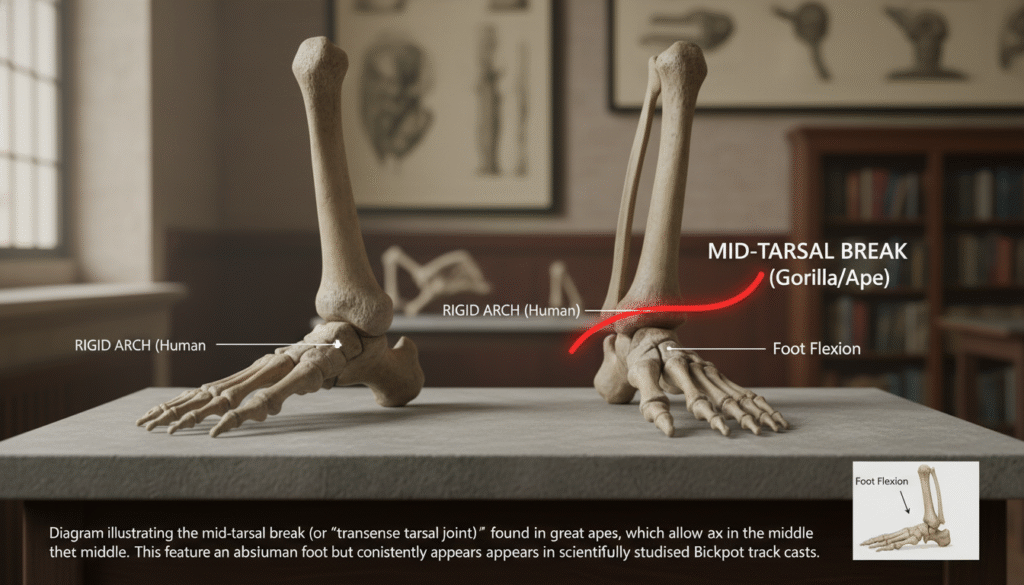
I’m talking about full trackways multiple prints, spaced perfectly, showing weight, stride, mid-foot flexibility, and pressure points no human can fake.
I’ve said it a hundred times and I’ll say it again:
You can fake a track. You cannot fake a trackway.
This blog is where the biological and physical evidence come together.
And once you understand this, the Bigfoot Hypothesis stops sounding like a mystery and starts sounding like basic wildlife biology.
In this blog, you’ll find links to BRFO (The Bigfoot Researchers Organization), official information sources, and trusted research outlets I reference in my work. You’ll also see links to my own Wildfoot pages, books, and projects. Some of these links may lead to platforms where my content is featured or where my books are available. All external sources are shared for research, education, and community exploration.
Select images in this blog are used from the following research archives, referenced for educational commentary:
You can’t press wooden boards and create fingerprint-level detail.
And you can’t get accidental dermal ridges unless the surface tension and pressure are just right.
More importantly:
Dermal ridges appear in different casts collected years apart by different people.
They match primate ridge flow patterns not human ones.
They vary based on age, just like real primates.
It’s impossible for hoaxers to synchronize this detail over decades.
Dermal ridges alone should’ve ended the debate.
Stride Length: The Hoax-Killer
Next up: stride length.
Subject
Approximate Stride Length
Human Stroll
approx 2.5 feet
Tall Athlete
approx 3 feet
Running Human (Stress)
approx 4 feet
Bigfoot Trackways
approx 5–7 foot strides
Bigfoot trackways consistently show:
5–7 foot strides
Even spacing
No drag
No stumble
No terrain compensation
Consider the trackway recorded near Bluff Creek Mountain, California, in 1967. Over a rugged, uneven path in the forest, the prints maintained a staggeringly consistent 6-to-7 foot stride. No human wearing rigid fake feet could maintain that distance, that rhythm, or that balance over such terrain without stumbling or severely distorting the pattern.
A normal-sized human trying to make 6-foot strides on uneven forest floor would fall on their face every second step.
A hoaxer wearing wooden feet? They’d break their ankles.
The fact that stride length remains consistent even while turning or climbing proves one thing:
The creature making these tracks is naturally large.
Not pretending.
Not performing.
Just walking.
Weight Distribution: The Ground Tells the Truth
In wildlife tracking, you can tell an animal’s weight by the compression in soil layers.
Bigfoot tracks show:
Deep heel impact
Forward pressure
Compaction in multiple soil layers
Ground deformation consistent with 600–900 lbs
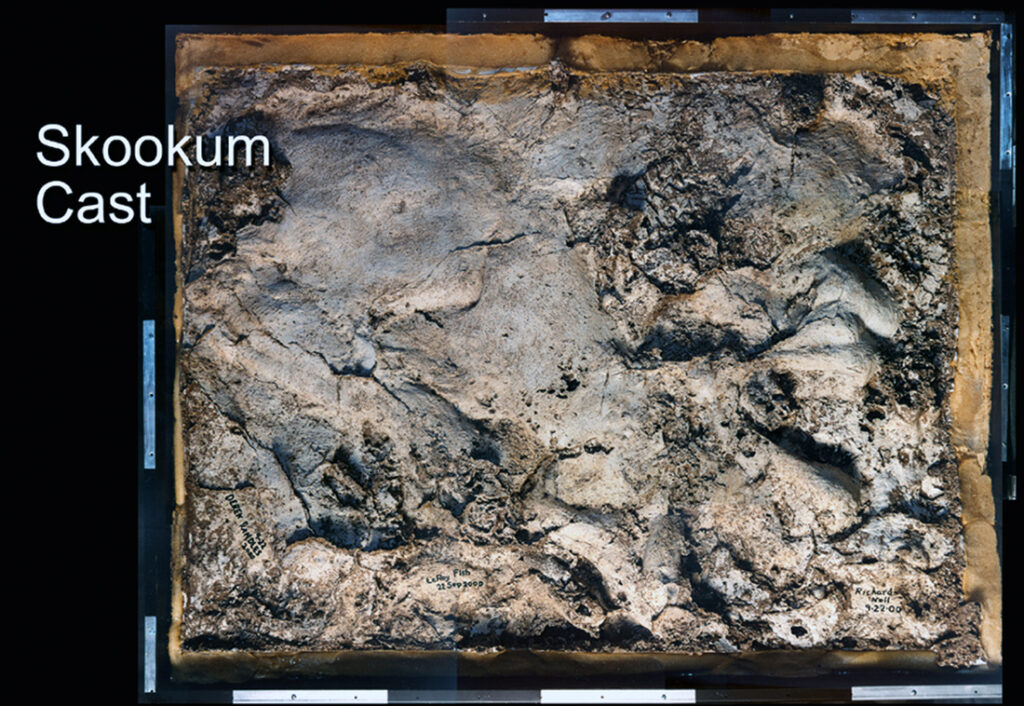
While not a footprint, the 2000 Skookum Creek Cast captured the full impression of a massive creature’s body as it rested on a muddy bank. The ground compression in the heel, buttocks, and calf area was consistent with an object weighing 600-900 lbs, showing a level of deep, multi-layer compaction that a hoaxer cannot replicate without heavy machinery.
No human even with heavy gear mimics this pattern.
Humans compress differently because of our rigid arch.
Bigfoot tracks show:
Heavy center mass
Rolling step
Mid-foot depth
Power transfer forward
These are the mechanics of a large primate not a human.
Cripplefoot: The Most Important Trackway Ever Recorded
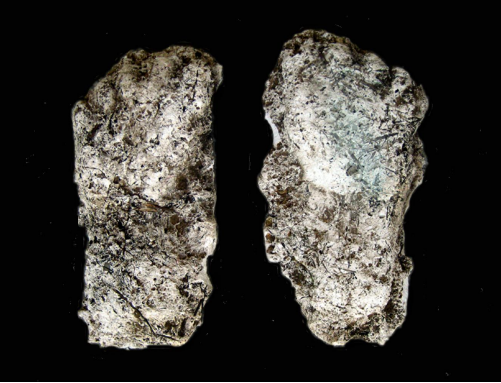
If you’ve never taken a deep dive into the 1969 Bossburg Cripplefoot trackway, let this be the moment.
The BFRO has one of the clearest, most respected breakdowns of this case, and it’s worth every second of study. Their archived material walks through why this cast is considered one of the strongest pieces of physical Bigfoot evidence ever recorded and when you look at the anatomy, it’s impossible to ignore.
What Makes Cripplefoot So Important?
This isn’t a smooth, perfect footprint. It’s a biological one. It’s a damaged one.
And that’s where the truth shines through.
The cast shows:
A clearly deformed arch
A twisted and uneven mid-foot
Arthritic swelling around key joints
Bone abnormalities consistent with long-term injury
Weight distribution and compensation that only happens in living anatomy
Toe flexion that matches a real, adapting foot not a sculpted fake
This is the kind of complexity that even modern forensic artists struggle with unless they have medical training and 3D anatomical models.
In the late 1960s? Forget it.
Nobody was building casts like this, and certainly not with injury mechanics that line up with primate physiology.
Why BFRO’s Documentation Matters
The BFRO’s archival work helps anchor this case historically. They don’t sensationalize it they break it down with photos, measurements, and expert commentary.
Their preservation of the Cripplefoot analysis gives researchers something rare in the Bigfoot world:
Because they show primate biomechanics mid-tarsal breaks, dermal ridges, and stride lengths that humans cannot replicate.
Can Bigfoot tracks be faked?
A single track, yes. A biologically accurate trackway showing weight, stride, flexibility, and terrain adaptation? No. It’s nearly impossible. The Blue Creek Mountain trackway, for instance, shows a stride length and gait impossible for a hoaxer to maintain.
What is the Cripplefoot cast?
A 1969 footprint of an injured Bigfoot showing natural deformity. Experts consider it one of the strongest pieces of Bigfoot anatomical evidence ever recorded because of its complex pathology.
What makes Bigfoot tracks unique?
Flexible mid-foot movement (the mid-tarsal break), deep heel impact, dermal ridges, and stride lengths beyond human capability. The Skookum Cast also illustrates the massive weight and body structure warping the ground.
Christmas Note
Winter is the season when tracks speak louder than anything else. Fresh snow captures details no hoaxer can fake and this is the time of year the forest tells the truth if you know how to read it.
If you like digging into real evidence, the Wildfoot books dive even deeper. They make solid winter reads or Christmas gifts for anyone who loves this mystery.