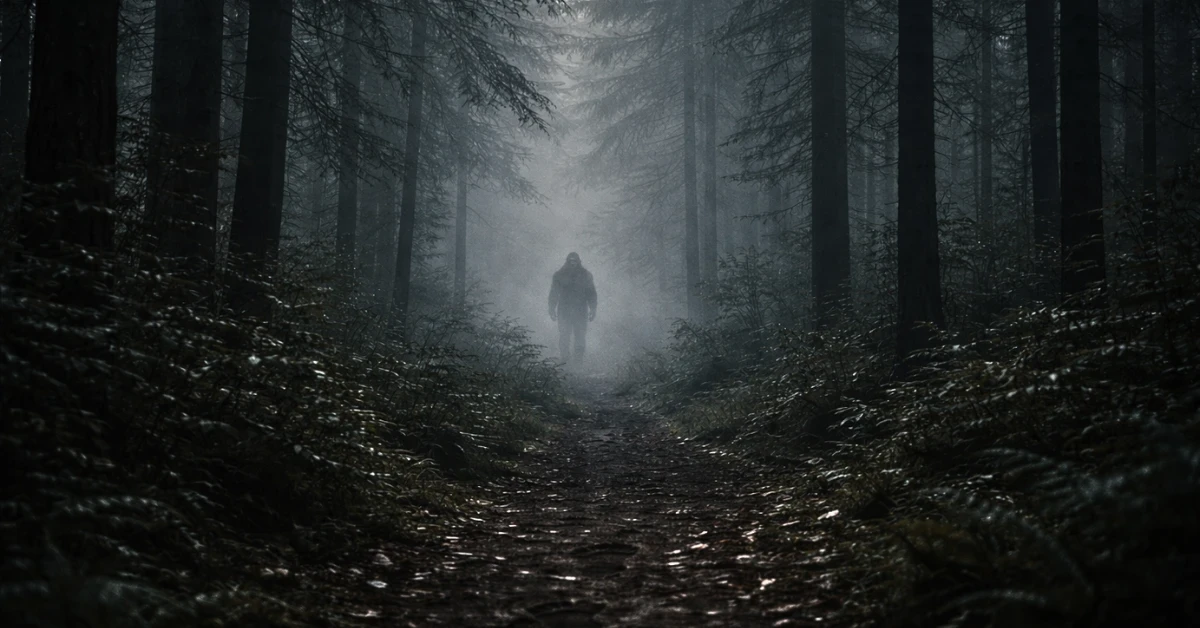
For more than fifty years, the Sasquatch conversation has been divided into camps.
Not discussions.
Not disagreements.
Camps.
Flesh and blood researchers demanding physical proof.
Spiritual experiencers describing guardians, watchers, and awareness.
Interdimensional theorists pointing to vanishing tracks and impossible movement.
Others focused on government silence, restricted zones, and quiet monitoring.
Each group convinced the others were missing something.
They were right.
Just not in the way they thought.
Because while we’ve been busy defending our positions, Sasquatch itself has never behaved like it belonged to only one explanation. The evidence has always crossed boundaries.
The mistake wasn’t believing different things.
The mistake was assuming those things couldn’t all be true at the same time.
The Illusion of Contradiction in Sasquatch Research
For decades, Sasquatch research has been framed as a series of oppositions.
If Sasquatch is physical, it can’t be spiritual.
If it’s monitored by governments, it can’t be ancient.
If it disappears, it can’t be biological.
But that assumption doesn’t come from the data.
It comes from how we’ve been trained to categorize reality.
When you line up Sasquatch sightings, footprint evidence, encounter reports, and historical accounts, the contradictions begin to collapse. Instead of conflicting explanations, the reports start behaving like parts of a single system.
Not multiple creatures.
Not competing theories.
One system, observed from different angles.
We aren’t looking at five different beings. We are looking at a hybrid Sasquatch system.
Once you allow for that possibility, the entire Sasquatch conversation changes. Scientific evidence stays intact. Spiritual encounters remain valid. Government silence suddenly has context. Indigenous knowledge stops being dismissed as metaphor.
Nothing gets erased.
Everything gets placed.
Why the Camps Are Closing Now
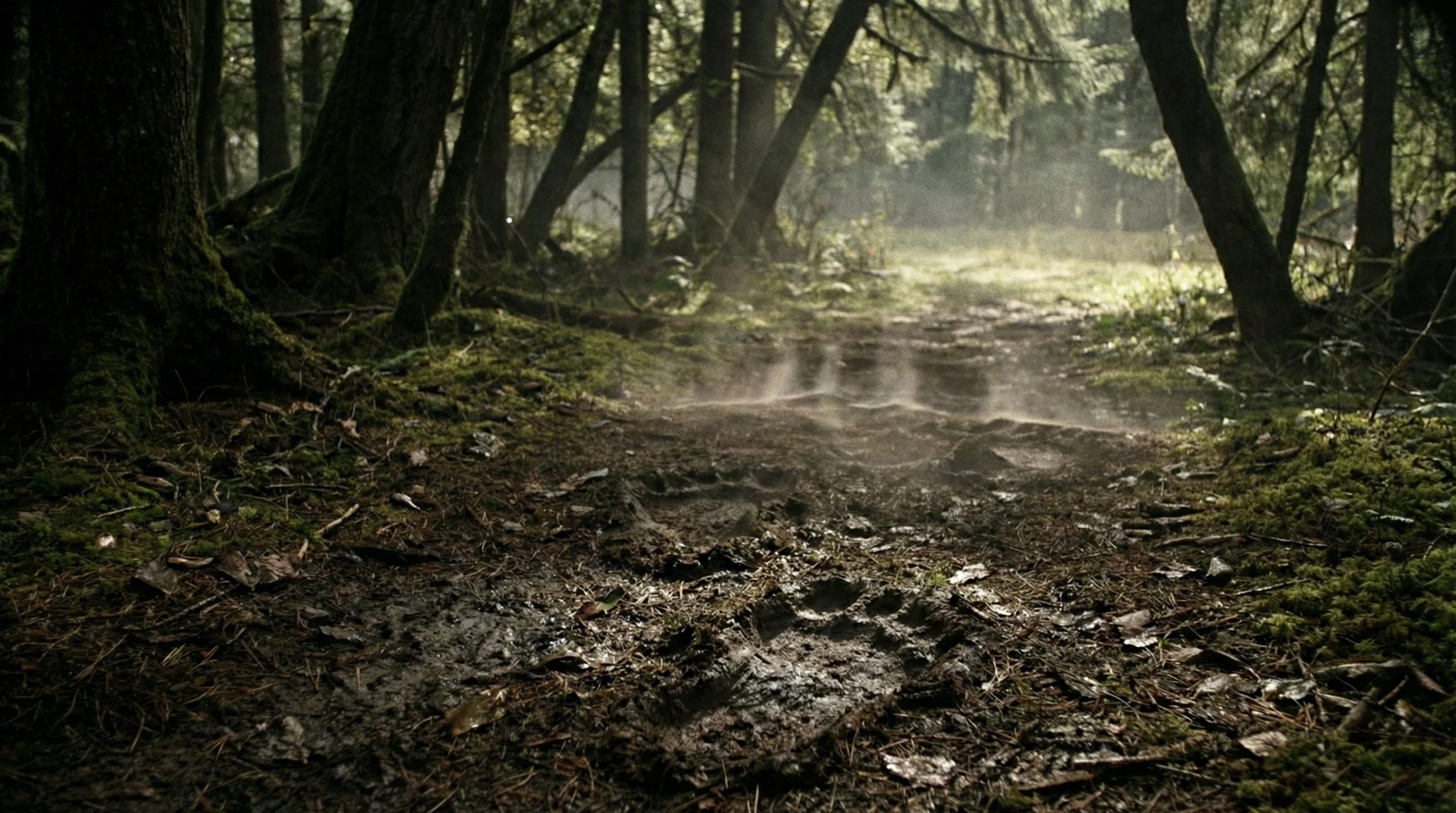
This shift isn’t happening by accident.
Modern thermal imaging, environmental sensors, long-term databases, and pattern mapping have exposed gaps that older explanations can no longer cover. At the same time, there’s been a cultural shift in how we understand intelligence, perception, and consciousness.
Biology is no longer assumed to be simple.
Reality is no longer assumed to be linear.
The camps aren’t closing because one side finally “won.”
They’re closing because the evidence outgrew the arguments.
When tools improve and language evolves, the conversation matures whether we’re ready for it or not.
The Five-Way Connection: A Unified Sasquatch Pattern
When Sasquatch evidence is viewed as a unified system, five recurring components appear. These are not beliefs. They are patterns documented across decades.
1. The Biological Anchor
Sasquatch is physical. It leaves footprints, breaks branches, displaces vegetation, and interacts with the environment. Trackways, hair samples, and environmental impact are consistent markers of biological presence.
2. Cognitive Superiority
Sasquatch behavior repeatedly demonstrates awareness, timing, avoidance, and decision-making that exceed typical animal instinct. This reflects intelligence, not randomness.
3. The Technical or Non-Linear Edge
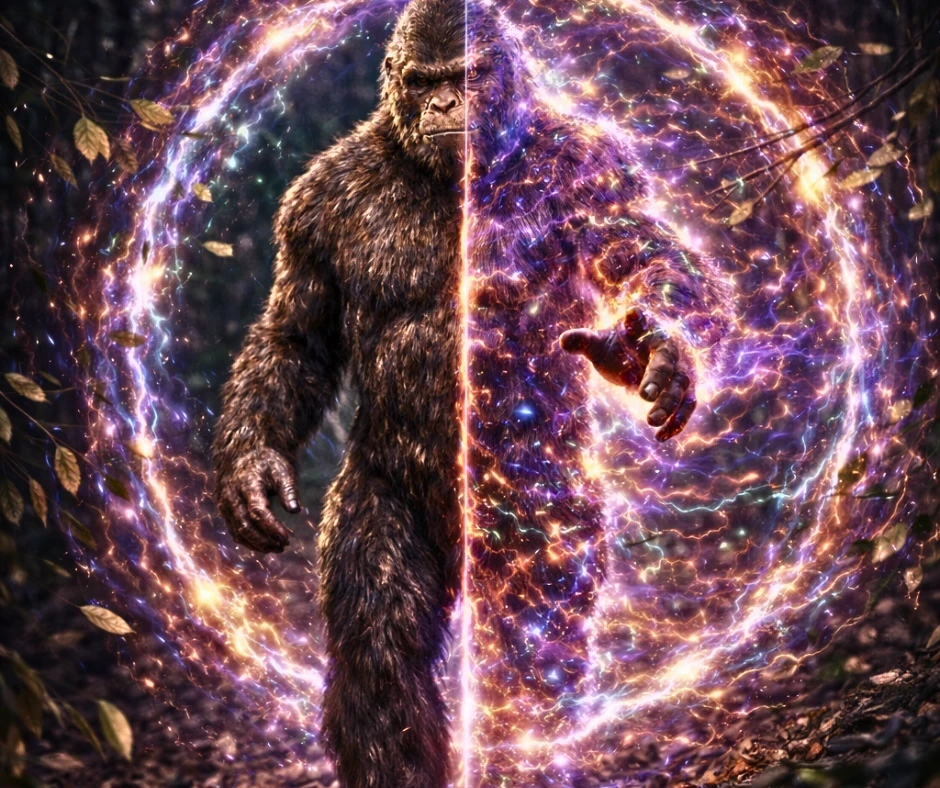
What many describe as “interdimensional” behavior doesn’t have to mean supernatural.
In biology, mechanisms already exist that create the illusion of disappearance. Infrasound can induce disorientation and an urge to leave an area. Specialized camouflage and environmental mimicry allow movement to go unnoticed even at close range.
Apply those principles to a large, intelligent hominid that understands terrain, timing, and human attention.
Tracks don’t end because the being vanishes.
They end because pursuit crosses a threshold.
Visual contact breaks not because of magic, but because sensory access is disrupted or redirected. Thermal signatures fade not because the being ceases to exist, but because it disengages in ways our tools are not designed to track.
This isn’t invisibility.
It’s non-linear biological behavior paired with situational intelligence.
4. The Official Silence
Governments do not suppress folklore.
They avoid problems they can’t solve.
If an intelligent, non-human hominid exists within national forests, protected land, and remote corridors, it creates a jurisdictional nightmare. There are questions of land use, public safety, environmental protection, and liability that don’t have clean answers.
Disclosure wouldn’t create clarity.
It would create responsibility.
Silence, in this context, isn’t evidence of a grand conspiracy. It’s bureaucratic avoidance. The safest move isn’t to explain something you can’t manage. It’s to quietly monitor it and avoid escalation.
That kind of silence only makes sense if the subject is real, physical, intelligent, and resistant to control.
The Hybrid Sasquatch Reality
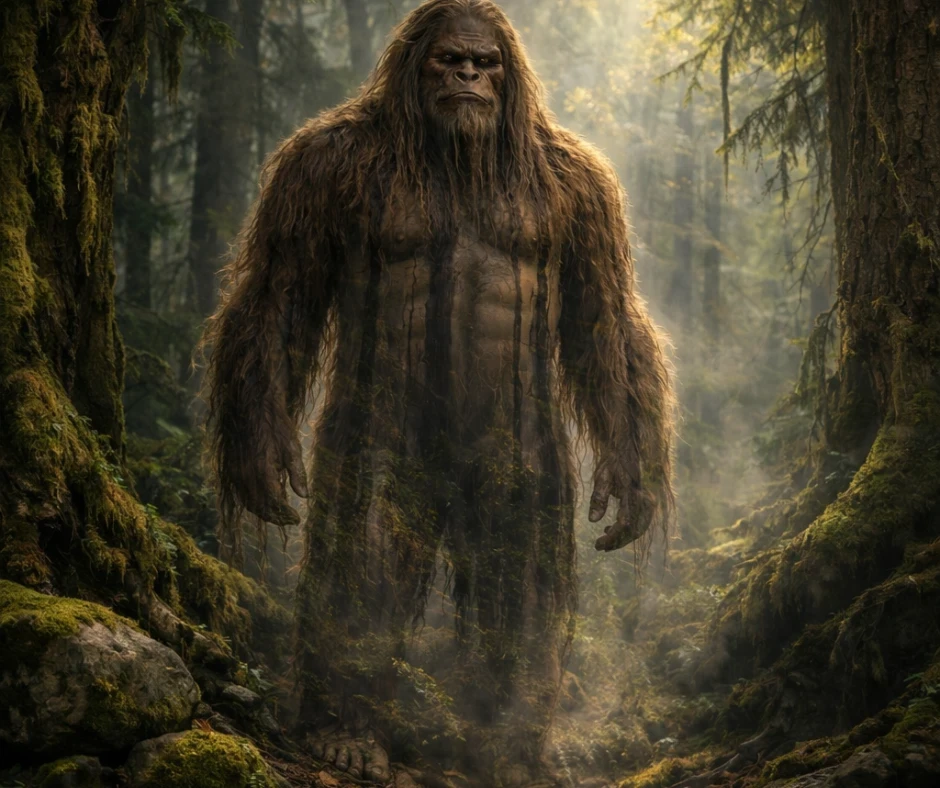
Language matters because language shapes understanding.
The most accurate description supported by the evidence is simple:
Sasquatch is a biological being with a non-linear way of interacting with our world.
That statement doesn’t diminish the mystery.
It explains the behavior.
It allows Sasquatch to be physical without being primitive.
Ancient without being mythical.
Elusive without being imaginary.
The Hybrid Sasquatch Theory doesn’t replace science or spirituality. It explains why both have captured parts of the truth while missing the full pattern.
Moving Forward in Sasquatch Research
This isn’t a call to abandon your beliefs.
It’s an invitation to widen your lens.
You don’t need to leave your camp.
You just need to stop defending the fence.
When researchers stop arguing over labels and start comparing patterns, Sasquatch encounters stop looking random. Sightings become contextual. Evidence becomes intentional.
The question shifts from
“Is Sasquatch real?”
to something far more revealing:
Why does Sasquatch choose when and how it is seen?
That is where this conversation is heading.
Where Sasquatch Patterns Actually Come Together
The Hybrid Sasquatch Theory didn’t come from one sighting or one opinion.
It emerged from decades of overlapping encounter reports, historical records, Indigenous knowledge, modern sensor data, and repeated behavioral patterns that refuse to fit single explanations.
This work doesn’t try to convince.
It organizes.
Fragments explain very little.
Patterns explain almost everything.
If this perspective resonates, there is far more depth beyond this page. Not as doctrine, but as a framework for continued exploration.
If This Perspective Resonates, These Books Go Deeper
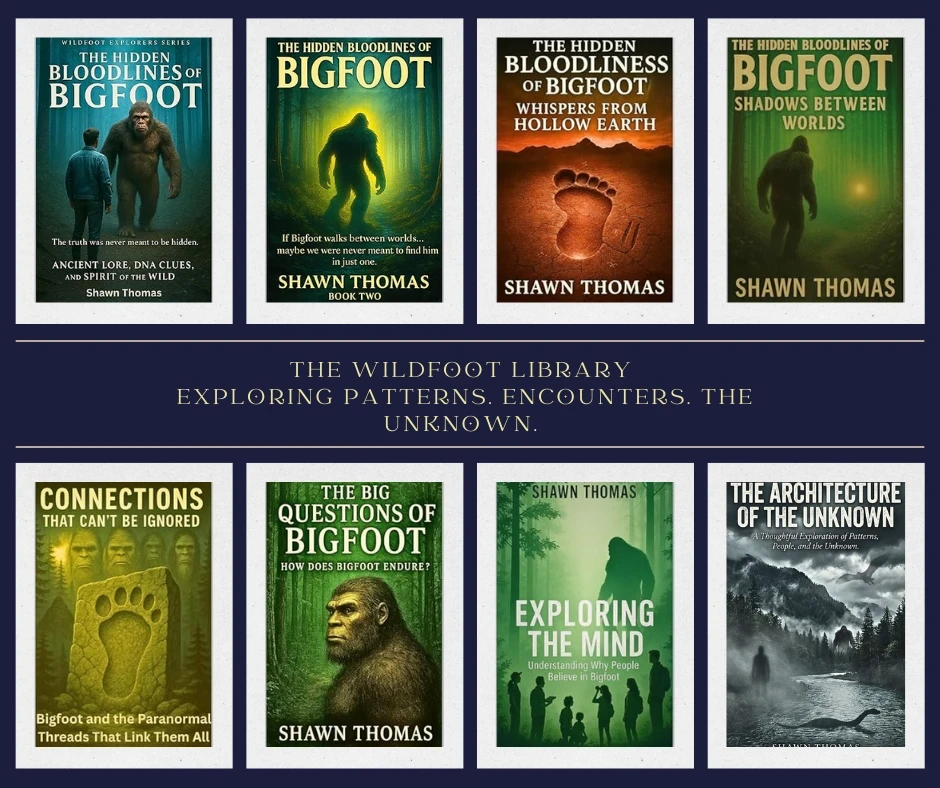
If this blog is making sense so far, it’s because the ideas here didn’t start on this page.
This framework was built across multiple books that explore the same Sasquatch patterns from different angles. Some focus on physical evidence and biological behavior. Others dig into intelligence, awareness, silence, and the overlap between the natural and the unexplained.
This article brings the system together.
The books are where each layer is examined in full.
Exploring the Hybrid Sasquatch Pattern in Depth
The Architecture of the Unknown
A foundational look at recurring patterns across people, places, and unexplained phenomena. This book lays the groundwork for recognizing why certain questions persist across time and why dismissing patterns is often the real mistake.
The Big Questions of Bigfoot: How Does Bigfoot Endure?
A direct examination of why Sasquatch has resisted classification for decades. This book confronts the contradictions head-on and asks why the phenomenon survives every attempt to simplify it.
The Hidden Bloodlines of Bigfoot Series
A multi-book exploration of Sasquatch as more than a single explanation. These books examine physical traces, ancient lore, intelligence, awareness, and the repeated suggestion that Sasquatch operates at the edge of human perception rather than fully within it.
Wildfoot’s Beginner’s Guide to Sasquatch Hunting
A grounded introduction for readers interested in field signs, tracking behavior, and understanding the environment Sasquatch interacts with. This guide focuses on observation, respect, and pattern recognition rather than sensationalism.
These books aren’t written to convince skeptics or reinforce belief.
They exist to document patterns that continue to surface whether we argue about them or not.
If you’re following the logic of this article, these works are the natural next step.
People Also Ask About Sasquatch
Is Sasquatch a physical being or something else?
Based on the evidence, Sasquatch appears to be a physical, biological being that does not interact with reality in a purely linear way. Footprints, environmental damage, and physical traces point to biology, while disappearance patterns suggest controlled disengagement rather than contradiction.
Why do Sasquatch tracks sometimes stop suddenly?
Abruptly ending tracks are one of the most consistent patterns reported across decades. If Sasquatch were only an animal, tracks would continue. If it were only non-physical, tracks wouldn’t exist at all. Partial evidence suggests intentional control, not coincidence.
Is Sasquatch interdimensional or spiritual?
Many encounters include non-physical elements such as awareness or communication without sound. These experiences may reflect how a highly intelligent biological being interacts with human perception rather than indicating a purely spiritual entity.
Why would governments monitor Sasquatch sightings?
Governments do not invest resources in myths. Monitoring behavior, restricted areas, and silence make sense only if Sasquatch is real, physical, intelligent, and unpredictable.
Why do some people feel Sasquatch before they see it?
Many witnesses report awareness prior to visual contact. This may involve heightened sensory perception or intentional signaling by the being itself, suggesting projection of presence rather than chance.
Is the Hybrid Sasquatch Theory proven?
The Hybrid Sasquatch Theory is not presented as a belief system or final answer. It is a pattern-based framework that explains overlapping evidence without discarding large portions of documented behavior.
Why do Sasquatch sightings happen to certain people?
Sightings often occur at transition points: remote edges, emotional shifts, or moments of reduced distraction. This suggests encounters may be situational and selective, not random.
Is Sasquatch more intelligent than humans?
Evidence suggests situational and strategic intelligence rather than superiority. Sasquatch appears to understand terrain, timing, and human behavior at a level inconsistent with undiscovered animals.
Does this theory dismiss traditional research or Indigenous knowledge?
No. It places traditional research, Indigenous knowledge, modern investigation, and personal experience into a single framework where each holds value.
Wildfoot Disclosure and Invitation
As an Amazon Associate I earn from qualifying purchases.
. Some links in the Wildfoot Book Library are Amazon affiliate links, which may earn me a small commission at no extra cost to you.
The library includes the books I’ve written and other resources tied to Bigfoot, survival, hidden truths, and the paranormal. Everything here is meant to support your curiosity and exploration.
I only share products and books I personally believe in or created myself. You’ll also find items connected to my other platforms, including Paranormal Curiosities Realm.
Thanks for supporting independent research and storytelling.
Shawn Thomas
Amazon Author & Creator
Founder of Wildfoot Explores and Wildfoot Explores Apparel shop
Not a Camp. A Sasquatch Mindset.
This approach isn’t about joining a movement.
It’s about how you think.
Curiosity over certainty.
Patterns over noise.
Questions over conclusions.
This mindset shapes how we research, how we listen to witnesses, and how we interpret evidence. It favors patience over urgency and understanding over victory.
The Overlapping Truth About Sasquatch
The truth doesn’t live in camps.
It lives where evidence overlaps.
Where independent reports repeat.
Where different explanations describe the same behavior.
This isn’t the end of the Sasquatch conversation.
It’s the point where it finally matures.
The camps aren’t closing because one side won.
They’re closing because the pattern is too big to ignore.
Fan Favorites from the Wildfoot Shop bestseller

These pieces have become bestsellers not because they shout, but because they signal a mindset. The hoodie, hat, and phone case featured here are worn by readers and field-minded thinkers who value curiosity over certainty and patterns over noise.
They aren’t about trends or slogans. They’re simple, functional reminders of how we approach the unknown calmly, thoughtfully, and without rushing to conclusions.
If this way of thinking resonates, these are the pieces people keep coming back to.