Every year thousands of people type the same question into Google.
Is Bigfoot real?
And here we are in 2026, and that question is still trending across search engines.
That alone should make people stop and think.
Most myths fade away with time. Stories slowly disappear as science explains more about the world around us. But Bigfoot hasn’t gone away. In fact, the mystery surrounding Sasquatch seems to grow stronger every year.
New sightings continue to appear. Researchers keep studying footprints and wilderness encounters. And people across North America continue sharing experiences that they often kept quiet about for years.
For some people, Bigfoot is just folklore.
For others, it’s one of the greatest mysteries still walking the forests of this planet.
For me personally, the answer has never been a question.
Bigfoot is real.
And after years of studying the patterns surrounding Sasquatch sightings, I believe the truth sits somewhere between two worlds.
Not just flesh and blood.
Not just spiritual.
But a hybrid explanation that connects both.
Interestingly enough, that’s exactly what many Indigenous cultures have been saying for centuries.
People Also Ask About Bigfoot
Before we dive deeper into the mystery, here are some of the most common questions people ask about Sasquatch.
Is Bigfoot real or just a legend?
Bigfoot has never been officially confirmed by mainstream science, but thousands of sightings, footprints, and cultural stories keep the mystery alive. You can explore the deeper scientific debate in this article:
➡ Bigfoot Mystery: What Science Still Can’t Explain
Why do people believe Bigfoot exists?
Many people believe because of repeating patterns in sightings, witness encounters, and physical evidence like tracks and structures.
➡ Why So Many People Are Researching Bigfoot Online
(From the Wildfoot blog collection)
What does Bigfoot represent spiritually?
Across many cultures, Sasquatch is seen as a guardian of nature or a spiritual being connected to the forest.
➡ Bigfoot’s Spiritual Symbolism in Modern Folklore
Where are most Bigfoot sightings reported?
Sightings tend to cluster in heavily forested regions like the Pacific Northwest and Western Canada.
➡ Exploring the Top Bigfoot Hotspots in Western Canada
The Scientific Position on Bigfoot
According to mainstream science, there is currently no officially confirmed proof that Bigfoot exists as a recognized species.
There is no confirmed body.
No formally accepted DNA sample.
No classification in modern zoology.
Because of that, most scientists dismiss Bigfoot as misidentified animals, folklore, or hoaxes.
But history has shown something interesting.
Science often changes its mind when new discoveries appear.
The giant squid was once considered a myth.
The mountain gorilla was dismissed as legend.
Even the okapi was believed to be folklore until explorers proved it existed.
So the absence of proof today does not automatically mean something isn’t real.
Sometimes it simply means we haven’t found the full answer yet.
The Patterns That Suggest Something Is Out There
For many people, belief in Sasquatch doesn’t come from a single piece of evidence.
It comes from patterns that repeat across decades and across geography.
When you look at the full picture, several things appear again and again.
- Footprints.
- Structures.
- Sightings.
- Indigenous oral traditions.
- Witness encounters.
- Geographic clusters.
Individually, each piece might be questioned.
But when those patterns appear together for over a century, the mystery becomes much harder to dismiss.
Footprints and Track Evidence
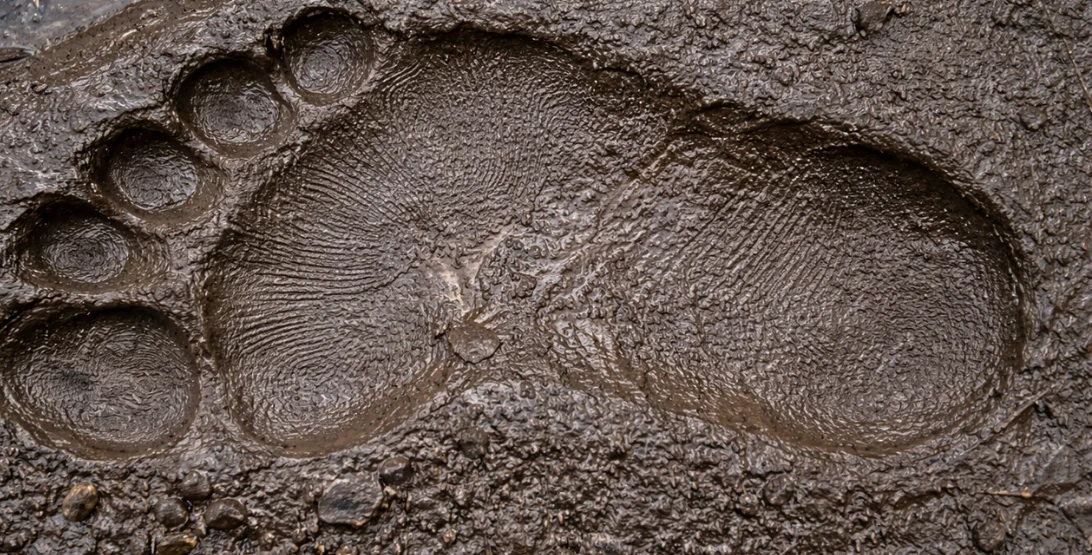
One of the most common forms of Bigfoot evidence is footprints.
Large tracks have been discovered across North America for decades. Some of these prints measure more than fourteen inches long and appear in extremely remote areas.
Some casts even show anatomical details like what researchers call a mid-tarsal break, suggesting a flexible foot structure closer to primates than modern humans.
Other casts appear to show dermal ridge patterns similar to fingerprints.
Skeptics argue that footprints can be hoaxed. And yes, some probably have been.
But when thousands of prints appear across decades and across different regions, the question becomes harder to dismiss.
Sasquatch Structures in the Forest
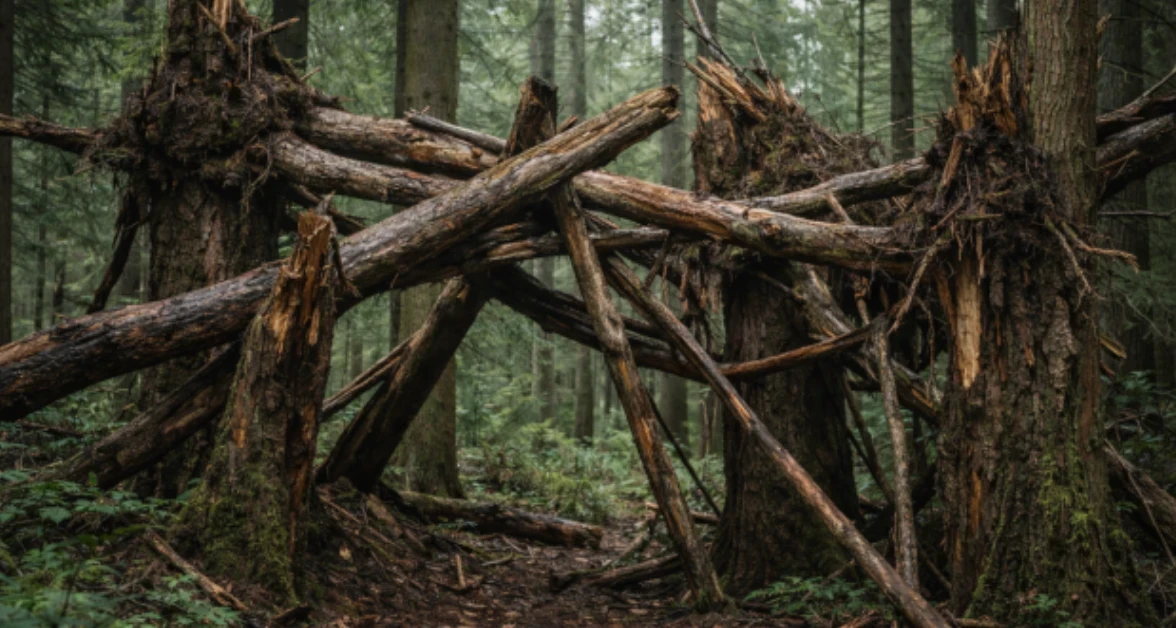
Another fascinating topic in Bigfoot research is forest structures.
Investigators have reported unusual formations deep in wilderness areas.
Large branches twisted together.
Logs stacked in unusual ways.
Trees bent or woven into patterns.
Some researchers believe these could be territorial markers or communication structures.
Others believe natural forces explain them.
But once again, similar formations appear in multiple forests across North America.
And that repetition keeps the conversation alive.
Indigenous Knowledge and the Spiritual Side of Sasquatch
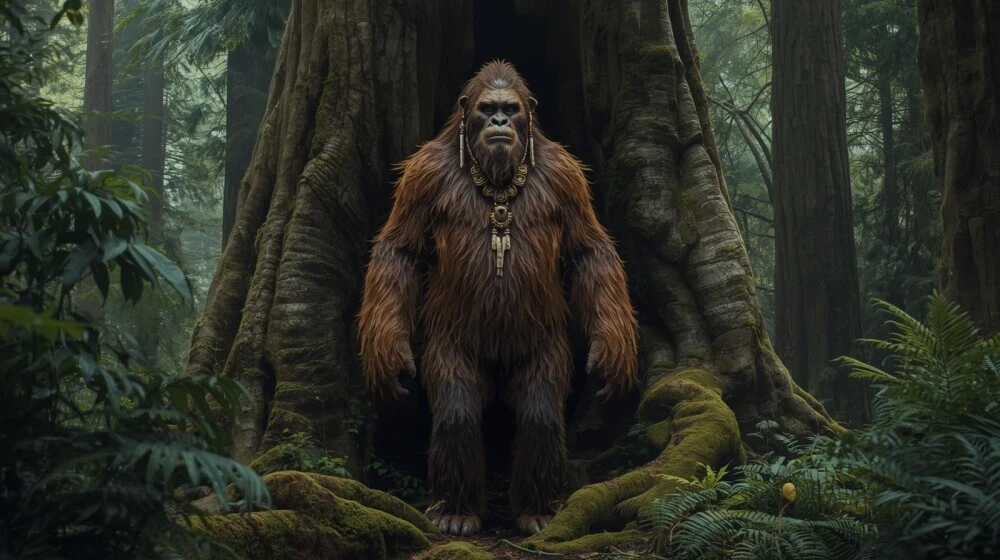
Long before the modern term Bigfoot existed, many Indigenous cultures described large forest beings.
Different tribes used different names.
But the descriptions often share common themes.
- Tall.
- Hair-covered.
- Human-like.
- Highly intelligent.
In many traditions Sasquatch was not simply an animal.
He was considered a guardian of nature.
A being that moved between worlds.
A protector of sacred wilderness.
These teachings are one of the biggest reasons I believe the answer to the Bigfoot mystery lies somewhere between the physical and the spiritual.
The Hybrid Theory: Flesh and Spirit
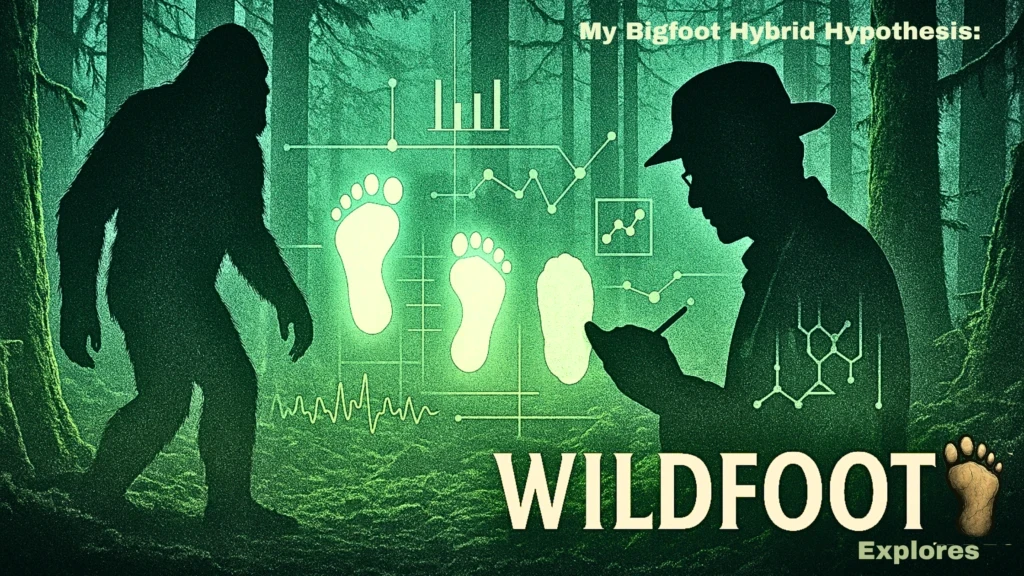
For decades the Sasquatch conversation has been divided into camps.
One side believes Bigfoot is simply an undiscovered primate.
Another believes Sasquatch exists entirely in the spiritual realm.
But what if both sides are looking at only half the picture?
The Hybrid Theory suggests that Sasquatch may exist somewhere between those explanations.
A physical being.
But one with awareness or abilities that connect to something deeper within the natural world.
This idea mirrors many Indigenous teachings that describe Sasquatch as a being connected to both the physical forest and the spiritual world around it.
My Personal Belief

After years of studying sightings, oral traditions, wilderness patterns, and witness encounters, I’ve reached my own conclusion.
Bigfoot is real.
- Footprints.
- Structures.
- Local sightings.
- Oral cultures.
Reports from hunters and truckers.
Encounters from people who had nothing to gain from telling their story.
When you begin looking at all of those elements together, the pattern becomes very hard to ignore.
That belief is exactly why I created Wildfoot Explores, wrote books about the mystery, and built a community around exploring the unknown.
If you’re truly looking for answers about Sasquatch, you don’t need mainstream science to tell you what to believe.
Start reading.
Start exploring.
Start paying attention to the patterns.
The truth has a strange way of revealing itself.
Explore the Wildfoot Library

If you want to go deeper into the mystery of Sasquatch, you can explore the Wildfoot Book Library here:
Inside you’ll find books exploring:
• Bigfoot sightings and encounters
• hidden bloodline theories
• cryptid patterns around the world
• paranormal connections to wilderness encounters
Wildfoot Apparel
The Wildfoot community has grown into something bigger than just research.
Many people enjoy representing their curiosity about the unknown.
You can explore the Wildfoot apparel shop here:
You’ll find hats, hoodies, mugs, and gear inspired by the search for the unknown.

Wildfoot Disclosure and Invitation

As an Amazon Associate I earn from qualifying purchases.
Some links in the Wildfoot Book Library are Amazon affiliate links, which may earn me a small commission at no extra cost to you.
The library includes the books I’ve written and other resources tied to Bigfoot, survival, hidden truths, and the paranormal. Everything here is meant to support your curiosity and exploration.
I only share products and books I personally believe in or created myself. You’ll also find items connected to my other platforms, including Paranormal Curiosities Realm.
Thanks for supporting independent research and storytelling.
Shawn Thomas
Amazon Author & Creator
Founder of Wildfoot Explores
Founder of Wildfoot Explores Apparel Shop


I’ve actually been following your site for a while now, and I’ve always found the perspective you bring to the Bigfoot topic really interesting. The idea of looking at patterns in sightings and traditions instead of just a single piece of evidence definitely adds another layer to the conversation.
It’s fascinating how the mystery has persisted for so long, especially with so many reported encounters and cultural stories surrounding it.
Quick question: after all your years studying this topic, what piece of evidence or pattern convinced you the most that something real might actually be out there?
Hey Jason, first off, thank you for following the site for a while. I really appreciate you taking the time to read and think about the material. That means a lot.
To answer your question honestly, there wasn’t one single piece of evidence that convinced me. It was the pattern that kept repeating across cultures, locations, and generations.
When you start digging into this topic long enough, a few things stand out.
First, the global consistency of the wild-man tradition. Long before the word “Bigfoot” ever existed, cultures around the world described very similar beings living just beyond the edges of human settlements. You see it with the Yeti in the Himalayas, the Almas in Central Asia, the Yowie in Australia, and many Native traditions here in North America. Different names, same core description.
Second is the sheer volume of eyewitness encounters. Over decades you hear thousands of reports from hunters, forestry workers, police officers, hikers, and people who were not looking for anything unusual. Many of these people describe almost identical behavior patterns: being watched, strange vocalizations, rock knocking, wood knocks, and massive footprints appearing where no person could reasonably have made them.
Then there’s the physical trace evidence pattern. We’re talking about footprints that show anatomical details like dermal ridges and mid-tarsal flexibility, something very difficult to fake consistently. These prints have been documented in many places over decades.
But the piece that really made me step back was when all three layers line up at once:
• ancient cultural memory
• modern eyewitness encounters
• physical trace evidence
When the same story keeps appearing across hundreds of years and thousands of miles, it starts to look less like coincidence and more like a real phenomenon people are encountering.
Now what that phenomenon actually is, that’s where the debate begins. Some believe it’s purely biological, some think there’s a paranormal component, and others land somewhere in between. My own research has pushed me toward the hybrid mystery idea, because some of the patterns simply don’t behave like a normal undiscovered animal.
I don’t think we have all the answers yet. But I do think the patterns are too strong to ignore.
I really appreciate the question, Jason. Conversations like this are exactly what keeps the topic moving forward.
Shawn
I must admit I love to read and watch videos on Big Foot, you will find me often watching Big Foot documentaries during my free time.
As for me, I do feel Big Foot could be the real thing. Why would it not be possible that Big Foot exists, but also sometimes it seems like it might be a myth.
Footprints and other evidence does make it difficult not to have an open mind Big Foot could exist, another thing is how could so many people all over the world experience encounters if this is only a myth.
The Wild Foot Library is brand new to me, but I must admit i am an avid reader. I mainly read mysteries because they give my imagination a boost trying to figure out who done it, I am going to check out your Wild Foot Library, maybe even order them in the near future.
Great information on Big Foot,
Jeff
Jeff, I really like how you put that. That mix of “could be real” but still feeling like a myth is exactly where this topic sits for a lot of people. And you’re right, it’s hard to ignore when similar encounters keep showing up in different places. Glad you found the Wildfoot Library too, and I appreciate you taking the time to read and comment.
Hi, This was honestly a really interesting read, especially the way you focused on patterns instead of trying to prove everything with one single piece of evidence. That approach feels a lot more realistic. What interested me was the most was the connection between modern sightings and Indigenous traditions. The hybrid theory you mentioned is also pretty thought provoking. At the same time, I do find myself somewhere in the middle. Part of me thinks there could be something out there we just haven’t properly documented yet, but another part still wonders how it’s managed to stay hidden for so long without clearer proof. That’s what makes this topic so fascinating though it keeps you questioning instead of giving you a clean answer. Really enjoyed this definitely got me thinking more than I expected.
Hey Shafna,
Really appreciate this, and I’m glad the pattern side of it stood out to you. That’s honestly where things started shifting for me too.
And I get exactly what you’re saying about being in the middle. That question, “how has it stayed hidden this long?” is the one that keeps this whole topic alive.
What pulled me away from a straight biological answer was that same issue. The more patterns I looked at, the more it started lining up with something that doesn’t behave like a normal animal.
Not saying that’s the final answer, but it definitely opens the door to a different way of looking at it.
That’s the fun part though… it keeps you thinking instead of closing the case.
Appreciate you jumping in on this.
Shawn
Super fun, love that it addresses both sides, leaves me wanting more information, piques my interest and curiosity. Always been a big interest to me, would love to get out and try to track bigfoot myself in the wilderness someday. Luckily, plenty of external links to read and explore. Can tell that the author has done extensive research and come at the topic as both a scientist/discoverer and believer. I fall in the same boat, definitely think there has to be something to the lore and myths, and hoping to see more facts and encouraged that we will eventually discover something new and exciting.
Hey John, I really appreciate that, seriously. That’s exactly the lane I try to stay in… not forcing one side, just laying everything out and following the patterns where they lead.
And I hear you on wanting to get out there yourself. That’s honestly where things start to shift. Reading is one thing, but being in the environment, especially deep in it, you start to notice things you can’t really explain on paper. Even if nothing “happens,” the feeling alone can be enough to make you question a few things.
That middle ground you’re talking about… that’s where I sit too. Not blind belief, not full denial. Just asking why this topic keeps showing up across different places, different people, different timelines.
There’s something there. Whether it’s physical, something we don’t understand yet, or a mix of both… that’s the part that keeps me digging.
Appreciate you taking the time to read it and drop a comment like that. And if you ever do head out there, just pay attention to the small stuff. That’s usually where it starts
As a disabled single mom entrepreneur, I barely have time to find my own car keys, so I have a weird amount of respect for a guy who’s managed to stay “missing” since the seventies. Between managing my business and keeping up with the kids, I definitely relate to the Sasquatch lifestyle—mostly staying hidden in the woods, rocking messy hair, and occasionally being spotted by confused locals while I’m just trying to get some peace.
Whether he’s a hybrid or just the world’s best hide-and-seek champion, this 2026 update is the perfect witty distraction for my five-minute coffee break!
Leah, this made me laugh… not gonna lie
That “Sasquatch lifestyle” line… messy hair, staying hidden, only being spotted when you least expect it… yeah, that might be the most accurate description I’ve heard in a while.
But honestly, I respect the way you said it too. Because in between the humor, there’s truth in there. You’re juggling a lot, still building something for yourself, still showing up… and somehow finding five minutes to sit down with a coffee and read something like this. That’s not small.
And hey, maybe that’s part of why this topic sticks with people. Whether it’s mystery, escape, or just a moment to step outside the noise for a bit… it gives you something different to think about.
Appreciate you dropping this comment. You brought some real personality into it… and yeah, I’ll never look at Sasquatch the same way again after that one