Just a Truck Driver and a Thought That Wouldn’t Let Go
I’m not a scientist. I’m not a biologist. I’m not someone sitting in a lab trying to prove something on paper. I’m a truck driver. Most of my time is spent on back roads, lease roads, and mountain passes where you start to realize just how much land is out there that people don’t see or think about. When you spend that kind of time out there, especially alone, your perspective shifts. You start thinking differently, and you start asking questions that don’t always have simple or comfortable answers.
Like a lot of people, I got pulled into the Sasquatch topic out of curiosity. At the beginning, it was just something interesting to look into when things slowed down. But the deeper I went, the more something started to stand out to me that didn’t match the usual explanations. It wasn’t one piece of evidence that changed everything. It was the people. Different backgrounds, different careers, different decades, and somehow they were all circling the same subject from completely different angles.
So today, I’m just putting a thought into words. I want to walk through what this topic actually brings in 2026 by looking at the people behind it. Not just what they believe, but who they are, how they got into this field, and what they actually contributed. Because when you shift your focus from the mystery itself to the individuals who have spent years studying it, something becomes very clear. Even when they disagree, even when they approach it differently, their work continues to line up in ways that are hard to ignore.
The Scientific Foundation: The Ones Who Took the Risk

If this topic had stayed in the realm of stories, it would have faded out a long time ago. What kept it alive was a small group of individuals who were willing to step into it from a scientific standpoint and treat it like a real question instead of something to dismiss. These weren’t people chasing attention. These were people putting their reputations on the line to follow something they couldn’t ignore.
Jeff Meldrum built his work around anatomy and repeatable structure. As a professor, he didn’t approach Sasquatch from belief, he approached it from physical evidence. His focus on footprint casts, especially the midtarsal break, introduced a level of measurable consistency that changed how people looked at the topic. The importance of his work isn’t just in what he found, but in how often those same traits showed up in completely unrelated locations. That level of repetition is what gives his research weight.
Grover Krantz took things even further at a time when it was far less accepted to even talk about this subject seriously. As a physical anthropologist, he openly argued that Sasquatch could be a surviving hominin species. That position wasn’t safe, and it came with consequences, but he held onto it because the patterns he saw in the evidence and eyewitness reports were too consistent to dismiss. His willingness to stand behind that idea helped push the conversation forward in a way that few others were willing to do.
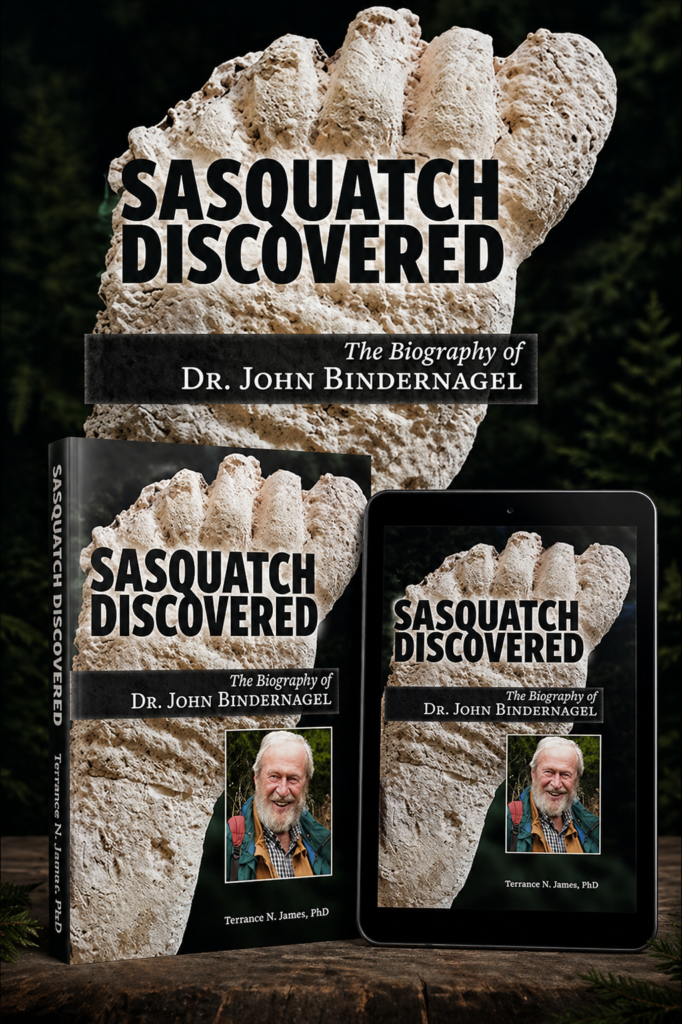
John Bindernagel approached the topic from an ecological standpoint. Instead of debating existence, he focused on behavior. He looked at sightings, movement patterns, and environmental conditions as if he were studying an undocumented species. That shift in perspective made the topic feel more grounded and gave it a framework that could actually be studied instead of argued over.
The Forensic Lens: Where Simple Explanations Ended

As the topic developed, the natural next step was to ask what people were actually dealing with. That question pushed the conversation into more complicated territory, where simple explanations stopped being enough.
Melba Ketchum brought one of the most controversial contributions into the field with her multi-year DNA study. Her conclusion suggested a hybrid origin involving human maternal DNA and an unknown paternal source. Whether someone accepts that or not, it forced the conversation into a space where it could no longer be easily dismissed as just folklore or misidentification. It challenged people to think beyond what they were comfortable with.
Scott Nelson approached the topic from a completely different angle by analyzing the Sierra Sounds. His background in linguistics led him to argue that the vocalizations showed structured patterns, suggesting something closer to communication than random noise. That idea alone shifts the topic into a different category, one that goes beyond simple biological explanation.
M.K. Davis contributed by focusing on visual analysis, particularly the Patterson-Gimlin film. His work breaks down movement, muscle structure, and proportions in a way that raises questions about what is actually being seen. His approach adds another layer of detail that continues to challenge straightforward explanations.
The Field Veterans: The Ones Who Went Out There
At a certain point, everything leaves the page and becomes real. That happens in the field, where theories are replaced by direct experience.
Les Stroud brings credibility to the conversation because his background is built on survival, not speculation. When someone with that level of understanding of wilderness behavior says certain encounters don’t match known animals, it carries weight in a way that is hard to ignore. His perspective is grounded in experience, not assumption.
Steve Isdahl has built a platform around firsthand accounts, many from experienced outdoorsmen who understand the difference between normal wildlife behavior and something that doesn’t fit. His contribution isn’t just in the stories themselves, but in the consistency that shows up across them. When people with no connection to each other describe similar experiences, it starts to form a pattern.
René Dahinden spent years in the field searching for physical evidence and played a role in some of the earliest serious investigations. His work helped establish that this topic deserved real effort and attention rather than casual dismissal.
Peter Byrne helped bring structure to that effort by organizing expeditions and treating the search with purpose. His approach helped shape how field research is conducted even today.
The Organized Research Effort: When the Data Started Speaking

As more information came in, it became clear that organization was necessary to understand what was actually happening. Individual encounters only tell part of the story, but when they are collected and compared, patterns begin to emerge.
The BFRO became one of the largest collections of sightings, allowing researchers to see connections across geography and time. That shift from isolated reports to organized data changed the entire conversation.
Matt Moneymaker played a key role in building that structure, helping turn scattered information into something that could actually be studied.
Cliff Barackman expanded on that by focusing on physical evidence through the North American Bigfoot Center. His work with footprint casts emphasizes movement, weight distribution, and anatomical consistency. By preserving these physical impressions, he adds a tangible layer to the topic that exists independently of interpretation.
James Fay contributes long-term field experience, while Lyle Blackburn focuses on regional patterns, showing how behavior remains consistent even across different environments.
What This Topic Actually Brings in 2026
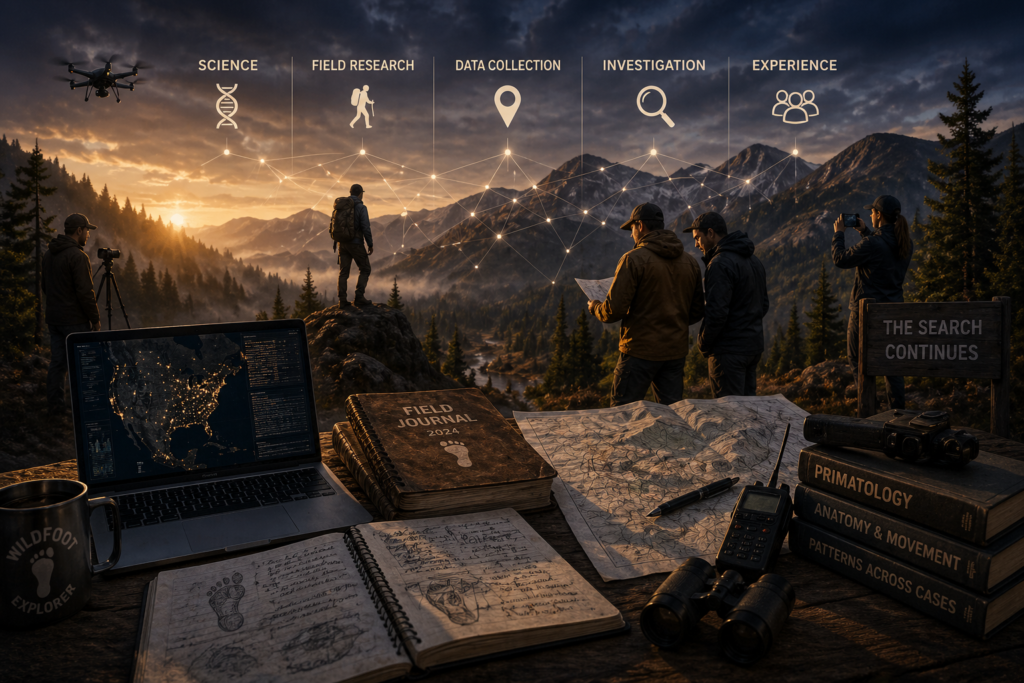
When you look at everything that has been built around this topic, it becomes clear that Sasquatch in 2026 is not the same conversation it was twenty or thirty years ago. It has evolved beyond isolated sightings and individual stories into something much broader. What used to be dismissed as folklore has slowly turned into a layered discussion involving science, field research, data collection, and personal experience all happening at the same time.
What stands out now is not just the evidence itself, but the range of people involved. You have scientists studying anatomy and movement, field researchers documenting behavior in real environments, investigators tracking patterns across cases, and everyday people stepping forward with experiences they cannot explain. These groups are not working together, and they are not trying to reach the same conclusion, yet they continue to contribute to the same overall picture.
This is what makes the topic different in 2026. It is no longer being carried by a single idea or a small group of believers. It is being shaped by multiple perspectives that continue to overlap in key areas. The conversation has become less about proving one answer and more about understanding why the same patterns keep appearing across completely different sources.
At the same time, technology, communication, and platforms have made it easier for people to share information. What once stayed local can now be seen globally, allowing patterns to form faster and more clearly than ever before. This has changed how the topic grows, how it is challenged, and how it continues to move forward.
When you step back and look at all of this together, you start to realize that this topic is no longer sitting on the edge of conversation. It is sitting right in the middle of it, pulling in different types of people who all bring something different into the mix. And even with all of that variation, the same core ideas continue to show up.
That is what Sasquatch brings in 2026.
Not just mystery.
Structure.
The Boundaries: Where the Debate Lives
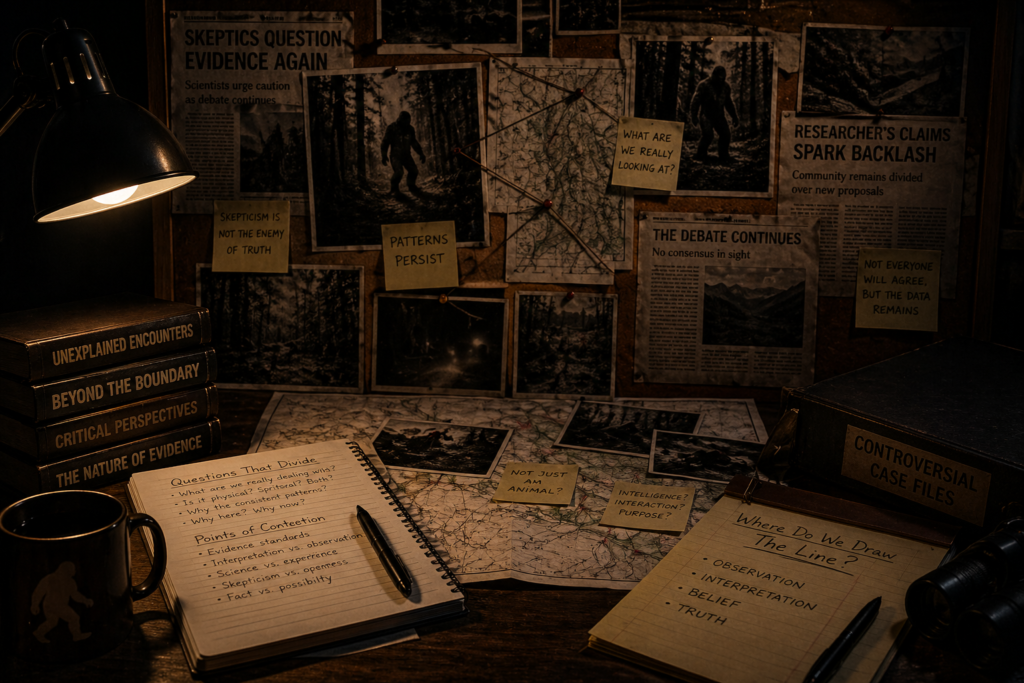
No matter how grounded the approach is, the topic eventually moves into territory that divides the community. These are the areas where traditional science often stops and speculation begins, but they are an undeniable part of the current landscape.
Todd Standing remains one of the most debated figures in the field. While his footage is constantly scrutinized and argued over, it serves a specific purpose: it keeps people engaged and forces a level of discussion that wouldn’t exist otherwise. Whether through support or skepticism, his work pushes people to define where they draw their own line in the sand.
Mike Paterson shifts the focus toward interaction and communication. He explores ideas that go beyond simple observation, looking into how these encounters might actually function on a social or interactive level. It’s a perspective that moves away from the “animal in the brush” theory and looks at the phenomenon as something potentially more complex.
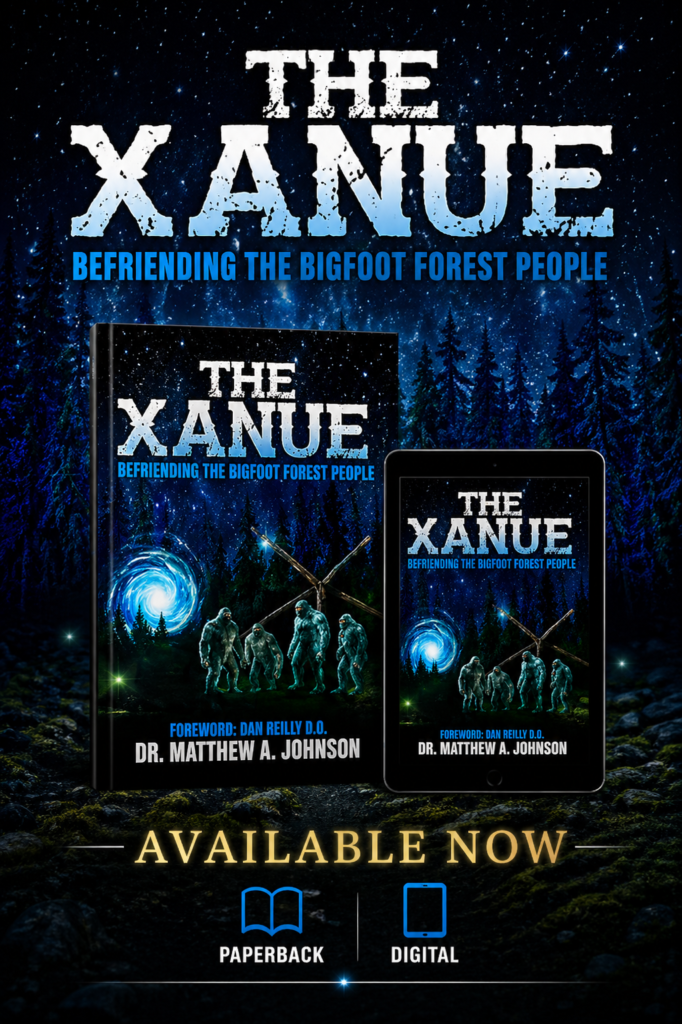
Matthew A. Johnson pushes into broader behavioral theories that challenge traditional biological thinking. His approach often clashes with the mainstream, but it highlights a significant segment of the research that refuses to stay within a comfortable, conventional box.
This is where the opinions split, but even here, the patterns don’t disappear. Regardless of which side of the boundary a researcher sits on, they are all still tracking the same elusive presence.
The Pattern That Connects Everything
When you step back and look at the collective work of these individuals, the picture changes. They aren’t aligned in their conclusions, and they aren’t working toward a single, unified answer. Yet, despite that lack of coordination, they continue to describe the same behaviors and the same structural patterns from completely different perspectives.
They describe movement that feels intentional rather than random, an awareness that exceeds typical animal behavior, and encounters that follow a recognizable logic instead of total chaos. This consistency shows up across different decades, different geography, and vastly different types of observers.
That doesn’t give us a smoking gun, but it gives us something arguably more important: a repeating structure. When the same data appears across independent sources that have no reason to agree, it stops being a story and starts being a signal. It is a reality that deserves our attention rather than our dismissal.
Why This Topic Refuses to Die
Most ideas fade when there is nothing behind them. This topic has not followed that path. It has been challenged, questioned, and pushed aside, yet it continues to come back because the same patterns, experiences, and questions keep showing up across completely different people.
That persistence is what makes it different. It is not built on one moment or one piece of evidence. It is built on repetition over time, and that is what keeps the conversation alive.
Explore More: Going Deeper Into the Topic
For those who want to go deeper, this is where the journey begins. The books featured here were chosen with purpose. Each one represents a different way of approaching the Sasquatch question, from scientific analysis and field research to personal experience and the unexplained.
Researchers like Jeff Meldrum, Grover Krantz, and John Bindernagel built their work on structure, anatomy, and evidence. At the same time, other perspectives explore ideas that extend beyond traditional scientific boundaries. These approaches do not all align, and they are not meant to. Together, they show how complex this subject has become.
The Wildfoot library builds on that foundation by connecting these perspectives into a broader picture. It brings together research, theory, and real-world experiences into one place, giving readers the opportunity to explore the question from multiple angles rather than just one.
Featured Books & Research


My Work and the Wildfoot Perspective
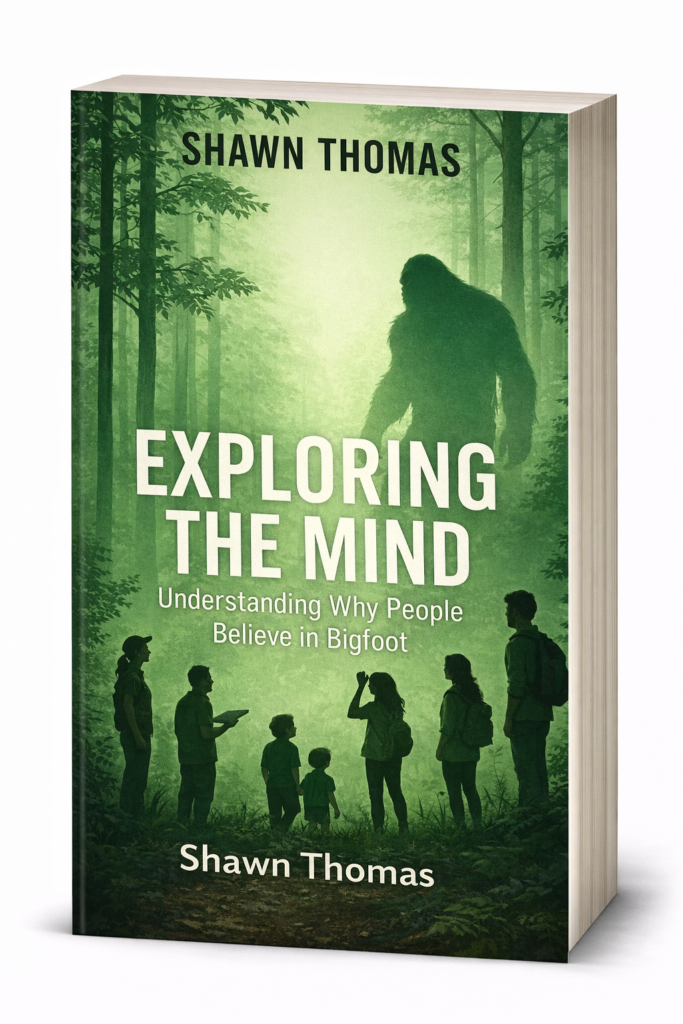
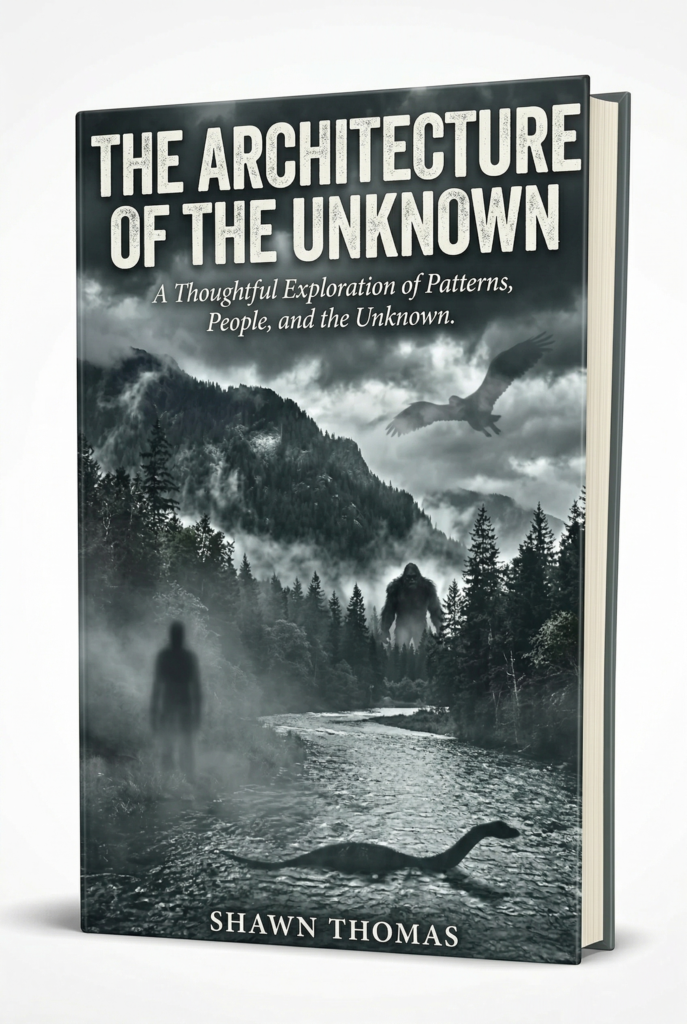
Everything I have built through Wildfoot comes from sitting in the middle of all these ideas. Books like The Hidden Bloodlines of Bigfoot, Why People Believe in Bigfoot, and The Architecture of the Unknown are not about forcing conclusions. They are about exploring the layers of this topic from different angles. Each one looks at a different piece of the puzzle, whether it is deeper theories, human behavior, or the patterns that link Sasquatch to other unexplained phenomena.
These books are meant to complement the work of the researchers who came before, giving readers a modern perspective that builds on existing knowledge while also asking new questions. They are part of the same ongoing exploration, not separate from it, and they are designed to help people think more deeply about what they are looking at.


Final Thought: Why This Question Still Stands
At the end of the day, Sasquatch in 2026 isn’t about proving a point or winning an argument. It is about the uncomfortable reality of a question that refuses to be answered. Most myths have a shelf life. They wither under the light of modern technology and global connectivity. But the longer this topic survives, the more it forces us to look at the blank spots on the map and reconsider what we actually know about the world we live in.
Whether someone walks away a believer or a skeptic is secondary. What matters is the endurance of the phenomenon. It continues to evolve, to challenge our clean explanations, and to surface in ways that defy a simple biological box.
That persistence is a signal in the noise.
Most ideas fade because they lack substance. They are ghosts of a different time. This one hasn’t faded. It stays with us because the experiences remain consistent, the patterns remain visible, and the woods remain much deeper than we care to admit.
When something survives this much scrutiny for this long, it isn’t just a story. It is a reality waiting for us to catch up.
Now I’ll say this before you head out of here.
This blog only shows a small selection of people. There was no way to build something that included everyone who has contributed to this topic over the years. What I wanted to do was highlight a few individuals who each brought a different angle into the conversation.
If you’re wondering why these names were chosen, it’s simple. They represent pieces of the larger picture. But they are far from the only ones. There are thousands of others out there just as credible, just as experienced, and just as important to this ongoing search.
This was just a small needle in a very large haystack.
And honestly, it was a fun one to write.
People Also Ask
Why do credible researchers take Sasquatch seriously?
Because consistent patterns appear across physical evidence, field observations, and eyewitness accounts, making it difficult to dismiss the topic outright.
Why are encounters so different?
Because they appear to fall into recognizable behavioral patterns rather than random events, suggesting structure instead of coincidence.
Are all researchers describing the same thing?
Not in terms of conclusions, but many are describing overlapping behaviors from different perspectives.
Why hasn’t Sasquatch been proven?
Because scientific proof requires a very specific type of evidence, and while there is supporting data, that final level has not yet been reached.
Wildfoot Disclosure and Invitation
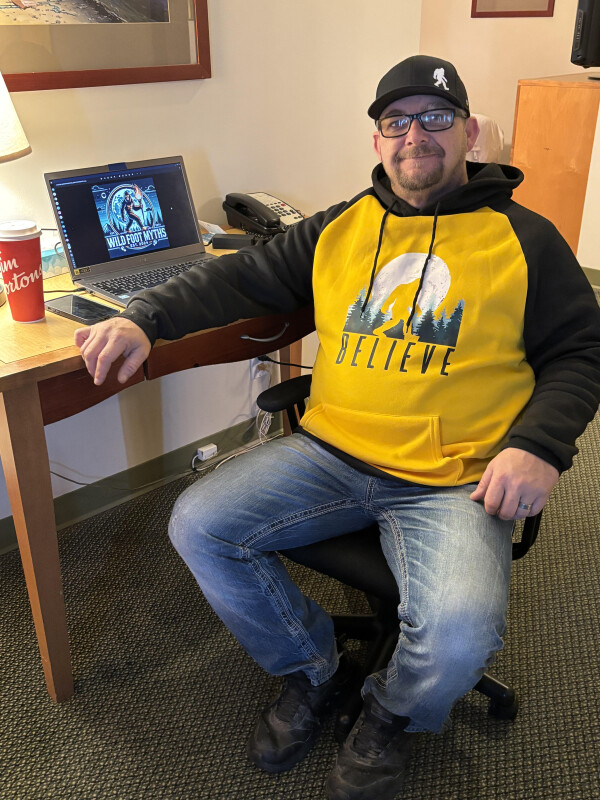
Hi, I’m Shawn.
I’m an Alberta truck driver and author, but more importantly, I am here because I am honoring someone close to me. This entire mission, from the research to the stories, is about keeping a legacy alive. You are here to explore a piece of that world with me. I am also an Amazon Associate, so I may earn a commission from some links on this site at no cost to you, but that is just a way to keep this engine running.
I built this place because I love the Sasquatch topic and needed a way to get it out to the world. It is my way of exploring the mystery and chatting with people who see all the different angles. Explore the blogs, check out the books, and look through the page with no obligations. Always remember to drop your thoughts and share your perspective because that is how we keep the search moving forward.
Shawn Thomas
Amazon Author & Creator
Founder of Wildfoot Explores and Wildfoot Explores Apparel shop
WHAT PATH WILL YOU EXPLORE FIRST

The Researcher’s Index:
The Scientific Foundation
The Forensic Lens:
The Field Veterans:
The Organized Research Effort:
The Boundaries: