Why the Wild Man Pattern Still Matters

Today began with something personal.
I have received messages from people who believe I am creating this entire pattern inside my own head. Fair enough. People are allowed to question what I believe. But here is the thing nobody seems to think about. I did not invent these ten questions. I did not sit down and dream them up out of nowhere.
I typed them into Google, and Google already had answers waiting.
Why? Because people have been asking these exact questions for years. Thousands of them. That is the beauty of Google and the danger of it at the same time. Google was built to give people the most detailed answer it possibly can find, pulled from everything already written, argued and searched by real people before me. It does not know if something is true. It only knows what has already been asked and what has already been said.
So when I ask Google why ancient civilizations preserved Wild Men, why the Sumerians created Enkidu, why cultures separated by oceans describe the same kind of being, I am not the one generating the mystery. I am just the one reporting back what is already sitting there, waiting, because the whole world has been asking it too.
You cannot believe everything you find on the internet. I know that better than anyone. So for each question below, I am showing you exactly what came back when I searched it, and then I am telling you where I land after reading it. Check me on it. That is the whole point.
Question One: Why Did Ancient Civilizations Preserve Wild Men in Their Writings?

I typed this one in expecting a shrug of an answer. I did not get one.
What Google says. Across ancient religion, law and poetry, the Wild Man kept showing up as the thing standing just outside the walls of civilization. Some cultures used him as a warning, the version of a person you become without order, family and community around you. Other cultures used him the opposite way, as a reminder that the untamed world still existed and could never be fully tamed no matter how many cities got built. A smaller thread running underneath both of those readings suggests the figure may have been shaped by real encounters, nomadic outsiders, or memories of other human populations that ancient people crossed paths with. That last piece is not proven. Google is honest about that.
What I think. Ancient people did not waste ink. They preserved law codes, religious text, poetry that had to survive being copied by hand for a thousand years. If the Wild Man was just a scary story to keep kids near the fire, I do not think he survives that process. He survives because he mattered enough to protect. That does not prove he was real. But it proves he was not nothing, and that is further than most people are willing to go.
Question Two: Why Did the Sumerians Create Enkidu?

This one takes us back roughly 4,000 years, to one of the oldest stories human beings ever wrote down.
What Google says. In the Epic of Gilgamesh, Enkidu starts out as a powerful, hairy Wild Man living among animals outside the city of Uruk. He is the earliest fully written example of this figure in human history, older than almost anything else we have on record. He is not a background monster. He becomes the closest companion of a king, strong enough to challenge him and eventually change him. Google’s read is that Enkidu represented what people lose when they trade wild freedom for civilization, a kind of counterweight to the controlled, ordered world Gilgamesh ruled over.
What I think. Out of every character the Sumerians could have built to teach that lesson, they built a hairy Wild Man who lived with animals in the wild. Not a soldier. Not a rival king. A Wild Man. That is not a small creative choice for a civilization’s oldest surviving epic. Something about that figure felt true enough, or familiar enough, to reach for first.
Question Three: Why Do Distant Traditions Describe Similar Wild Humanlike People?
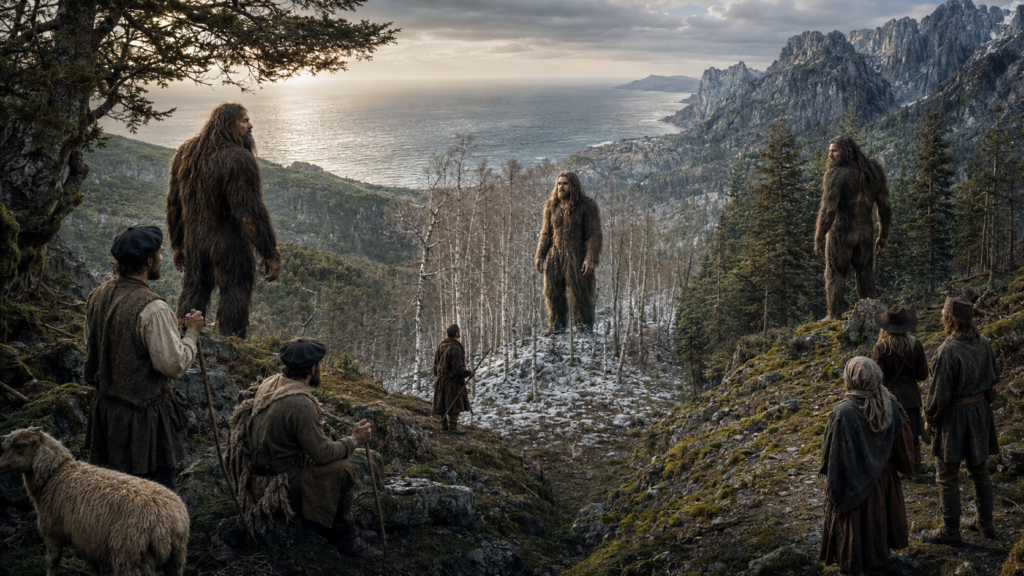
This is the question that stretches across oceans, and it is the one I keep coming back to.
What Google says. Versions of this figure exist almost everywhere you look, and not just in places you would expect. Basque tradition has its own Wild Man. Slavic tradition has its own. Central European folklore built an entire mythology around forest people who lived just past the treeline of every village. None of these cultures were talking to each other when their stories formed. Google’s explanation leans on a mix of possibilities, shared migration routes carrying old stories to new places, similar wilderness environments producing similar folklore independently, and basic human psychology reacting the same way to the same kind of unexplained shape in the trees.
What I think. Every one of those traditions deserves to stand on its own, and I am never going to flatten a Basque legend and a Slavic legend into one generic Bigfoot story just because they rhyme. But the rhyme itself will not leave me alone. Cultures with no contact, separated by oceans and centuries, kept landing on the same rough shape. Migration and psychology can explain some of that. I am not convinced they explain all of it.
Question Four: Why Did the Wild Man Survive When So Many Other Figures Disappeared?
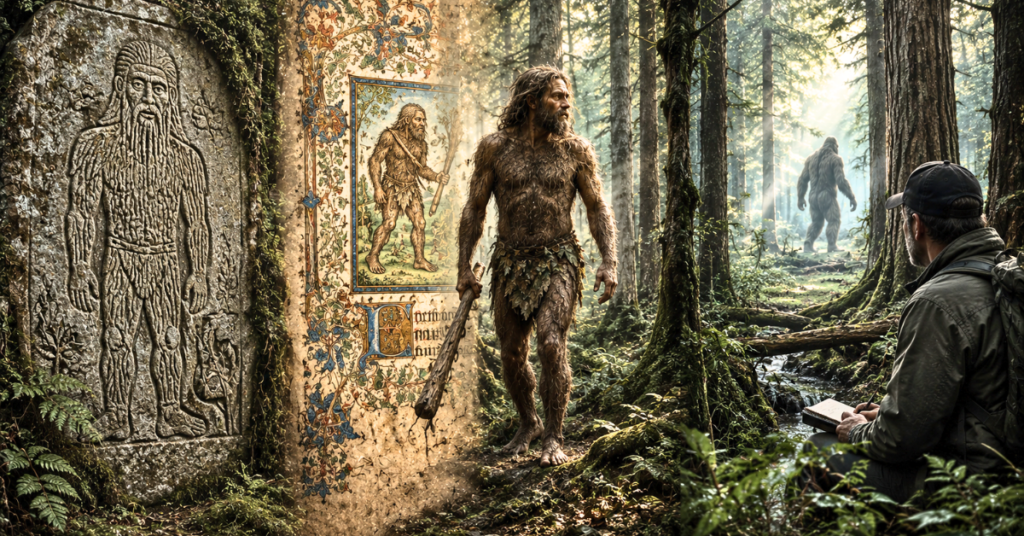
Countless old stories have faded out of human memory completely. This one did not.
What Google says. The strongest explanation is adaptability. The figure kept changing shape to match the century telling his story. Ancient literature placed him beyond the walls of the city. Medieval European art turned him into the Woodwose, carved into cathedral stone and painted on coats of arms. Frontier newspapers reported possible physical Wild Men in unexplored territory long before anyone called him Sasquatch. Today he wears that name, and tomorrow he will probably wear another one.
What I think. The costume changed. The address never did. He has always lived exactly one step past wherever civilization currently ends. That is either a very durable piece of folklore, or it is a very consistent set of encounters getting relabeled every few generations. I lean toward the second one, but I will admit both are possible.
Question Five: Why Do Modern Eyewitnesses Continue Describing a Similar Being?
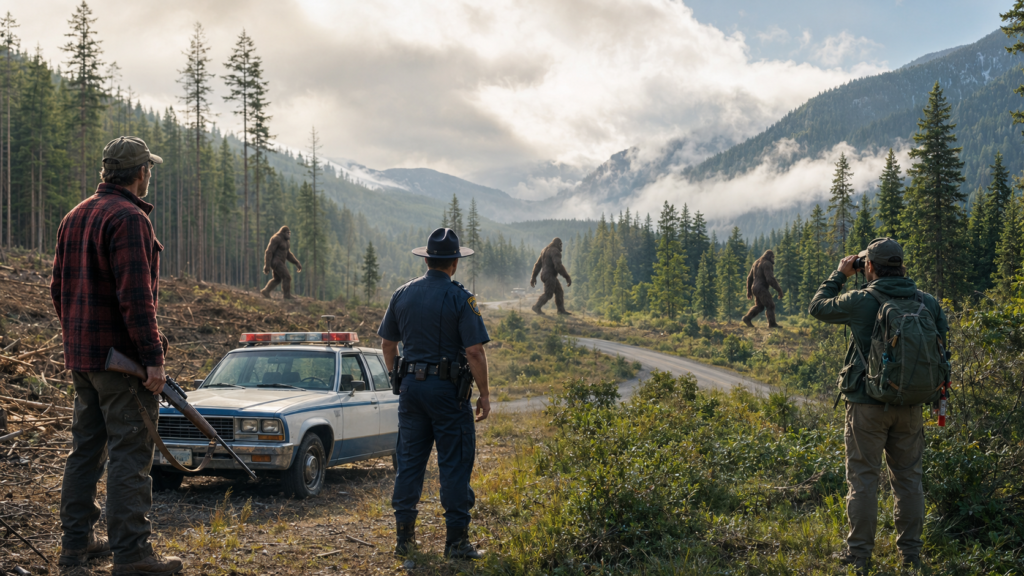
Different people. Different decades. Different forests. And still, the same rough description keeps coming back.
What Google says. A bear standing upright can look startlingly humanlike through brush and bad light. Fear distorts memory, size and distance, sometimes badly. Movies and television have also handed people a ready made image to reach for whenever something moves fast and unclear at the edge of the woods. All three explanations are legitimate, and an honest witness can absolutely be wrong without being a liar.
What I think. I believe every one of those explanations accounts for some of the reports. I do not believe they account for all of them. Hunters, police officers, people who know local wildlife by sight, keep describing extended daylight observations with purposeful movement and proportions they insist were not a bear. If you have seen something you could not explain, that is exactly the account I want. Use the Report an Encounter page linked below. Your story matters more than you think it does.
Question Six: If Modern Media Created the Sasquatch Image, Why Did Similar Descriptions Exist Before 1967?
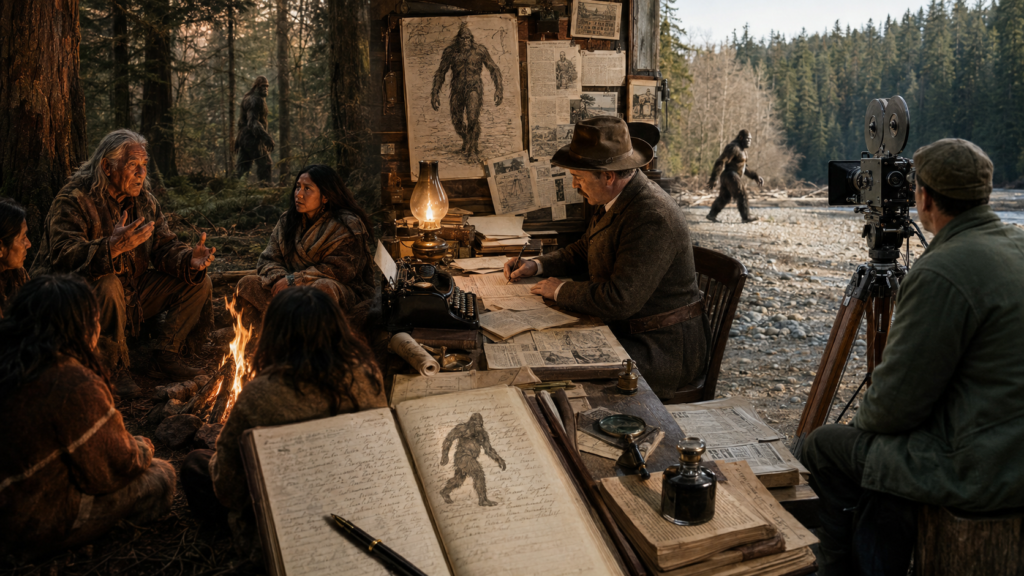
This is the one that goes straight at the easiest dismissal in the whole topic, that Hollywood built Bigfoot.
What Google says. The word Sasquatch itself was coined in 1929 by J.W. Burns, a government agent working on the Chehalis reserve in British Columbia, who spent years collecting Indigenous accounts decades before any camera caught anything on film. American newspapers were reporting sightings as early as the late 1800s. None of that required television, and none of it required the Patterson-Gimlin footage, which did not exist yet.
What I think. If the modern media created this image from nothing, the record should be empty before 1967. It is not. The word existed. The newspaper reports existed. The Indigenous accounts existed, collected by a named government employee, not a movie studio. Media did not invent Sasquatch. It picked up an image that was already standing there and gave it a wider stage.
Question Seven: Why Would Anyone Spend Decades Researching a Subject That Brings Ridicule Instead of Respect?
What Google says. A powerful personal experience can send someone searching for validation for the rest of their life. Unusual tracks and other disputed physical evidence can hook people with a genuinely scientific mindset. Proving an unknown humanlike population would be one of the biggest discoveries in modern history. And underneath all of that, the search itself offers something a mapped, digital world rarely offers anymore, real purpose and a real connection to wilderness.
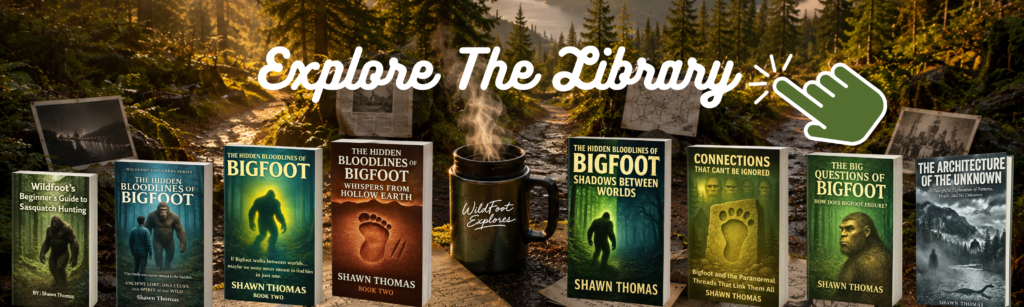
What I think. This one is personal. I have followed this subject since I was six years old. I am not chasing a creature through the woods. I am chasing a subject through history, oral tradition, eyewitness reports, physical evidence and human belief, and I have been doing it for most of my life. Nobody does that for decades because it is fashionable. This is the part of the work I care about most, and it lives in my books. If this subject has ever pulled at you the way it pulls at me, the Wildfoot Book Library is linked below.
Question Eight: If Sasquatch Exists, Why Is There No Accepted Physical Proof?
This might be the hardest question in the entire investigation, and I am not going to pretend otherwise.
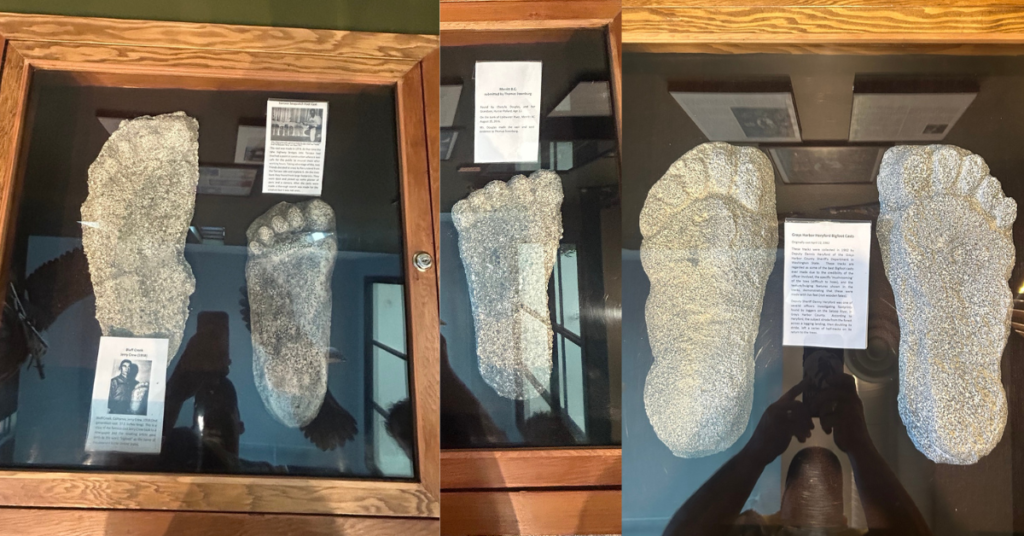
What Google says. Scavengers, insects and rodents consume and scatter remains quickly. Acidic forest soil damages bone, and true fossilization requires rare conditions most remains never get. Environmental DNA breaks down fast through moisture, sunlight and microbial activity, and samples that do survive can end up contaminated or simply matched to known animals. On top of all of that sits the population problem. A small breeding population would be nearly impossible to encounter. A larger one should have left bones behind by now.
What I think. This is where I land somewhere different, and I want to be precise about it instead of overselling it. The disputed Ketchum study reported something specific. The mitochondrial DNA came back unambiguously human. The nuclear DNA showed structure and sequence her team called novel and unexplained. Mainstream science never accepted her methods or her conclusions, and the criticism was fair, the paper skipped normal peer review and contamination was never fully ruled out.

Contamination or true anomaly? That question has never stopped bothering me.
Unknown does not automatically mean Sasquatch. But unknown does not mean nothing either. If results like that exist, the answer is independent retesting under strict conditions. New samples, documented chain of custody, multiple qualified labs, published methods other scientists can actually try to reproduce. Disputed evidence is not proof. It is a place to start looking harder, not a reason to stop looking at all.
Question Nine: Who Decides What Counts as Proof?

What Google says. The international scientific community sets the bar through peer reviewed journals, university researchers testing findings through criticism and replication, and taxonomic authorities that require verified evidence before recognizing anything as a new species. Google also explained why disputed evidence often gets dismissed instead of retested. A weak chain of custody makes contamination or planting impossible to rule out. Independent testing costs real money. The burden of proof sits entirely on the person making the claim, and some methods cannot even be reproduced by outside labs. Formal blind tests on alleged hair samples have repeatedly come back as known animals.
What I think. Those standards exist for good reasons. Without them, mistakes and hoaxes could slip into the scientific record disguised as discoveries, and that helps nobody, believers included. But I still have a question worth sitting with. If cost, reputation and assumptions about probability keep disputed evidence from ever getting a real second look, how does it ever get a final answer either way? Science should not lower its bar for Sasquatch. The evidence needs to rise and meet it. But samples collected under controlled conditions deserve controlled testing, not silence.
Question Ten: What Do These Questions Actually Prove?
This is the one that pulls all ten of the others together, so it deserves its own answer, not just a wrap-up.

What Google says. Across all nine searches, Google handed back psychology, migration, bears, pareidolia, environmental decay, contaminated DNA, cultural adaptation and the spread of modern media. Nine different questions, and nine different flavors of the same basic answer, that the pattern can be explained piece by piece, one ordinary cause at a time, without needing anything unknown to actually exist.
What I think. Google is not wrong about any single piece. Bears exist. Contamination happens. Media spreads an image faster than any campfire story ever could. But answering nine separate pieces one at a time is not the same as explaining the whole pattern sitting on top of them. Nobody, not Google, not the skeptics in my messages, not the scientific community, has ever put all nine pieces on the table at once and accounted for why they keep pointing the same direction across four thousand years, six continents and every kind of evidence we know how to collect. That gap between explaining the pieces and explaining the pattern is exactly where I live.
These ten questions do not hand us a body. They do not hand us a skeleton, a captured animal or a peer reviewed discovery. What they hand us is something else entirely.
They hand us a pattern that refuses to break.
From ancient writings to oral traditions, from medieval folklore to frontier newspapers, from modern eyewitnesses to disputed DNA, every piece of this puzzle keeps landing in the exact same place. The hoaxes exist. The mistaken sightings exist. The bears in bad light exist. But strip every one of those away, and something still remains underneath, something that has followed humanity through every age, every culture and every form of media we have ever invented to talk about it.
So here is my real question, and it is the only one that matters after everything above.
How is it possible for anyone to say something does not exist when this much exists about it?
Not belief alone. Not folklore alone. Not one culture’s imagination working overtime. All of it, together, forming one pattern that has never once gone quiet across the entire span of recorded history.
I did not build that pattern. I just followed it, one question at a time, the same way you can. Every piece of this puzzle belongs exactly where it is. And no matter where humanity goes from here, this will still be waiting beyond the tree line.
The search is on.
Which of these ten questions would you want Google to answer differently? Tell me the number in the comments. And if you have ever seen something you could not explain,

Wildfoot Disclosure and Invitation
As an Amazon Associate I earn from qualifying purchases.
Some links in the Wildfoot Book Library are Amazon affiliate links, which may earn me a small commission at no extra cost to you.
The library includes the books I’ve written and other resources tied to Bigfoot, survival, hidden truths, and the paranormal. Everything here is meant to support your curiosity and exploration.
I only share products and books I personally believe in or created myself. You’ll also find items connected to my other platforms, including Paranormal Curiosities Realm.
Thanks for supporting independent research and storytelling.
Shawn Thomas
Amazon Author & Creator
Founder of Wildfoot Explores and Wildfoot Explores Apparel shop