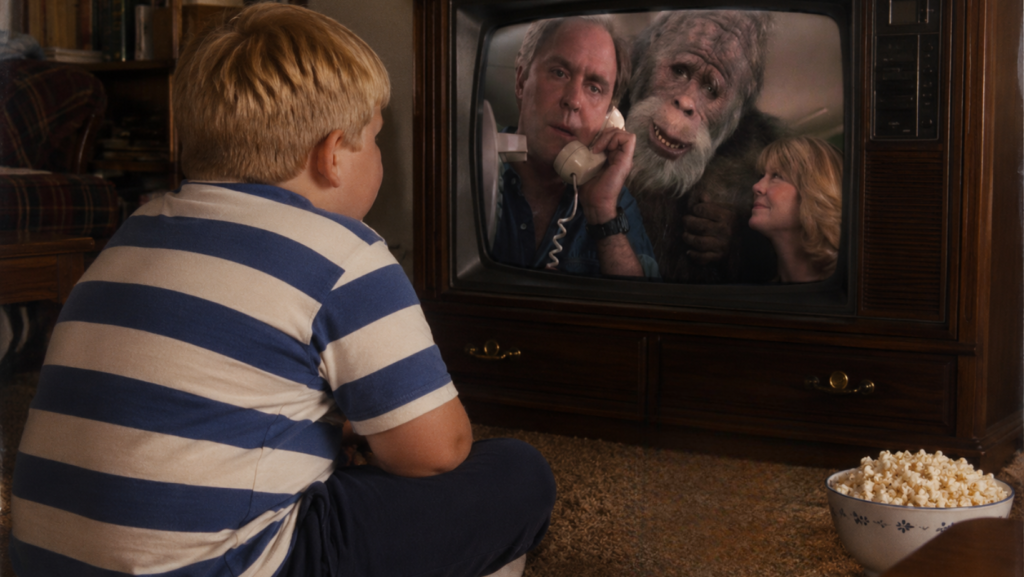
My journey began in 1987 when I was a six-year-old kid watching Harry and the Hendersons. To most people, it was just another Hollywood movie, a bit of fun for a weekend afternoon. But to me, sitting there staring at the screen, it planted a seed. It made me start looking at the dense Canadian woods differently. Every time we drove past the tree line, I found myself constantly asking what if. I spent my youth scouring school libraries, public libraries, and hunting down campfire stories, grabbing hold of anything I could find that whispered about what might be hiding out there in the dark.
Four decades of looking into the shadows changes a person. It takes you past the initial excitement of campfire stories and forces you into the grueling, quiet work of evaluation. When you look at a subject for that long, the noise begins to filter itself out. You stop looking at individual encounters as isolated events and start looking at the phenomenon as a massive, interconnected puzzle.
People ask me all the time why I spend my life chasing this. It is a fair question, and honestly, it is one I welcome. I am a truck driver from Alberta who spends long hours on the blacktop with nothing but the road ahead and my own thoughts. Over the years, that time behind the wheel led me to build Wildfoot Explores, write books, and dedicate nearly four decades to researching one of the biggest mysteries on Earth.
The longevity of this pursuit has taught me that the truth is rarely found in the sensational headlines. It is found in the quiet, repetitive details left behind by witnesses who had absolutely nothing to gain and everything to lose by speaking out. This is not a story that happened overnight. My perspective shifted one question, one book, one conversation, one mile, and one experience at a time. Over the years, I realized I wasn’t really looking for a hidden animal anymore. I was trying to understand a much deeper, heavier riddle. I wanted to understand why so many completely different groups of people, across thousands of years and separated by massive oceans, continued describing remarkably similar wilderness beings.
This blog is not an attempt to force anyone into belief. It is not a scientific paper, it is not a debate, and it isn’t written to definitively prove a point to skeptics who have already made up their minds. This is simply the story of how I arrived at my own hypothesis after thirty-nine years of research. I want you to feel like you’re riding in the passenger seat of the rig beside me while I explain exactly how my thinking evolved, showing you the pattern of evidence and letting you walk the same path I did.
The 55-Book Library

My research really exploded when I started diving into digital literature about two years ago. The nice thing about being online is that it allowed me to curate a massive library of over fifty-five books directly on Amazon. This setup is the lifeblood of my research while I am out working on the road. When I am driving in the truck, I can simply open up my library on Amazon, click on a book, and have my phone read it directly through the truck stereo system.
If a book is a couple of hours long, that is awesome. That is exactly why I love being a truck driver. The job gives me the ultimate opportunity to listen, learn, and absorb information. When I am not listening to my library books, I am burning through long-form podcasts and audio deep-dives behind the wheel. There is not much information out there that passes me by on the highway.
I did not just collect these fifty-five books to validate what I already believed. I study them to recognize the recurring patterns that connect them all. Every author brought something valuable to the table, and together they helped shape the perspective I have today. They showed the exact same physical and behavioral anomalies being recorded in the 1960s as were documented a century prior, long before modern pop culture created a standardized template. Watching those dots connect while the pavement hums under your tires changes how you look at the map.
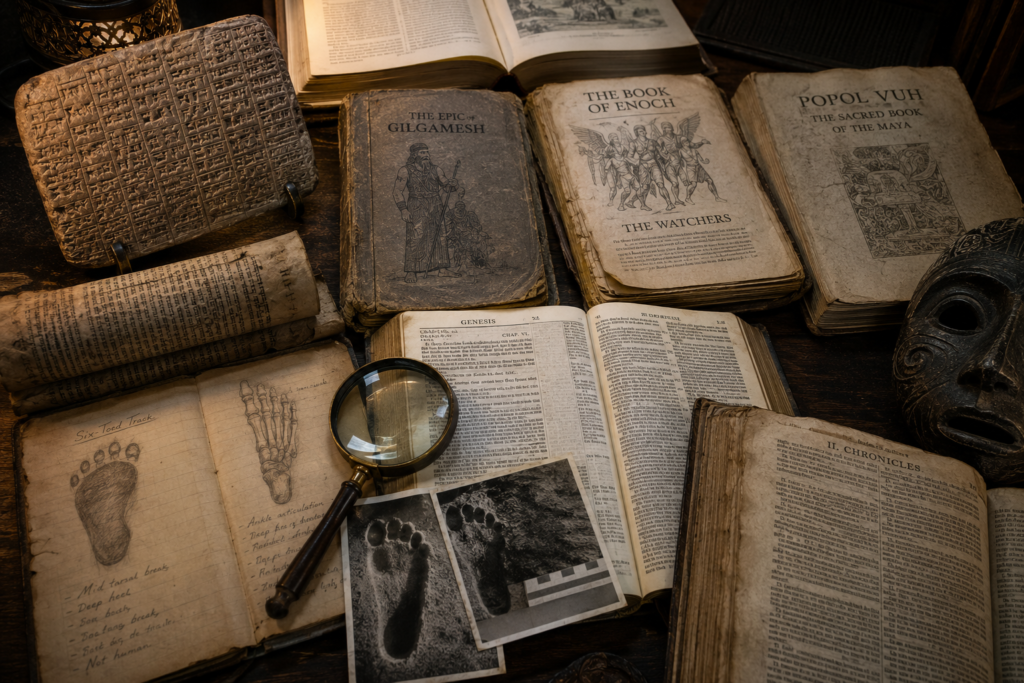
What Ancient Civilizations Recorded
The first place I wanted to look was some of humanity’s oldest written records. Most people out there just toss out the title of an ancient work or skim the surface of what they think it means, but they don’t really understand the text behind it. I wanted to see the raw text for myself to see how it matched up with what I was looking at on the modern side of the research.
I want to be completely transparent here: I don’t follow one single faith myself. But that doesn’t mean I read these books from a distance. When I open the Epic of Gilgamesh, I try to read it through the eyes of the people who carved it into clay and believed it with everything they had. When I open Genesis, I try to read it the way someone who has built their entire life around that book would read it. I do the same with the Popol Vuh, the same with the Book of Enoch. I don’t attach myself to just one of these belief systems as my own truth, but I believe in the conviction behind all of them. I believe in how much an entire civilization can believe something, and what that says about what they were actually seeing or experiencing. That, to me, is the real truth worth paying attention to.
So when I go digging through these texts, I’m not picking one and dismissing the rest. I’m stepping into each one, one culture at a time, trying to feel it the way that culture felt it. And every single time, I come out the other side with the same reaction: holy cow. Because these are completely different peoples, different languages, different corners of the earth, who never spoke to each other — yet each one, in their own words, through their own believers, kept describing the same three things. A hairy wild man who lives outside civilization. A giant of unusual size. A spirit-being that crosses between our world and somewhere else. That’s the pattern I actually care about. Go grab these books, flip to these exact sections, and see the blueprint for yourself:
The Shaggy Boundary Protector (The Epic of Gilgamesh Tablet I): In Tablet I of the ancient Mesopotamian cuneiform tablets, the script states that the mother goddess Aruru pinched off a piece of clay and dropped it into the wilderness to create Enkidu. The text describes him as a massive being whose whole body was shaggy with hair, living entirely among the beasts, eating grass with the gazelles, and drinking at the watering holes. The text goes on to show a local human trapper paralyzed with fear because Enkidu was actively filling in his pits, destroying his snares, and protecting the wild animals from human intrusion. When the trapper saw Enkidu face to face, he was frozen with fear, numb with terror, and his face was altered like one who had made a long, agonizing journey. Reading that through the eyes of the people who believed it, the raw, soul-shaking dread made me lean forward because it mirrors what modern witnesses report feeling during an encounter.
I’m not saying Gilgamesh and Sasquatch are the same thing. I’m saying an entire ancient civilization believed enough in this figure to carve his story into stone for four thousand years and that story described a massive, hairy wild man interfering with a trapper, destroying his traps, protecting the wilderness, and leaving the witness frozen with fear. Fast forward to today, and many hunters still report their traps being disturbed, strange interactions in the woods, and encounters with large upright hairy beings that leave them with that same overwhelming feeling of fear and awe. Is it proof? No. But it’s certainly a fascinating pattern.
The Broken Bloodlines (2 Samuel 21:15–22 & 1 Chronicles 20:4–8): Most people think the story of giants in the Bible ends when David defeats Goliath. But if you read it the way someone raised on this text would read it, a very different picture emerges. In 2 Samuel 21:15–22 and its parallel account in 1 Chronicles 20:4–8, the Bible documents several later battles fought by David’s warriors against the remaining descendants of the giants in Gath. One warrior is specifically described as having twenty-four fingers and toes, meaning six fingers on each hand and six toes on each foot. Rather than presenting Goliath as a one-time anomaly, these passages describe an ongoing conflict with a distinct lineage remembered throughout Israel’s history.
This was one of the biggest surprises in my research not because I hold this book as my own belief, but because of how seriously an entire faith tradition kept returning to this lineage across multiple books instead of letting it end with one famous fight. That made me stop and ask a simple question: why do so few people ever read beyond the famous story? I’m not suggesting this proves anything about modern encounters. I just found it fascinating how much conviction sits behind one of the world’s most influential books preserving multiple accounts of an unusual giant lineage, complete with remarkably specific detail. That alone made me want to keep digging.
The Original Hybrid Crossing (Genesis 6:4): This is a passage mainstream readers often gloss over, but it lays a foundation for a crossing of realms. The text records that there were giants in the earth in those days, and also after that, when the sons of God came in unto the daughters of men, and they bare children to them, creating the mighty men of old. Reading it the way a believer reads it, this isn’t describing a normal human or a simple ape; it’s describing a massive, powerful, conscious presence born from an intersection of realms, and it’s taken with total seriousness by millions of people to this day.
I’m not drawing conclusions from it. I’m noticing that an enormous number of people, across thousands of years, have believed deeply in a crossing between the spiritual and physical realms that resulted in extraordinary beings unlike ordinary humanity and that a lot of modern witnesses also describe encounters that seem to blur that exact same line. That’s a similarity I find difficult to ignore.
The Wild Man Paradigm (The Book of Enoch & Book of Giants): Pull back the curtain into the deeper Hebrew traditions, and the Book of Enoch in Chapters 6 through 7 tells us the children of these celestial crossings grew into a physically dominant, massive lineage that corrupted the natural balance of the earth. In the closely related Book of Giants found in the Dead Sea Scrolls, these ancient adversaries are described as powerful, untamed beings associated with the wilderness. This tradition holds that while their physical bodies could be destroyed, their spirits remained upon the earth.
This is where my curiosity really grew. Reading it through the eyes of the communities who held this tradition sacred, it’s fascinating that they describe physical beings whose presence continued beyond death the same as the Popol Vuh, the same as Gilgamesh. Many modern witnesses also describe encounters that feel different from seeing an ordinary animal. They often speak about an overwhelming intelligence, awareness, or presence that stays with them long after the experience ends. I’m not saying they’re describing the same thing. I’m pointing out how familiar those descriptions sound, coming out of a belief held with total sincerity by people who never met each other.

The Remnants of the Creation (The Popol Vuh – Chapter 2): Cross the ocean to the sacred creation texts of the K’iche’ Maya, Chapter 2 of the creation cycle, and you find a striking pattern from a completely isolated culture with zero contact with the Middle East. Read through the eyes of the K’iche’, the story goes that before modern humans were formed, the gods created earlier, trial lineages of beings out of wood and mud. These early creations were physically powerful but lacked the same type of human soul or consciousness; they were eventually broken, transformed, and scattered into the deepest, untouched jungles as remnants of an older world. To the people who believed this, the deep timber wasn’t just trees and dirt it was a literal, divided veil between our physical reality and the spirit realm.
Here’s what stood out to me. This tradition developed completely independently from the ancient Middle East, yet it still describes deep forests as places where another reality overlaps our own. Different cultures. Different languages. Different continents. Nobody copying anybody. Yet the same idea keeps appearing: the deepest wilderness is more than just a place of trees. That’s a pattern I simply can’t ignore not because I hold any one of these beliefs as my own, but because of how much conviction each separate culture put behind the same shape of story.
The Last of the Rephaim (Deuteronomy 3:11): Long before David’s battles with the giants of Gath, this same tradition records another figure named Og, king of Bashan. Deuteronomy 3:11 states that Og was the last of the Rephaim and even preserves the dimensions of his iron bed, measuring nine cubits long and four cubits wide. Whether those measurements refer to the bed itself or symbolize Og’s extraordinary stature has been debated for centuries. Regardless, it shows how seriously this tradition’s writers preserved a giant lineage across multiple books rather than limiting the subject to a single story like Goliath.
Before I started reading these texts through the believer’s eyes, I assumed Goliath was the beginning and the end of the giant narrative. Instead, I found the references spread throughout, each adding another piece to a bigger picture. I’m not saying these passages explain modern encounters. I’m pointing out that one of the world’s oldest surviving traditions repeatedly records extraordinary beings as part of its narrative, held with the same conviction as the Mesopotamian and Mayan traditions before it. That made me realize there was a lot more to study than I’d ever been taught.
When I step into each of these belief systems one at a time and look at all these traditions side by side, I don’t see proof of a biological animal. I see thousands of years of different people believing, with everything they had, in the same shape of story. So why were these ideas important enough to preserve for thousands of years?
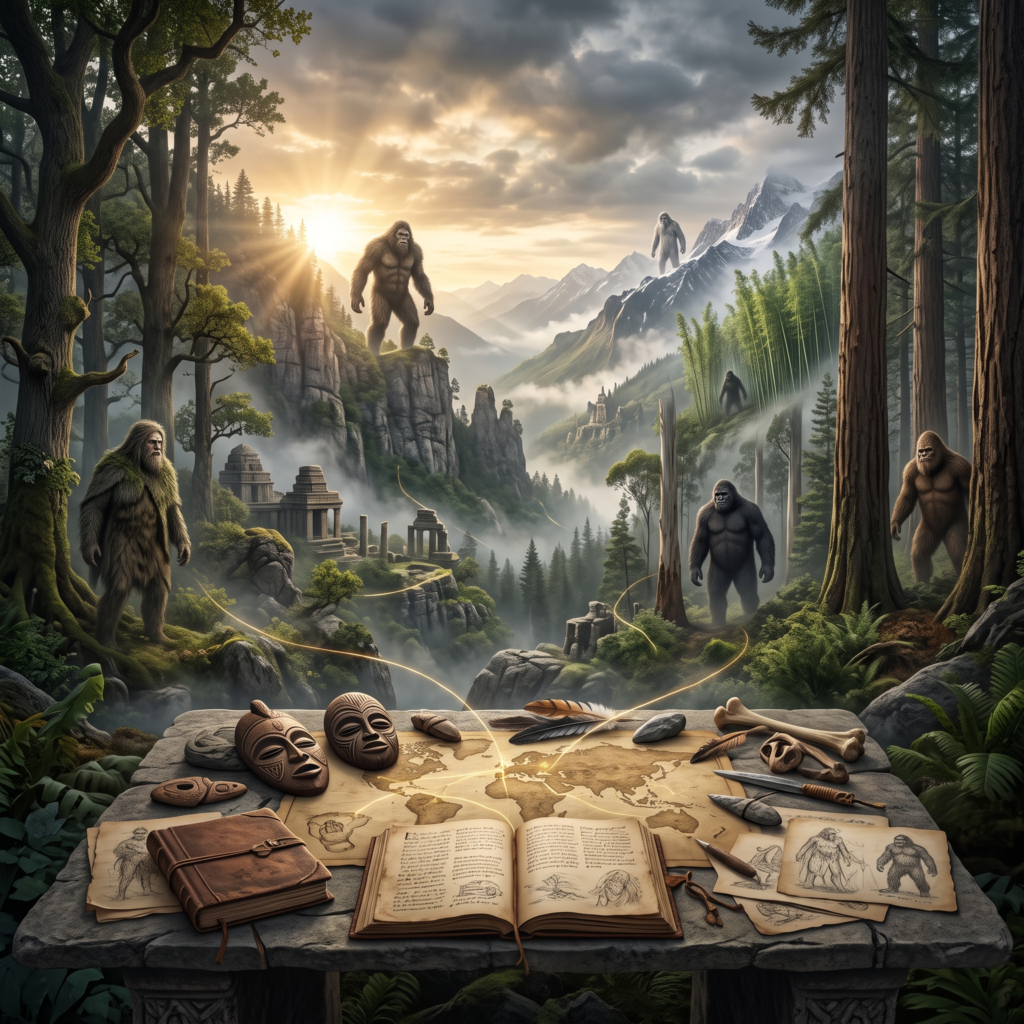
Folklore and Mythology
I’ve always loved folklore. To me, it’s people wanting to write down something incredible enough that it had to be preserved whether it was a warning to stay out of a certain stretch of woods, an explanation for something nobody could otherwise account for, or a way of showing another tribe or generation what kind of creature was actually out there. Universities like Harvard, Yale, and Oxford don’t spend decades studying folklore because fairy tales are entertaining. They study folklore because stories preserve culture, beliefs, fears, values, history, and sometimes memories that survive long after written records disappear. When you step back from monster-hunting and look at global anthropology, a jarring question slaps you in the face.
How does a civilization in Mesopotamia describe a wilderness guardian, while another civilization on the other side of the planet records something remarkably similar, without either one knowing the other exists? Why does nearly every continent on Earth have its own independent version of a wild wilderness being?
If you travel across the old world, you find the Woodwose or the European Wild Man, a hairy, club-wielding creature of the deep forests documented in medieval art and folklore. In the Basque country, they tell stories of the Basajaun, the massive, hair-covered lords of the woods who protected the flocks and possessed ancient knowledge of agriculture. In the rugged mountains of Russia and Mongolia, researchers have spent lifetimes collecting accounts of the Almasty or the Russian Snowman, described not as an animal, but as a primitive, reclusive human-like entity. Down in the dense jungles of Sumatra, locals live alongside stories of the Orang Pendek, a short, immensely strong, bipedal primate. In Australia, the Indigenous histories speak deeply of the Yowie, a towering, aggressive wild man of the bush, while China has its historical accounts of the Yeren in the remote mountain forests of Hubei.
These traditions weren’t built by people talking to each other over the internet. They were developed by completely isolated cultures who had no contact with one another, yet many described remarkably similar wilderness beings on their maps of the unknown. This was one of those moments where I stopped the audiobook and just sat there thinking for twenty minutes, staring out at the highway lines. I don’t believe in just one of these, I believe in all of them, the same way I believe in the conviction behind Gilgamesh, or Genesis, or the Popol Vuh. Each one is a different people, in a different language, staring into their own tree line and writing down what they were sure was worth remembering. While the details, sizes, and names vary between these traditions, the core image stays anchored. They all described an intelligent, hairy, bipedal presence that guarded the boundary between human civilization and the untamed wild.
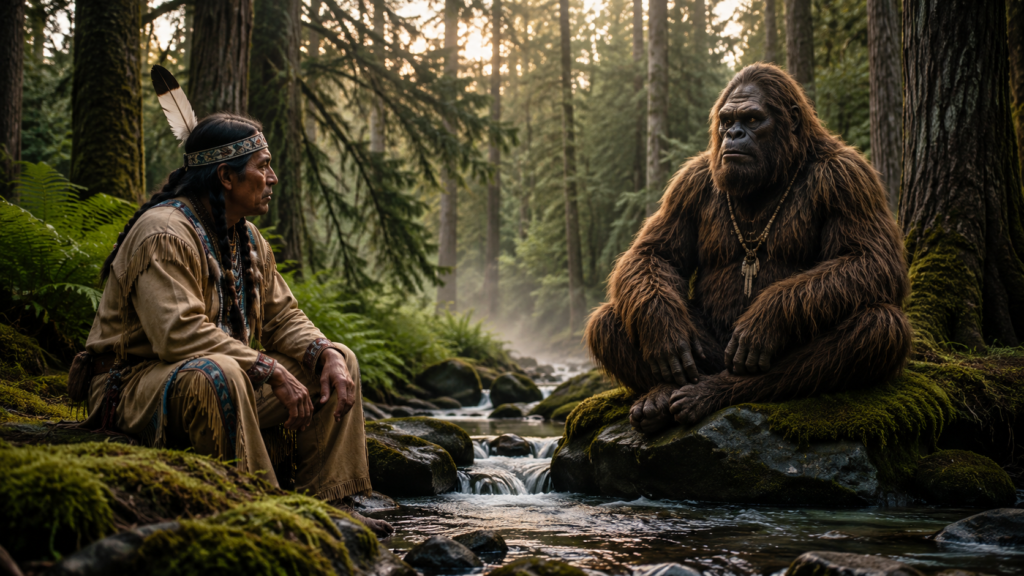
Indigenous Oral Traditions
The absolute biggest turning point of my entire journey came when I stopped looking at modern reports and focused on Indigenous oral traditions. This is where that same idea of stepping into someone else’s belief mattered more than anywhere else in my research except here I wasn’t reading a four-thousand-year-old tablet or a book translated a dozen times over. These are living traditions, held today, by real people, in real communities. Long before television, documentaries, or internet forums, many Indigenous Nations already held deeply rooted teachings, names, and histories regarding these beings. David Paulides’ The Hoopa Project and Tribal Bigfoot pushed my nose directly into the deep roots of Indigenous history. Sharon Eby’s anthropological insights in Bigfoot Beyond Belief further highlighted how these cultural beliefs function on a societal level.
I want to be completely respectful here: I am an outsider, and I never claim to speak for Indigenous communities or assume their knowledge belongs to me. What I can share is what I personally learned simply by listening, observing, and keeping my mouth shut.
What struck me was not just the fact that they talked about them, but the specific way they described them. They did not categorize them as simple animals, nor did they treat them as mere folklore. They were understood as another people, ancient caretakers deeply connected to the Earth, existing entirely beyond our rigid western categories of biology. This realization completely broke my old way of thinking. Instead of asking the standard biological question, “What animal is this?” I started asking, “What if we have been looking at this through the wrong lens entirely?”
Indigenous knowledge provided a worldview where the physical and spiritual realms are not completely separate entities; they overlap. This perspective opened my eyes to the idea that Sasquatch belongs to a reality where nature carries an inherent energy, and certain extraordinary experiences occur precisely where those physical and spiritual worlds intersect. Hearing descriptions of them as Big Brother, Forest People, Caretakers, or Guardians completely changed the lens through which I viewed the mystery. It shifted my focus away from proving a discovery and toward understanding a relationship.
What did these communities understand that modern society may have forgotten?

Harrison Hot Springs and the Turning Point
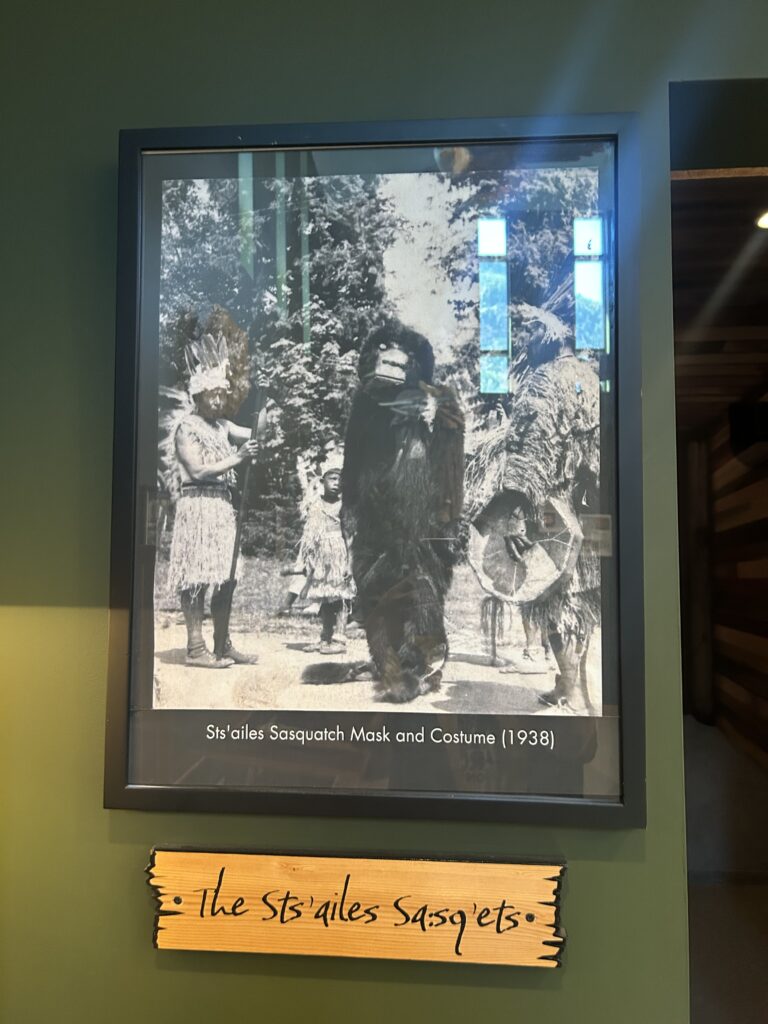
If there is one specific place that crystallized everything I believe, it is Harrison Hot Springs in British Columbia. Traveling there changed my entire perspective. I did not go there to find a footprint cast; I went to listen and look at the real information left behind by the roots of history. Walking the traditional territory of the Sts’ailes people, visiting the museum archives, walking the Spirit Trail, and absorbing an environment so deeply saturated in this history reframed my entire thirty-nine years of research. I learned about the deep historical roots of the word “Sasquatch,” derived from the Halq’eméylem word Sasq’ets, the specific dialect spoken by the Sts’ailes people.
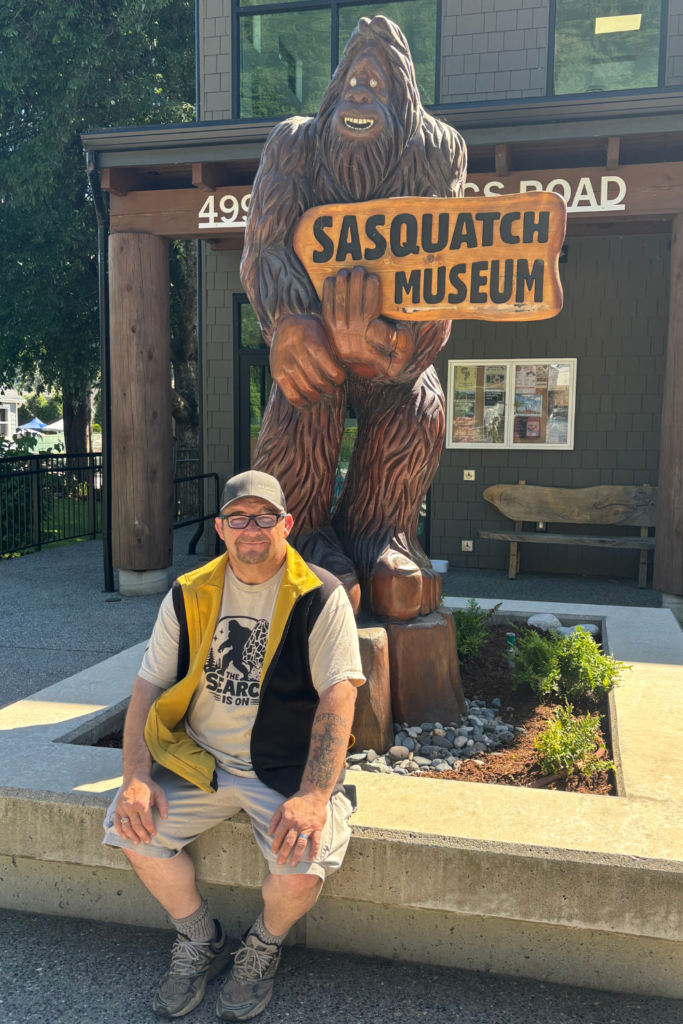
I want to be completely honest about my time out there: I never got a chance to talk to an elder when I was at the festival. There were a lot of people around the event, and I am the kind of guy who didn’t want to bother them or intrude on their space. Instead, I spent my time thoroughly exploring the woods, studying the museum archives, and absorbing the environment. Next year, I plan to line things up in advance with a couple of the community members so I can get to chat with them face to face and hear their stories directly.
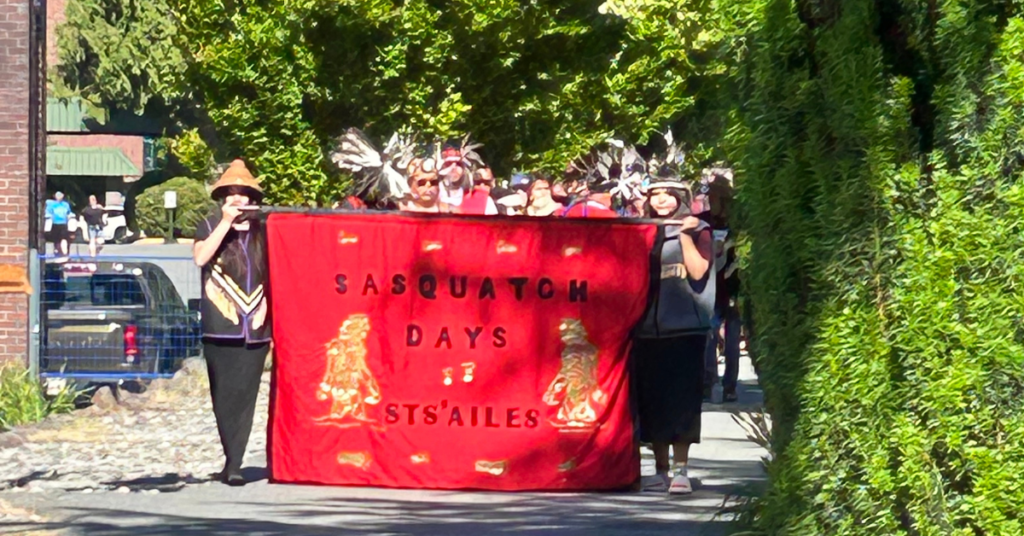
But even without that direct conversation, standing there during Sasquatch Days, hearing the traditional songs echo through the trees, and seeing the profound respect the community holds for this being hit me hard. Looking at the historical records of the 1938 mask, watching the Sts’ailes banner lead the gathering, and seeing the sacred artwork preserved in the museum cases allowed me to see that Sasq’ets is understood as a spiritual caretaker of the land rather than an undiscovered primate. The teachings on this continent view Sasquatch as an ancient spiritual people. The Miocene-era primate theories simply didn’t line up with the sheer scope of what was being preserved right in front of my eyes. The biggest lesson I learned wasn’t about footprints; it was about perspective. When I brought that lens back home to Alberta, every modern report, ancient text, and personal experience I had ever tracked suddenly fell into place. I stopped trying to force the phenomenon into a simple biological box. It was a massive, emotional turning point for me.
What did these communities understand that modern society may have forgotten?

Modern Researchers
Modern researchers approach the mystery very differently. They aren’t interpreting ancient stories or mapping folklore. They are measuring footprints, interviewing witnesses, analyzing behavior, and documenting physical evidence in the dirt. For decades, these investigators didn’t just chase campfire stories; they documented physical footprints, mapped migratory patterns, analyzed wood structures, and applied strict forensic guidelines to the data.
By studying their collective work, I learned to look at the mystery through a disciplined lens of pattern recognition, tracking how identical physical markers appear across different continents, cultures, and timelines. These biographies and data points heavily influenced the direction of my research, showing me the sheer weight of what people were finding in the field:
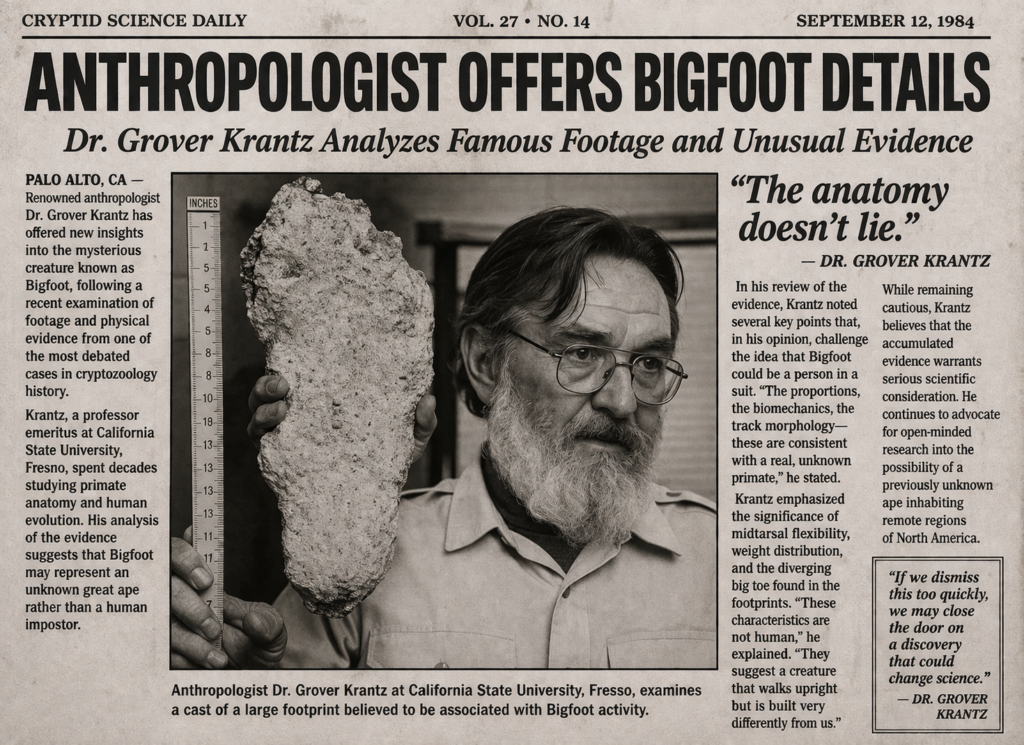
Dr. Grover Krantz: The first major mainstream anthropologist to risk his professional reputation to study the physical evidence. His rigorous book Bigfoot Sasquatch Evidence focused heavily on bone leverage, stride dynamics, and weight distribution, showing that the immense step-lengths and deep track depths recorded in the wild demand a massive, biologically functional bipedal entity.
David Thompson: A legendary 19th-century fur trader and geographer widely considered one of the greatest land mapmakers in history. In 1811, while tracking through the windswept Athabasca Pass in Alberta, he measured and recorded a massive, unidentifiable four-toed track with short claws that completely baffled his voyageurs. His meticulous journal logs serve as the earliest Western scientific documentation of Sasquatch tracks, showing that the physical consistency of this phenomenon predates modern pop culture by centuries.
J.W. Burns: A historical schoolteacher and Indian Agent at the Chehalis Reserve who was the first to bring the traditional accounts of the Sts’ailes people to mainstream attention in the 1920s. He anglicized the Halkomelem word Sasq’ets into “Sasquatch,” forever cementing the identity of this being as a real, historical entity deeply rooted in the geography of Western Canada. I actually found my way to Burns in a roundabout way, I’m an Irish descendant myself, and I was reading through lists of notable Irish-Canadian figures for something else entirely when his name turned up. That’s what got me digging into his work in the first place, and it turned into real respect for a guy who took the time to actually listen to what the Sts’ailes people were telling him instead of dismissing it outright.
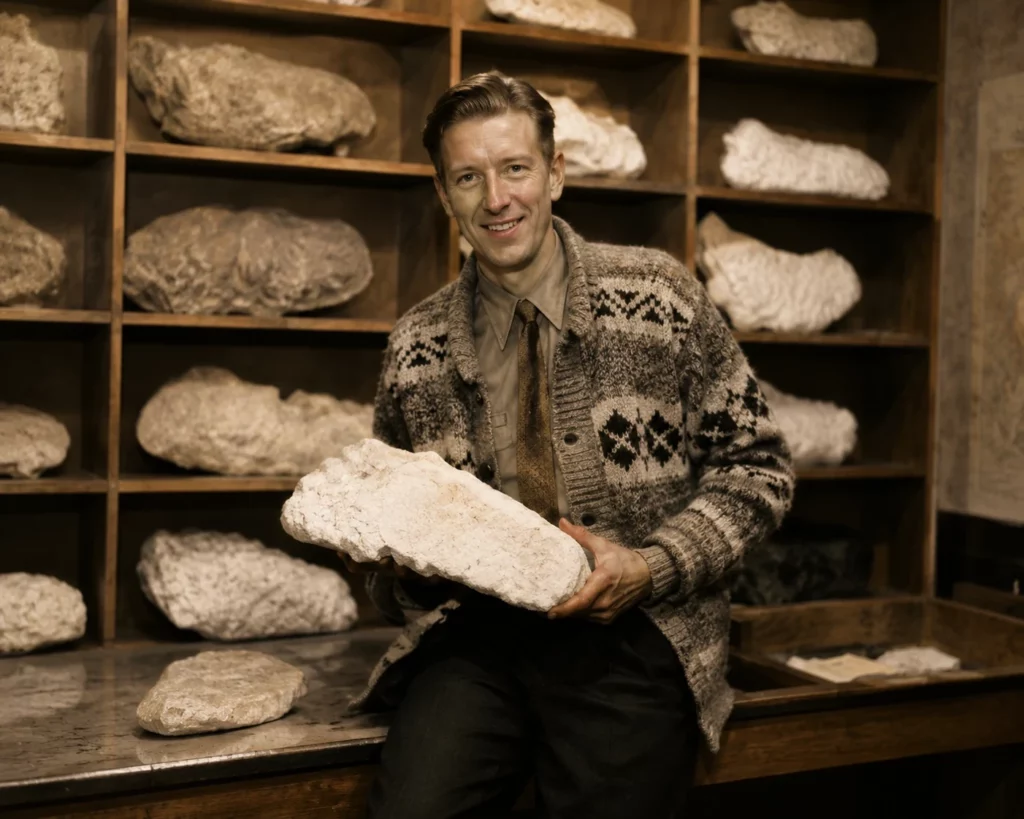
John Green: One of the ultimate founding fathers of modern research whose books The Best of Sasquatch Bigfoot and Sasquatch: The Apes Among Us built the largest data repository of eyewitness accounts in existence. He is an investigator I have always respected deeply. He demonstrated that when you map thousands of independent sightings over a century, the geographic trends and physical descriptions lock together perfectly.
Peter Byrne: A legendary figure who brought classic, disciplined field coordination and deep patience to the search. His work in The Hunt for Bigfoot showcased the importance of long-term, systematic wilderness surveillance, indicating that an organized, respectful approach is required when tracking an elusive presence in dense timber.
Dr. Jeff Meldrum: A professor of anatomy and anthropology whose landmark book Sasquatch: Legend Meets Science provided biological validation. His exhaustive analysis of footprint casts verified the presence of midtarsal breaks, dynamic toe splay, and complex heel-strike mechanics that point toward a living, flexible skeletal foot structure that is incredibly difficult to replicate with a static wooden fake or a heavy boot.
David Paulides: A former investigator who brought rigid forensic standards and analytical witness interviewing to the subject through The Hoopa Project and Tribal Bigfoot. By utilizing professional forensic artists to sketch witness descriptions blindly, he demonstrated that independent observers across remote areas are describing the exact same distinct facial structures and physical features.
Dr. Melba Ketchum: A veterinary scientist and lead researcher who headed a comprehensive, multi-year genetic evaluation of anomalous hair, tissue, and blood samples. Her team’s conclusion was that the maternal lines mapped to modern humans, while the nuclear DNA showed something they couldn’t classify against any known primate. I’ll be straight with you: mainstream science never accepted her study, and if you go looking, you’ll find plenty of geneticists who tore the methodology apart. I know that. I’m not going to pretend otherwise or hide it from you.
Here’s my honest take anyway: this is a woman with a legitimate, respected career in veterinary genetics before any of this. She didn’t build her name on Bigfoot. So when she puts everything on the line studying this one subject and immediately gets written off by the exact same institutions that respected her work in every other area of her career, I find that suspicious in its own right. Maybe I’m wrong. Maybe the mainstream critique is correct and I’m giving her too much benefit of the doubt. That’s fair, and you’re allowed to land there. But I’ve read enough of this field to know that the loudest rejection doesn’t always mean the worst science sometimes it just means the most inconvenient conclusion. I believe her. That’s my opinion, not a fact I’m handing you, and you can go read the criticism yourself and make your own call.
Les Stroud: Known globally as “Survivorman,” he spent decades filming alone in the world’s most extreme environments, maintaining a strict, hard-nosed skepticism about the phenomenon. However, his own unexplainable encounters while filming in the remote bush forced an organic shift in his worldview. His Survivorman Bigfoot series brought elite wilderness survival logic to the field, transitioning him from a baseline skeptic into an open-minded researcher documenting the limits of traditional wilderness science.
Cliff Barackman: A dedicated field researcher and evidence analyst who brought meticulous track morphology and acoustic evaluation to the forefront. As the curator of one of the largest public collections of cast evidence in the world at the North American Bigfoot Center, his calm, scientific documentation of footprint and handprint dynamics bridged the gap between television pop culture and credible field study.
Ron Morehead: In 1971, Morehead and a friend were camped in the Sierra Nevada mountains when they began capturing hours of strange vocalizations echoing through the dark, howls, wood knocks, and what sounded disturbingly like back-and-forth conversation. Those recordings became known as the Sierra Sounds, and decades later a retired U.S. Navy cryptolinguist who stumbled onto them for a school project concluded the vocal patterns weren’t human and weren’t faked. Morehead has spent over fifty years standing behind that tape, and whatever you make of it, it remains one of the only pieces of audio evidence in this entire field that a trained specialist looked at and couldn’t explain away.
Matt Moneymaker: The founder of the Bigfoot Field Researchers Organization (BFRO) who built the first major structured network for citizen scientists to submit, track, and verify sighting reports globally. His work in establishing regional expeditions and standardized database tiers created a global platform that allowed patterns of behavior, vocalizations, and wood knocks to be cross-referenced instantly.
W.T. Watson: A dedicated Canadian researcher who brought localized, rugged field competence to the tracking community. Through books like Sasquatch Canada, he documented that the phenomenon is intimately tied to the deep, untouched wilderness corridors stretching all the way across the northern provinces.
Sharon Eby: A close personal friend of mine who possesses incredible knowledge and has written some truly fantastic books, including Mapping Bigfoot and Bigfoot Beyond Belief. As a brilliant spatial analyst, her work organized thousands of scattered track locations and environmental details into clear coordinate maps, demonstrating that sightings directly correlate with specific terrains, river systems, and isolated micro-environments.
Thomas Steenburg: A veteran investigator of the Canadian wilderness whose field research across Western Canada provided unmatched regional consistency. His dedication to evaluating track reports right here in Alberta has kept the modern research community grounded in raw data and direct landscape forensics.
Dennis Muñoz: A historical researcher whose work Sasquatch: Ancient Warrior looked past standard zoological timelines to trace the footprints of this being back into ancient warfare and older human conflicts, showing that modern high-strangeness reports line up cleanly with ancient military logs and historic native combat records.
Every single one of these names gave me something to chew on while I was out on the highway. I am laying out what influenced my own journey, not claiming that every conclusion they reached is universally accepted by modern academy doors. But when you look at the forensic depth the footprint mechanics, the bone leverage, the wood structures, the DNA anomalies this material made me stop and think.
Whether they realize it or not, many of these researchers keep running into the same wall. The physical evidence often points in one direction, while the actual encounter reports point somewhere much stranger. It is a genetic crossroad where the physical sample says one thing, but the molecular makeup says something else entirely. They inadvertently demonstrated that the physical entity leaves a track that science can verify, but a genetic signature that completely shatters the boundaries of standard mainstream biology.
Why does the physical evidence answer some questions while creating entirely new ones?
Modern Encounters
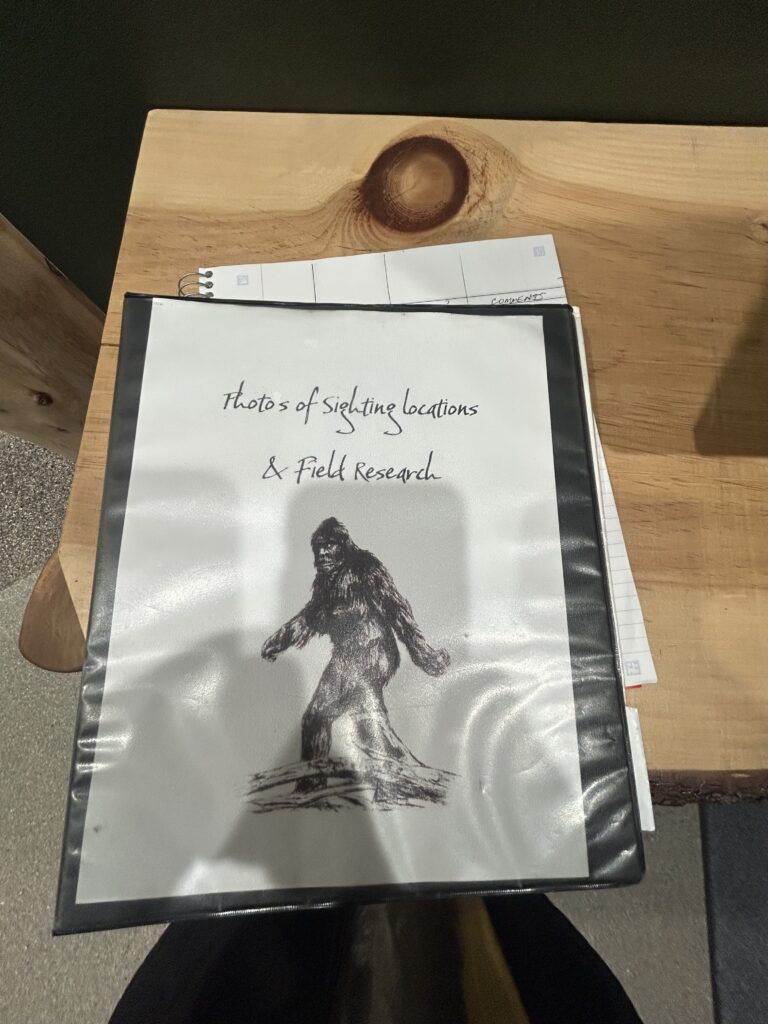

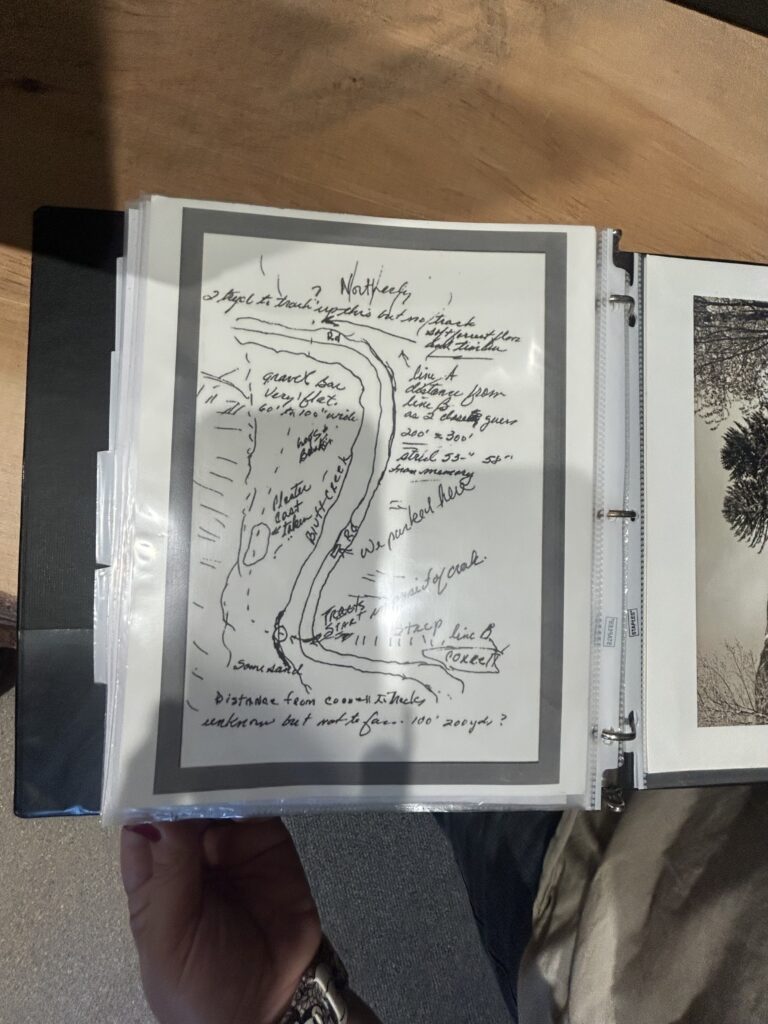
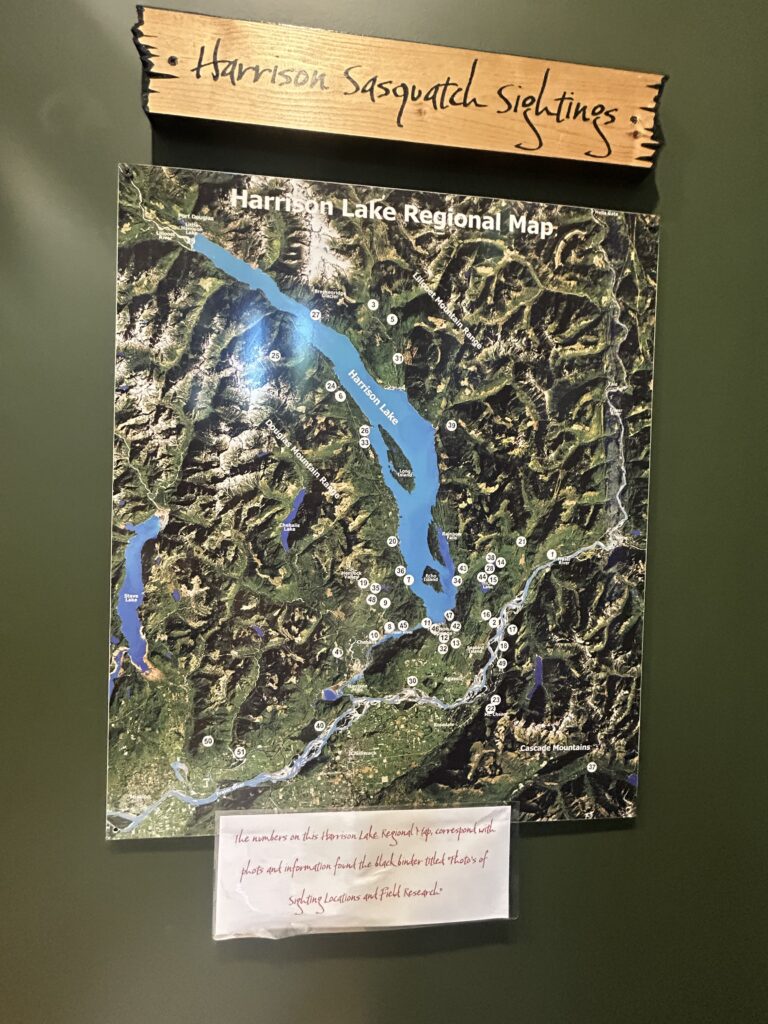
Images are from my visit to Harrison Hot Springs Sasquatch Museum
This is where your understanding of the wilderness has to face the raw experiences of thousands of ordinary people. When you look at modern reports, you realize these witnesses aren’t crazy, and they aren’t looking for attention. They are mechanics, hunters, police officers, and truckers who saw something that completely tore up their understanding of reality.
Why are so many ordinary people, who have never met each other and have completely different backgrounds, describing experiences that overlap in remarkable ways? They report the exact same physical markers, like heavy bipedal strides and massive shoulder widths, but they also report details that mainstream science refuses to touch. They talk about the “Oz Effect” that sudden, terrifying atmospheric silence where the insects stop chirping and the birds go completely dead quiet. They report heavy wood-knocks echoing through the timber, deep vocalizations that vibrate straight through a human chest cavity, and intense electromagnetic anomalies that cause cameras and flashlights to die instantly.
More than that, they report footprints that march cleanly through the mud or snow and then simply stop in the middle of an open field, as if the being blinked right off the map. Some witnesses describe encounters that feel entirely flesh-and-blood, while others describe strange light orbs, sudden missing time, or a heavy, telepathic pressure that floods their minds with a warning to leave the area immediately. If this were just an unclassified wild ape, these anomalous details would not exist, let alone repeat themselves across different continents, cultures, and centuries. Discarding half of the data just because it doesn’t fit into a neat, comfortable zoological box isn’t good science. It’s bad research.
What happens when thousands of ordinary people begin describing the same extraordinary experience?
The Convergence of Patterns
This is where everything changed for me. This is the stretch of road where all the scattered thoughts finally started tracking together. Look at the totality of the path we just walked. Look at the data points lining up on the dashboard.
- Ancient writers.
- Storytellers.
- Indigenous knowledge keepers.
- Scientists.
- Hunters.
- Police officers.
- Truck drivers.
- Ordinary families.
- Thousands of years.
- Every continent.
- Different languages.
- Different beliefs.
- Different cultures.
- Different purposes.
Yet somehow, they keep pointing toward the exact same mystery. Each lens approaches this from a completely different direction, with a completely different motive, yet the core shape of the shadow stays the same.
Maybe they’re all wrong.
Perhaps some of it is just ancient metaphor designed to teach a moral lesson.
Maybe some of it is misunderstood wildlife, a bear glimpsed through the heavy timber in the low light of dusk.
Maybe some of it is just exaggerated campfire talk that grew taller with every telling.
But when five completely different ways of looking at the human experience keep pointing me toward the same recurring pattern, I pay attention. Pattern recognition beats hype every single time. And when you look at how these independent lines of evidence converge, it forces you to realize that we’ve been asking the wrong question from the very beginning. I began wondering if we shouldn’t be asking, “What animal is Sasquatch?” I started asking, “What kind of intelligence has humanity been trying to describe for thousands of years?”
The Pattern Convergence Hypothesis
This is how I arrived squarely at my personal hypothesis. This is the framework that makes the most sense to me after thirty-nine years, and I want to present it clearly as my own perspective, not an established scientific fact. I believe Sasquatch cannot be understood by choosing between two opposing extremes. It is not merely an unclassified physical primate, nor is it a completely ethereal phantom. I believe it is a dual-natured entity. What if we are dealing with an ancient lineage, a primordial energy tied directly to the fundamental elemental forces of this planet: Land, Water, and Air?
I shut the audiobook off and just sat there thinking about this for hours while the truck swallowed miles of dark asphalt. The true, untouched wilderness and our deep water systems act as a divided veil between our physical world and another realm entirely. In certain isolated areas and geographic hotspots, that veil becomes thin. What if there is a completely different reality that actively intersects with our physical realm? When you cross that threshold, you step directly into the presence of this entity.
This hypothesis addresses the total sum of the phenomenon without throwing half the evidence in the trash. I believe we are looking at a higher, powerful spiritual presence that can manifest itself into our physical reality as a heavy, physical form, and then completely leave in the blink of an eye. It acts like a caretaker that protects the Earth. Because it plays with our perception, it shows us exactly what we need to see during an encounter. If it wants to present itself as an ancient, human-like linear person, it will. If it needs to project itself as a massive, towering primate to frighten a human away from its territory, it does.
This framework made me stop and think about why researchers hit a brick wall where hair samples return human mitochondrial DNA but completely unidentifiable nuclear DNA. It provides a way to look at why people vanish without a trace in deep national parks, leaving their gear behind as if they were blinked right off the earth. To me, it points toward an ancient, hybrid, spiritual entity guarding the threshold between worlds, standing as a living warning to modern human arrogance and challenging us to remember the ancient forces that truly govern this Earth.

Questions I Still Can’t Answer
Admitting what you do not know is the first requirement of honest research. Even with this convergence of patterns as a framework, massive questions remain unanswered. Good researchers admit what they do not know, and I am completely comfortable sitting with that uncertainty.
I cannot tell you exactly how their transition between physical states occurs, or what specific mechanism allows them to evade modern thermal imaging and trail cameras so effectively. I do not know their true origin, or why they choose to maintain such a strict boundary between their world and ours. Embracing this hypothesis does not mean having all the answers. It means being willing to sit with the discomfort of the unknown rather than forcing a simple, incorrect answer onto a complex mystery.
People Also Ask
Why do people believe in Sasquatch?
Belief is typically driven by the overwhelming volume of consistent eyewitness testimony, physical track evidence displaying distinct biological features like the midtarsal break, and historical documentation spanning thousands of years across multiple global cultures.
What is the core hypothesis of this research?
The hypothesis suggests that Sasquatch is a dual-natured entity possessing both a physical, biological body and non-physical, interdimensional or spiritual capabilities that allow it to manipulate its surroundings and evade traditional scientific capture.
What do Indigenous traditions say about Sasquatch?
Most Indigenous oral histories view the being as a real, intelligent neighbor within the ecosystem. These traditions explicitly acknowledge both its physical presence and its spiritual attributes, often treating it with deep cultural respect rather than viewing it as a simple animal.
What is the midtarsal break, and why is it important?
The midtarsal break is a physical upward flexing point in the middle of the foot, found in certain primates but absent in modern adult humans. Its presence in high-quality track casts indicates a complex, functional internal foot anatomy that is incredibly difficult, if not impossible, to fake convincingly in the wild.
Why are ancient texts mentioned in Sasquatch research?
Ancient texts from Sumerian, historical, and theological sources frequently describe hair-covered giants and hybrid beings with attributes that mirror modern Sasquatch reports, indicating that humanity has been interacting with this specific phenomenon since the dawn of recorded history.
Can Sasquatch be both physical and spiritual?
According to many traditional perspectives and modern high-strangeness reports, yes. The entity appears capable of interacting fully with the physical environment while retaining attributes that cross into the realm of interdimensional movement and environmental anomalies.
What books should I read if I’m new to Sasquatch research?
A strong foundation begins with analytical texts focused on footprint morphology, regional historical archives containing early newspaper accounts from the 1800s, and comprehensive collections of First Nations oral histories.
Recommended Reading from Wildfoot Explores
If you want to dig into the exact books from my personal library that shaped this journey, challenged my thinking, and helped me map this pattern convergence, you can find them available on Amazon:
- Sasquatch: Legend Meets Science – Jeff Meldrum
- The Hoopa Project: Bigfoot Encounters – David Paulides
- Tribal Bigfoot – David Paulides
- The Paranormal Ranger – Stanley Milford Jr.
- The Locals: A Closer Look at Bigfoot and Bigfoot Believers – Thom Powell
- Raincoast Sasquatch – J. Robert Alley
- Book of Elders: My Life with the Bigfoot People – Michael Bodewitz
- The Sasquatch People and their Interdimensional Connection – Kewaunee Lapseritis
- Sasquatch: The Apes Among Us – John Green
Final Thoughts
Nearly forty years ago, a movie made a six-year-old boy wonder what might be hiding beyond the tree line. That curiosity turned into a lifetime of reading, traveling, listening, and asking questions behind the wheel of a truck. I do not expect everyone to agree with the conclusions I have reached. I simply ask people to look at the same patterns I did.
Ancient texts. Folklore. Indigenous oral traditions. Modern researchers. Living witnesses.
When I step back and look at all of it together, I can no longer explain Sasquatch as simply an undiscovered ape. The patterns led me somewhere else. Maybe one day science will explain every footprint, every encounter, and every story. Maybe it won’t. Until then, I’ll keep reading, listening, traveling, and asking questions. Because after thirty-nine years, I’ve learned that the journey became much bigger than simply searching for an animal. It became a search to understand why humanity keeps describing this mystery.
I cannot prove this to you in a laboratory, and I am not trying to. Wildfoot Explores was never built to win arguments, trade insults on forums, or force compliance. It was built to create a community where people can share their experiences without the fear of ridicule, grounded in honesty and respect. My books are my legacy, written so my children, grandchildren, and anyone who feels the pull of the wild can see the honest path I took to get here.
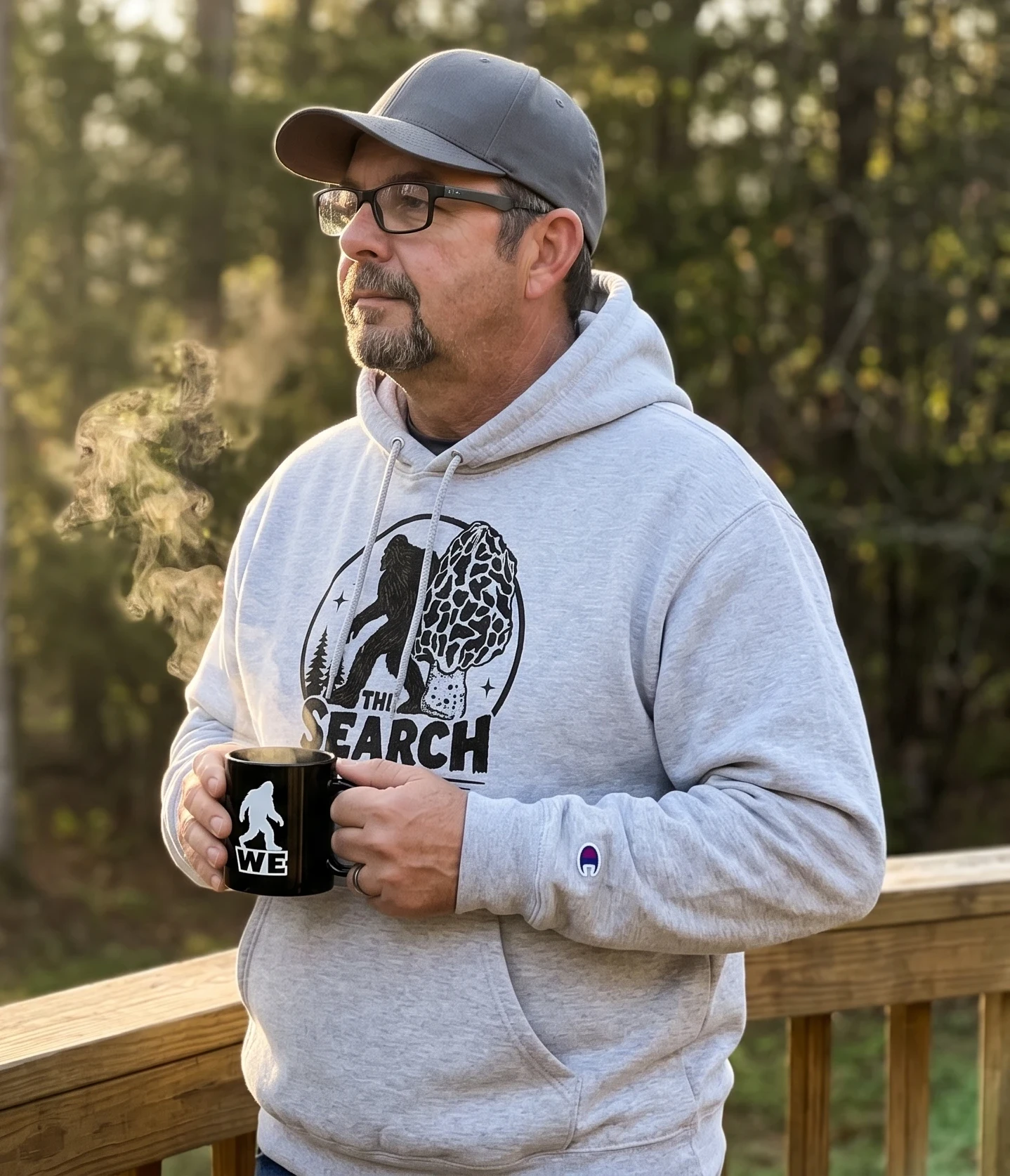
When my late cousin and best friend, Nathan, gave me his hand-carved piece, it gave me a definitive purpose. “The Search Is On” became the line I live by. It is a search for understanding, not validation. The patterns are real, the history is deep, and the journey is far from over.
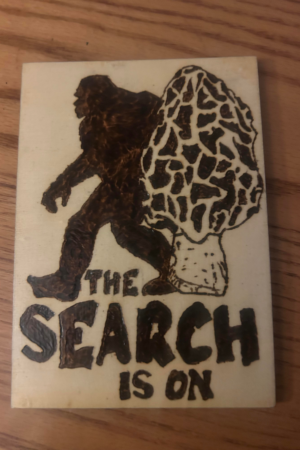
The Search Is On.
I would genuinely love to hear what you think. Whether you agree with me, disagree with me, or have had experiences of your own, leave a comment below. Some of the best conversations on Wildfoot Explores begin in the comments, and your perspective might help someone else see the mystery from a completely different angle.
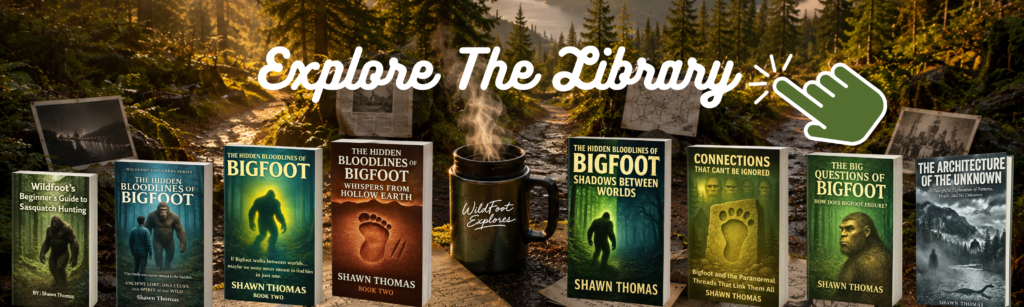
If you want to dig into the exact books from my personal library that shaped this journey, challenged my thinking, and helped me build the Hybrid Theory, you can find them at the banner below
Wildfoot Disclosure and Invitation
As an Amazon Associate I earn from qualifying purchases.
Some links in the Wildfoot Book Library are Amazon affiliate links, which may earn me a small commission at no extra cost to you.
The library includes the books I’ve written and other resources tied to Bigfoot, survival, hidden truths, and the paranormal. Everything here is meant to support your curiosity and exploration.
I only share products and books I personally believe in or created myself. You’ll also find items connected to my other platforms, including Paranormal Curiosities Realm.
Thanks for supporting independent research and storytelling.
Shawn Thomas
Amazon Author & Creator
Founder of Wildfoot Explores and Wildfoot Explores Apparel shop