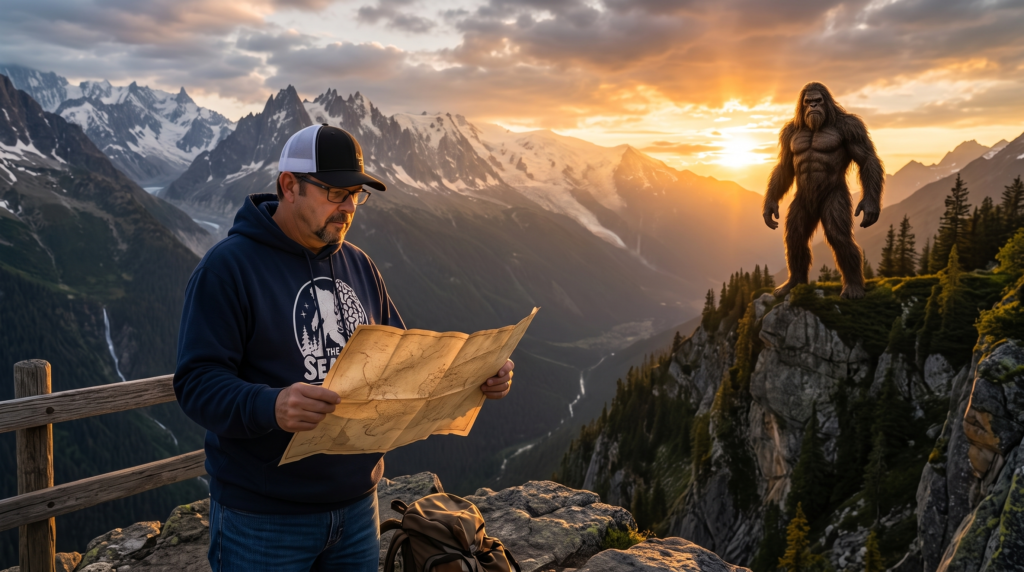
Every once in a while, I come across something that completely changes the way I look at this mystery. It isn’t always a footprint, a blurry photograph, or another eyewitness report. Sometimes it’s a simple question that refuses to leave my mind.
Over the last little while, I’ve been digging into the mountain ranges stretching from Alberta through British Columbia. The more I researched, the more I realized I might have been asking the wrong questions all along.
For years we’ve looked for Sasquatch the same way. We study footprints. We analyze photos. We search for DNA. We compare eyewitness reports and map out every encounter we can find. There’s absolutely nothing wrong with that because every piece of information helps. But what if we’ve forgotten to look at the people who knew these mountains thousands of years before any of us arrived?
That question stopped me in my tracks.
What did the people who lived in these valleys, crossed these mountain passes, hunted these forests, and raised their families here already know about the land?
The more I read, the more one pattern kept appearing. Nation after Nation told stories about certain mountains, certain valleys, certain lakes, and certain places that deserved respect. The names were different. The languages were different. The stories weren’t identical. Yet somehow the message remained surprisingly similar.
The high country wasn’t viewed as empty wilderness.
It was shared.
That doesn’t prove Sasquatch exists. It doesn’t prove every story describes the same thing. But it certainly made me stop and think.
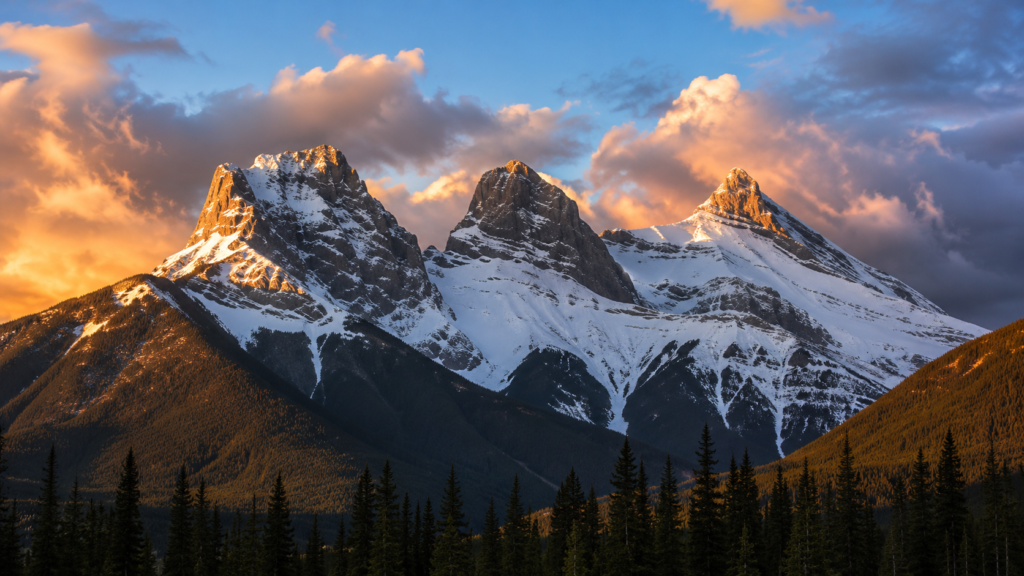
Take the Bow Valley around Canmore and Banff. Most of us drive through there looking at incredible scenery. We stop to photograph the Three Sisters. We hike the trails. We admire the views and then head home. Yet for the Îyârhe Nakoda, these mountains have long carried a much deeper meaning. Many peaks were treated as places of great respect. Certain areas weren’t simply climbed because they looked interesting. They were approached carefully, often with ceremony and prayer, because they were understood to be spiritually significant.
Whether you believe those teachings from a spiritual perspective or simply appreciate them as part of Indigenous history, there’s something fascinating about comparing those ancient traditions with modern encounter reports. Some of the same mountain corridors that have been respected for generations continue to produce reports of large upright figures, strange vocalizations, unexplained experiences, and an overwhelming feeling that you’re no longer alone.
Coincidence?
Maybe.
But it certainly makes you wonder.
One story that really caught my attention involved what many people today know as Tunnel Mountain in Banff. Most visitors have no idea the mountain was almost blasted apart for a railway tunnel that was never built. Long before surveyors arrived, however, the mountain already held deep cultural importance to the Blackfoot and the Nakoda people, who viewed it as Sacred Buffalo Guardian Mountain. It wasn’t simply another hill on the landscape. It represented something much greater.
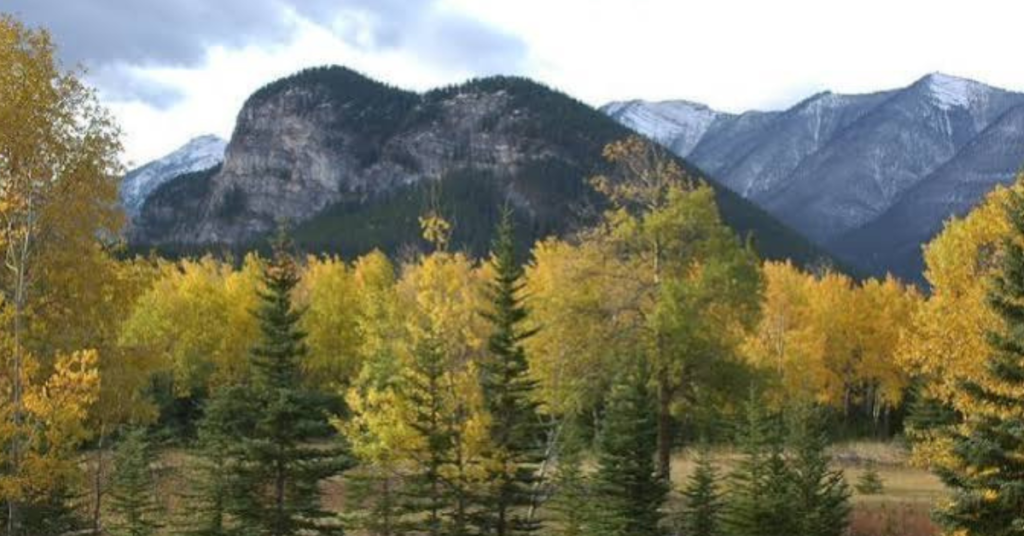
It made me wonder how many places across North America have had their original stories replaced by modern names and forgotten history. How many times have we walked across sacred ground without ever realizing it?
As I kept following this mountain corridor north toward Jasper, another incredible historical account surfaced. In 1811, explorer David Thompson recorded discovering a series of enormous footprints in the snow near Athabasca Pass. His Indigenous guides looked at those tracks and refused to follow them. These were experienced woodsmen who knew every animal that lived in those mountains, yet whatever they believed made those prints wasn’t something they wanted to pursue.
Again, does that prove Sasquatch?
No.
But it certainly raises another interesting question. What frightened experienced mountain hunters enough that they chose to walk away?
The farther west I followed the Rockies, the more the pattern seemed to continue. Mount Robson wasn’t simply another peak towering over British Columbia. Within Secwépemc tradition it carries tremendous cultural and spiritual importance. Stories describe it as a place deserving humility and respect. Even today, experienced mountaineers often describe the area as having an incredible presence that is difficult to explain. Whether that’s simply the overwhelming power of nature or something deeper is up to each individual to decide, but I find it fascinating that these feelings continue to be reported in places that have carried similar stories for generations.
Then my thoughts drifted back to Harrison Hot Springs.
That trip honestly changed something for me.
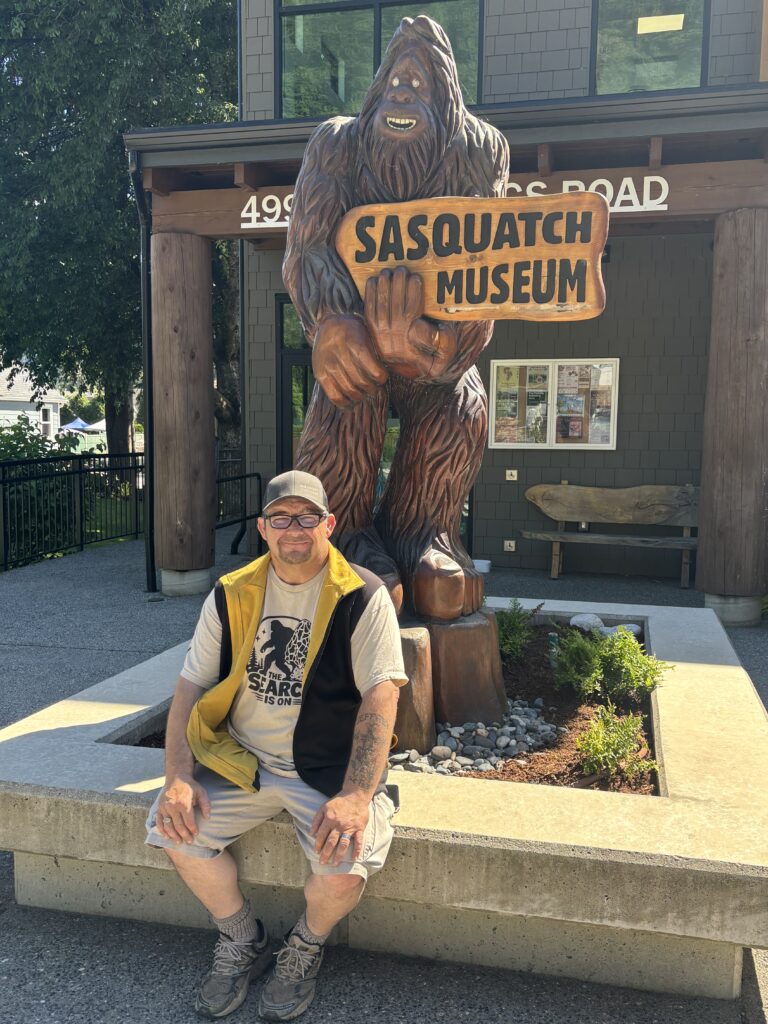
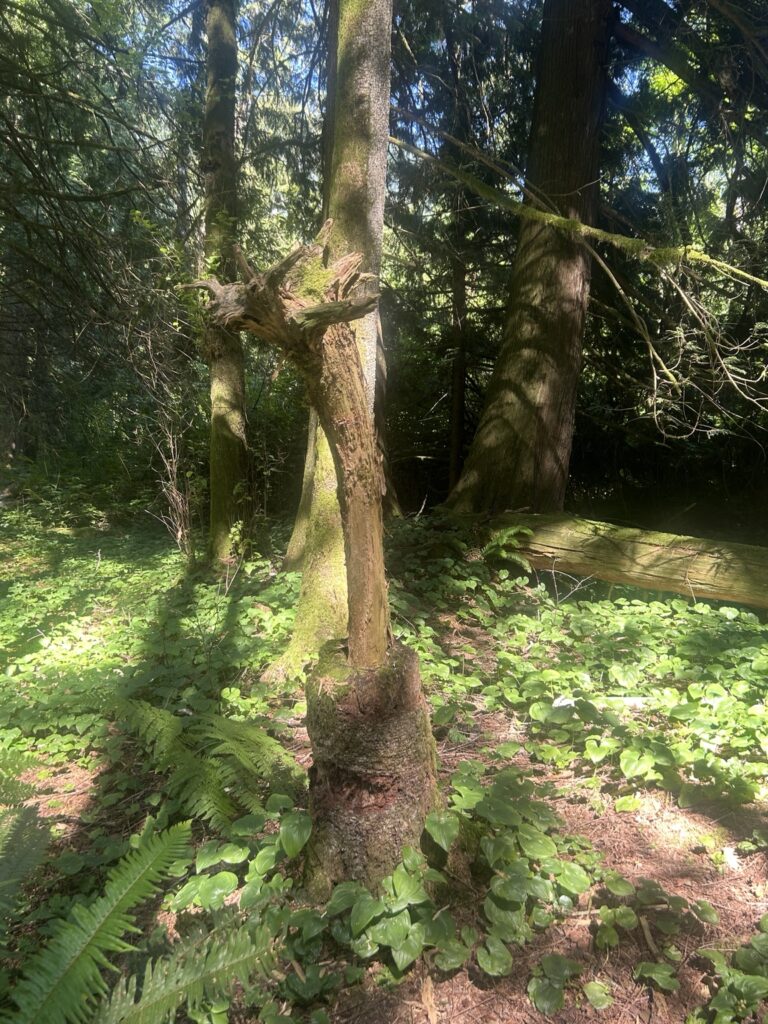


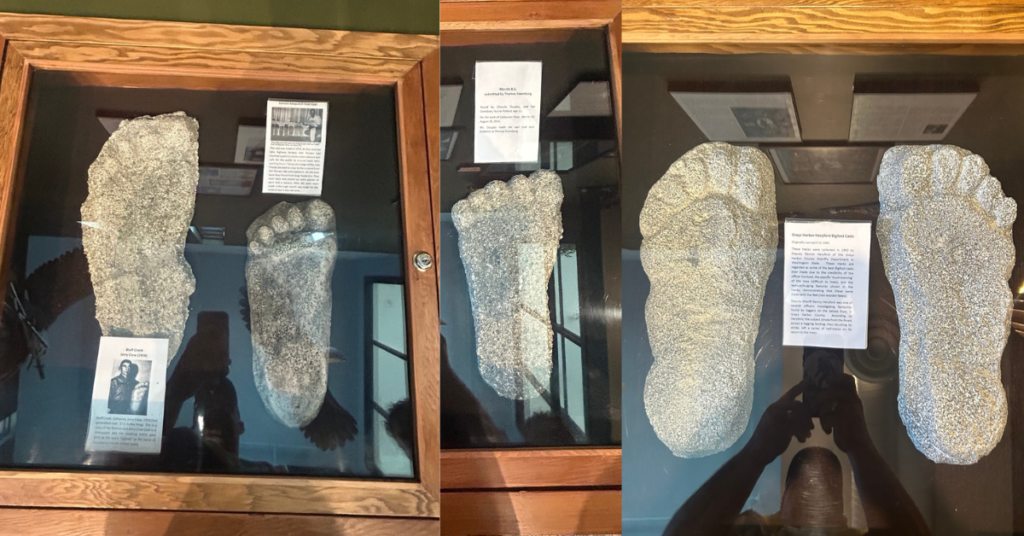
Walking through the Spirit Trail, standing inside the Sts’ailes cultural displays, learning more about their history, reading the encounter reports, and spending time where the word Sa:sq’ets originated gave me a completely different perspective. For the Sts’ailes people, Sasquatch isn’t simply an undiscovered ape hiding in the woods. Traditional teachings describe Sa:sq’ets as a respected caretaker of the land, someone connected to the forests, rivers, wildlife, and the balance of nature itself.
Whether you personally believe Sasquatch is flesh and blood, spiritual, something in between, or you’re still undecided, it’s difficult not to appreciate how consistently these teachings have been preserved.
That’s what keeps pulling me back.
Not because someone is trying to convince me.
Because the patterns refuse to disappear.
One thing I’ve noticed throughout this journey is how often people describe the same feeling before an encounter ever takes place.
The forest goes quiet.
Birds stop singing.
Everything suddenly feels different.
An overwhelming feeling tells them it’s time to leave.
Science offers some possible explanations. Researchers have discussed everything from environmental psychology to low-frequency sound waves known as infrasound. Some suggest certain natural conditions may trigger feelings of anxiety or unease.
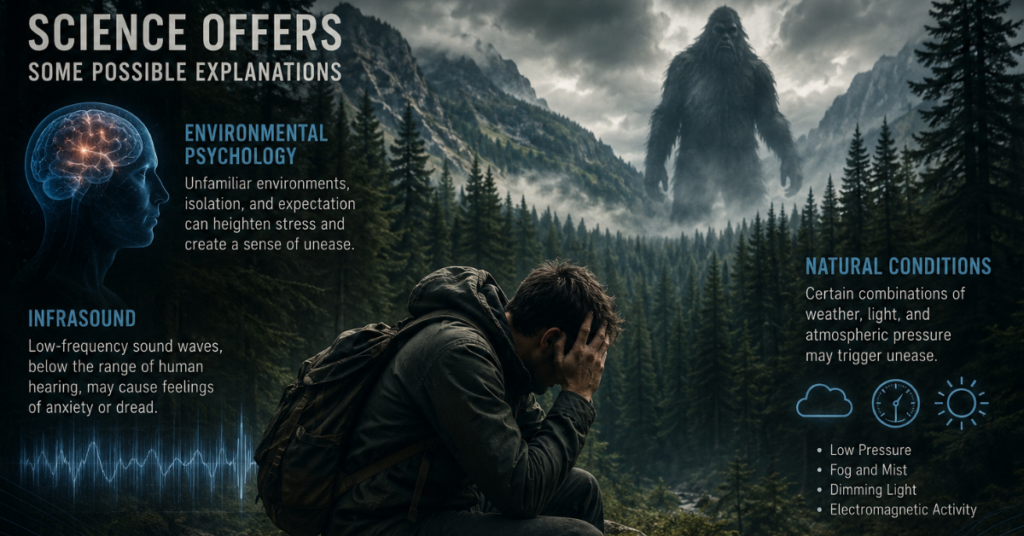
Indigenous teachings often describe the experience differently. Rather than viewing it as random fear, some traditions see it as the land itself warning you that you’ve crossed into a place deserving respect.
I don’t know which explanation is correct.
Maybe neither.
Maybe both.
But I do know one thing.
You hear that same description over and over again from people who have never met each other.
That’s worth paying attention to.
As I looked at encounter reports stretching from Kananaskis to Banff, Jasper, Mount Robson, Harrison Lake, and beyond, I stopped seeing isolated sightings on a map. I started seeing a corridor. A chain of mountains connected not only by geography but by stories, traditions, respect, and modern reports that continue to surface generation after generation.
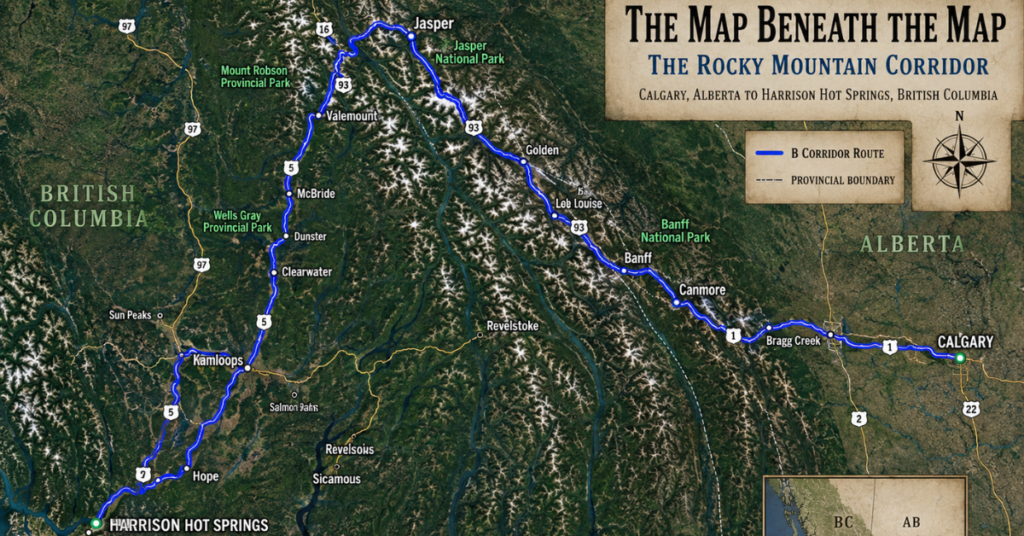
The map below isn’t intended to prove anything. It’s simply a visualization of the mountain corridor that kept appearing throughout my research. From Calgary through Banff, Jasper, Mount Robson, and down to Harrison Hot Springs, the route follows one connected chain of mountains where Indigenous traditions, historical accounts, and modern encounter reports continue to overlap. Whether that pattern is coincidence or something more is a question each of us has to answer for ourselves, but seeing it laid out this way certainly made me stop and think.
I’m not saying every old story describes Sasquatch.
I’m not saying every encounter is real.
I’m simply asking whether we’ve overlooked one of the biggest pieces of the puzzle.
Maybe we’ve spent decades searching for footprints while ignoring the people who already understood these mountains.
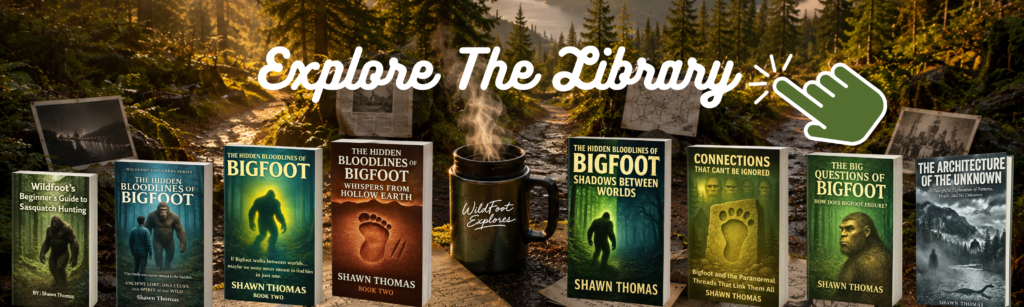
That’s exactly why I wrote The Hidden Bloodlines of Bigfoot: Whispers From Hollow Earth. It explores many of these ideas, historical accounts, and competing theories in much greater depth. If this article got your mind turning, I think you’ll enjoy the journey inside those pages.
At the end of the day, I’m not trying to convince anyone that I’ve solved the Sasquatch mystery.
I don’t think anyone has.
What I am saying is this.
The more I study these mountain ranges, the harder it becomes to ignore the similarities. Different Nations. Different languages. Different stories. Yet so many of them point toward the same rugged corridors, the same valleys, and the same respect for places that many of us now treat as ordinary hiking destinations.
Maybe that’s just coincidence.
Or maybe the greatest clue we’ve ever had wasn’t hidden in a footprint.
Maybe it was hidden in the stories that have been waiting for us all along.
The next time you’re standing on a mountain trail and everything suddenly goes quiet, don’t just look for tracks in the mud. Look around. Think about who walked that valley long before us. Think about the names they gave those mountains. Think about the stories they chose to preserve.
You don’t have to believe every story.
You don’t have to agree with every theory.
But sometimes the best discoveries begin with a single question.
What if we’ve been looking at the right mountains all along… but reading the wrong map?
As always, explorers, keep asking questions, keep respecting the land, and never stop searching.
The search is on.
Wildfoot Disclosure and Invitation
As an Amazon Associate I earn from qualifying purchases.
Some links in the Wildfoot Book Library are Amazon affiliate links, which may earn me a small commission at no extra cost to you.
The library includes the books I’ve written and other resources tied to Bigfoot, survival, hidden truths, and the paranormal. Everything here is meant to support your curiosity and exploration.
I only share products and books I personally believe in or created myself. You’ll also find items connected to my other platforms, including Paranormal Curiosities Realm.
Thanks for supporting independent research and storytelling.
Shawn Thomas
Amazon Author & Creator
Founder of Wildfoot Explores and Wildfoot Explores Apparel shop
People Also Ask
Why do so many Sasquatch encounters occur near mountain ranges?
Many researchers point to environmental geography and isolation as the main reasons. Large, contiguous mountain corridors like the Canadian Rockies or the Cascades provide vast, unbroken tracts of dense forest, complex cave systems, and abundant freshwater sources. However, as documented in historical patterns, these exact rugged corridors have also been consistently identified by various cultures for generations as distinct, occupied regions that require a specific level of boundary respect.
What is the origin of the word Sasquatch?
The anglicized word “Sasquatch” is derived directly from the Halkomelem word Sa:sq’ets. Halkomelem is a language spoken by Coast Salish peoples, including the Sts’ailes First Nation centered around the Harrison Lake and Harrison Hot Springs area of British Columbia. In traditional Sts’ailes history, Sa:sq’ets is not viewed as a rogue animal or missing link, but rather as a highly respected spiritual caretaker and guardian of the land.
Did explorer David Thompson really find giant footprints in the Rockies?
Yes. In January 1811, while searching for a navigable trade route through the Rocky Mountains near Athabasca Pass (near modern-day Jasper, Alberta), famed surveyor and explorer David Thompson documented a trackway of massive, four-toed footprints in the deep snow. Measuring roughly 14 inches long and 8 inches wide, the tracks puzzled Thompson. More significantly, his experienced Indigenous guides recognized the prints, displayed deep unease, and adamantly refused to follow the trail into the high country.
What is infrasound, and how does it relate to wilderness anxiety?
Infrasound refers to low-frequency sound waves that fall below the normal range of human hearing (typically under 20 Hz). In nature, infrasound can be generated by high winds moving through mountain peaks, ocean waves, or even specific wildlife. While humans cannot consciously “hear” these frequencies, environmental psychology shows that infrasound can physically trigger intense physiological responses, including a sudden drop in blood pressure, an overwhelming feeling of dread, unexplained anxiety, and a distinct sensation of being watched.
Hi,
I like your article series and this article also equally interesting to others. I really like how you connected modern encounter reports with the older stories and teaching. It made me curious to know which part of this corridor first made you stop and look at the patterns differently?
Thank you.
Thank you so much! I really appreciate that.
Honestly, the turning point for me was my trip to Harrison Hot Springs. Walking the Spirit Trail, learning more about the Sts’ailes teachings, and then comparing those traditions with encounter reports from places like Banff, Jasper, and Mount Robson made me realize I wasn’t just looking at isolated sightings anymore. I was looking at a connected mountain corridor.
That was the moment I stopped focusing on individual reports and started looking for patterns instead. The more I researched, the more those patterns kept showing up across different regions and different cultures. It doesn’t prove anything, of course, but it definitely made me start asking different questions.
Thanks again for such a thoughtful question. Those are my favorite kind because they keep the conversation going.
Shawn, one thing I kept coming back to here is whether the strongest pattern is not the sightings themselves, but the repeated overlap between place, story, and behavior. When the same corridors keep appearing in Indigenous teachings, historical accounts, and modern reports, it raises a broader question about whether geography and cultural memory should be treated as evidence, not just background.
I’m also curious how you separate respectful comparison from overconnecting dots that may not belong together. When you study a mountain corridor like this, what would count for you as a meaningful pattern versus a coincidence that just happens to look compelling on the map?
Hi Aly,
That’s a fantastic question, and honestly, it’s something I think about all the time.
For me, one story or one sighting doesn’t prove much. But when the same locations keep showing up across Indigenous teachings, early settler accounts, and modern eyewitness reports, that’s when I start paying attention. I’m a big believer that patterns are worth investigating, even if we don’t yet know what they mean.
At the same time, I try really hard not to force connections just because they sound interesting. A meaningful pattern, to me, has to repeat independently. If different cultures, different witnesses, and different time periods all point toward the same mountain range or corridor without influencing each other, that’s far more compelling than two similar stories that could simply be coincidence.
That’s really the heart of this blog. I’m not trying to prove a theory. I’m trying to identify places where multiple lines of evidence seem to converge and ask, “Why here?” Sometimes there may be a simple explanation. Other times, it might point us toward something we’ve overlooked.
Those are the kinds of questions that keep me exploring. Thanks again for such a thoughtful comment. I genuinely enjoy conversations like this.
I find questions about Bigfoot fascinating, and this post definitely inspires further thought and, of course, even more questions. I agree that we can find a lot to think about by exploring what earlier peoples and peoples of our land point out in their legends and traditions. Very interesting post. Thanks for creating this post. – Shirley
Hi Shirley,
Thank you so much for your kind words. I really appreciate you taking the time to read the article and share your thoughts.
I think that’s one of the biggest pieces of the puzzle that often gets overlooked. Indigenous traditions and the stories passed down through generations deserve to be listened to with respect. Whether someone believes Sasquatch is a physical creature, something more mysterious, or isn’t convinced at all, those oral histories are an important part of understanding the places we’re exploring.
My hope with these blogs isn’t to tell people what to believe. It’s to encourage curiosity, ask better questions, and maybe look at familiar places from a different perspective.
Thanks again for stopping by, Shirley. Comments like yours make these conversations so worthwhile.
I really appreciate how you’re shifting the focus from chasing blurry photos and plaster casts to actually listening to the original storytellers of these mountain corridors. It makes me wonder if we’ve been treating Sasquatch like a missing hiker instead of a respected neighbor who probably just wants us to stop tracking mud into their living room. When you mapped out that continuous chain from Banff down to Harrison Hot Springs, did you notice any specific cultural warnings or ceremonial boundaries that modern hikers might be accidentally crossing without realizing it? I’m also curious how you balance the scientific explanations like infrasound with the deeply spiritual teachings of the Sts’ailes people when you’re out in the field yourself. Thank you for reminding us that sometimes the best compass isn’t a GPS, but a story that’s been waiting centuries to be heard.
Hi Ropata,
Thank you. I really appreciate that, and I think you summed up the heart of what I’m trying to do.
One thing I’ve learned over the years is that the footprints, casts, and eyewitness reports are incredibly valuable, but they’re only one part of a much bigger picture. The Indigenous stories add context that many of us have overlooked for far too long. Whether someone believes Sasquatch is a physical being, something more spiritual, or a combination of both, those teachings deserve our respect.
As for the mountain corridor, I did notice a recurring theme. Different nations have different traditions, but many speak about certain places with a sense of reverence. They aren’t simply mountains to be climbed. They’re places where people were expected to show humility and respect. I think that’s an important lesson, regardless of what someone believes about Sasquatch.
When I’m out in the field, I try not to choose between science and tradition. I think both have something to offer. Science helps us understand the physical world, while oral history preserves knowledge that has been passed down for generations. Rather than seeing them as competing ideas, I like asking whether they might be describing different parts of the same mystery.
At the end of the day, I’m still learning. The more I research, the more I realize that asking better questions is often more important than rushing to conclusions.
Thanks again for such a thoughtful comment. Conversations like this are exactly why I enjoy writing these blogs.
Hi! This was a fascinating read. I really enjoyed your perspective that sometimes our assumptions can shape what we think we’re looking for. Whether someone believes in Sasquatch or not, your article encourages readers to keep an open mind and consider different possibilities, which I think is valuable in any kind of exploration. I’m curious—after all your research, has there been one piece of evidence or one location that made you question your own assumptions the most? Thanks for sharing such an intriguing article!
Thanks a lot, Bryce. I really appreciate that. Honestly, Harrison Hot Springs probably challenged my assumptions the most. Seeing how consistent the Sts’ailes teachings were alongside the modern reports made me realize there might be a much bigger picture than I originally thought. It definitely sent me down a whole new rabbit hole