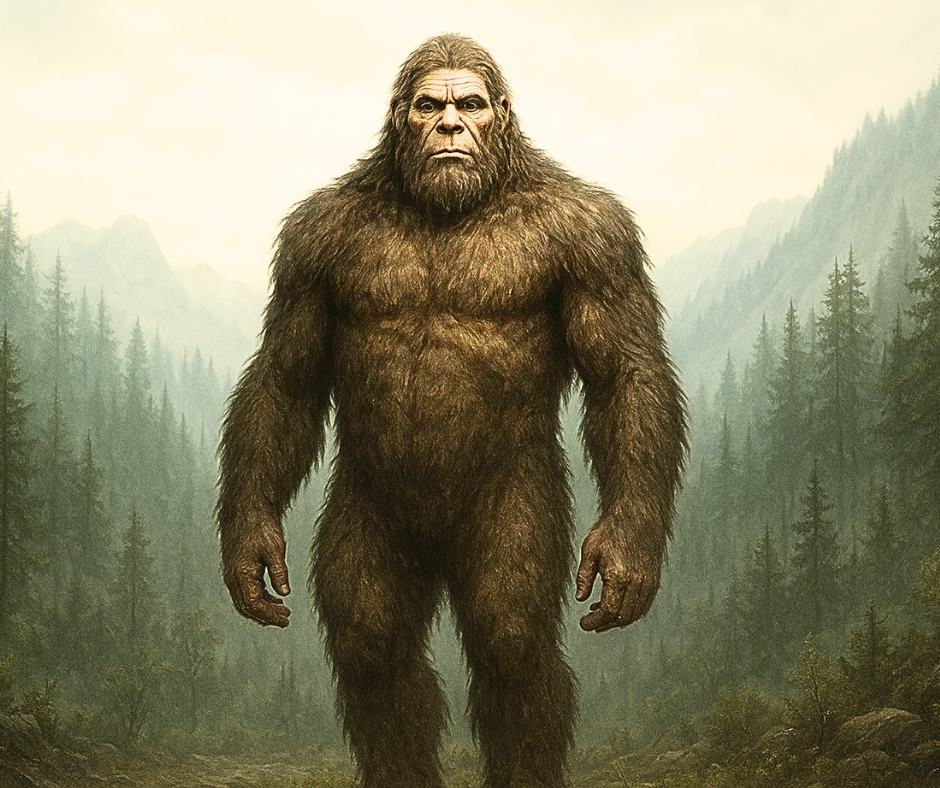
Every time the Bigfoot conversation comes up, somebody asks the same critical question:
“If Bigfoot is real, why don’t we find bodies? Why don’t we find bones? Why don’t we see it more often?”
And every time, I shake my head not out of frustration, but because the answer is so simple to anyone who truly understands wilderness ecology.
Bigfoot isn’t hiding by magic. It’s not cloaking or slipping into another dimension.
Bigfoot stays hidden because the environment protects it. Because wilderness is bigger, harsher, smarter, and more unforgiving than most people will ever understand.
This post is the environmental backbone of the Wildfoot Hypothesis—the part where we stop thinking like humans and start thinking like a creature that has successfully dominated the world’s most remote forests for millennia.
Let’s break open the logic.
The Wilderness Is Big Enough to Hide Anything

Most people perceive the world through the lens of towns, cities, and highways. But once you hit true backcountry, everything changes.
Here is the overwhelming reality:
- Canada’s Untouched Mass: Canada contains over 2 million square kilometers of untouched wilderness. Not “difficult to reach.” Never stepped into by any human.
- The Alaskan Scale: Alaska is larger than most countries, featuring massive regions that are permanently uninhabited and untracked.
- The Pacific Northwest Fortress: This region is a labyrinth of impossible terrain: deep ravines, cliff systems, moss-soaked slopes, and remote ridges.
- The Backcountry Math: If you dropped 500 black bears into this environment, you’d never see 480 of them again. If you dropped 500 mountain lions, you’d be lucky to see 3.
Now, imagine a nocturnal, intelligent, and highly evasive hominin with generations of learned avoidance behavior. You will never see it unless it wants you to.
The Body Question: Why We Don’t Find Remains
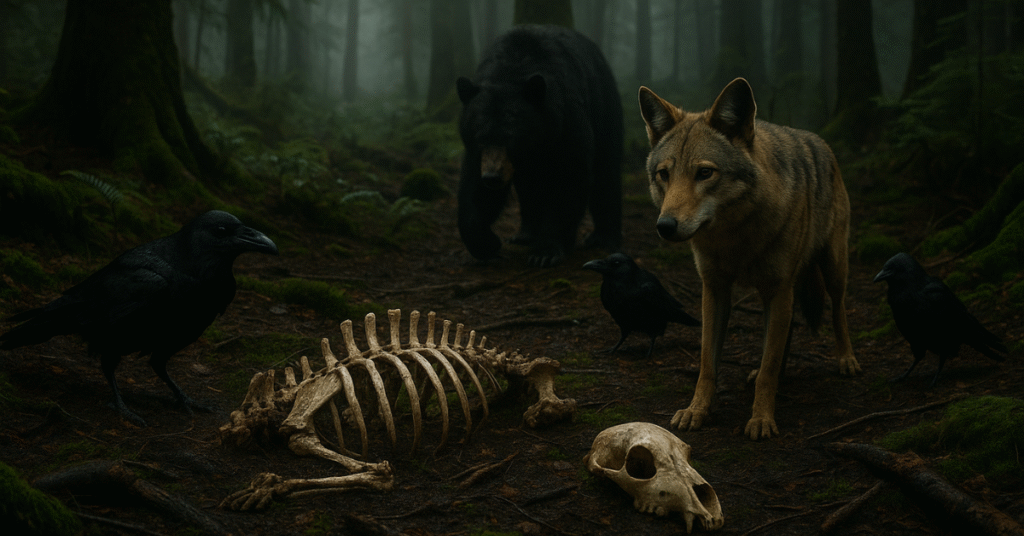
This is everyone’s favorite skeptical argument: “No bodies = no Bigfoot.” Let’s talk real wilderness biology for a minute.
1. Bones Don’t Last in the Forest
The North American wilderness is the most efficient recycling system on Earth. Moisture, fungi, insects, bacteria, and weather dissolve remains fast.
- A deer skeleton can be gone in 6–12 months.
- A bear carcass is often stripped clean in weeks.
- A small mouse skeleton can vanish in days.
2. Scavengers Erase Everything
Wolves, coyotes, ravens, eagles, beetles, and ants strip carcasses to nothing before decomposition can even finish its work.
3. Bigfoot Likely Hides or Buries Its Dead
This is not a stretch it’s expected behavior for a highly intelligent hominin.
- Primates show mourning behavior.
- Gorillas hide their dead.
- Elephants cover their dead.
4. We Barely Find Cougar Bodies
How many wild cougar skeletons have you found? Cougar populations are relatively stable, yet finding their remains is a once-in-a-lifetime discovery for a professional tracker.
This isn’t mysterious. This is ecology. A small population living in deep wilderness results in virtually zero recoveries.
Nocturnal Advantage: Bigfoot Owns the Night
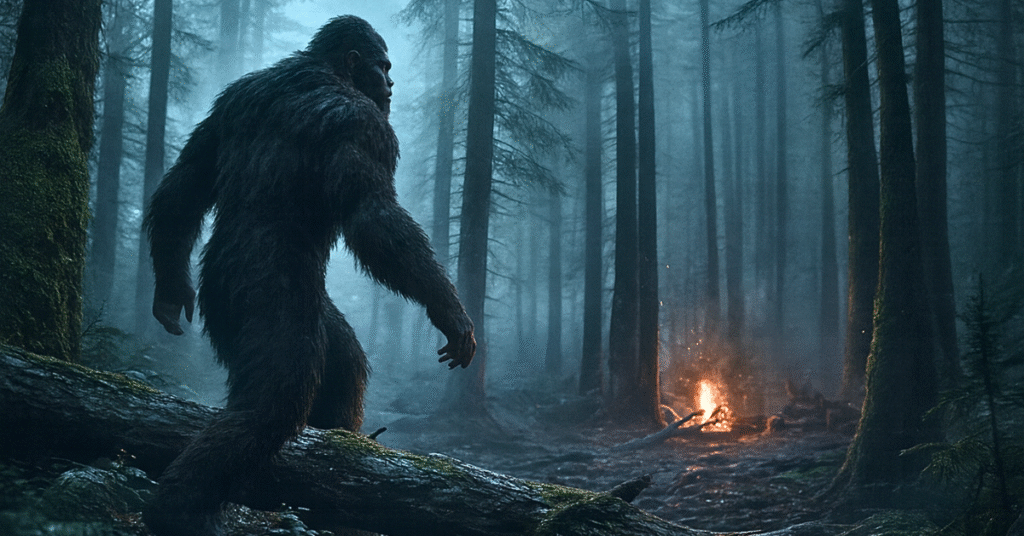
Most people fundamentally underestimate how different the forest becomes after dark.
At night, visibility drops to zero, and the advantage shifts entirely.
Bigfoot sightings align perfectly with nocturnal dominance:
- Seen at dusk or dawn (crepuscular).
- Heard pacing camps after midnight.
- Tree knocks and vocalizations after dark.
- Eye shine witnessed at tall height.
Humans are clumsy and sight-dependent in the dark. Bigfoot is not. If you dominate the night, you dominate visibility.
Forest Cover: The Ultimate Shield
Dense forest destroys human vision: ferns, deadfall, moss beds, ravines, fog layers, and pine walls.
Most people can’t reliably see 30 feet in heavy, thick timber. A creature that is an expert in moving from trunk to trunk, using shadow as cover, is essentially invisible.
Sightings usually happen when:
- It misjudged your approach.
- You walked in silently.
- You crossed its boundary.
They do not happen because people “spot them easily.”
Avoidance Intelligence: The Real Evolutionary Trick
This is the simplest point: Bigfoot isn’t afraid of humans it avoids them intentionally and intelligently.
This means it engages in behavior identical to successful predators like wolves and mountain lions, only amplified by greater intelligence:
- It circles camps.
- It tracks humans without being seen.
- It understands wind direction and noise discipline.
- It retreats long before contact is possible.
Avoidance is not fear. Avoidance is dominance. The creature that controls distance controls risk, and Bigfoot controls distance perfectly.
Low Population = Low Encounter Rates
Most primates live in small groups, require large territories, and maintain low densities.
If Bigfoot mirrors this evolutionary pattern, then:
- Groups are tiny.
- Territories are massive.
- Encounters are inherently rare.
A small, low-density population in a huge wilderness is almost statistically invisible. This is wildlife math, not mystery.
People Also Asked
Why hasn’t Bigfoot been found yet? Because its habitat is massive, remote, and barely touched by humans. Bigfoot’s population is small and its avoidance behavior is highly evolved.
Why are no Bigfoot bodies found? Forest decay is rapid, scavengers remove remains quickly, and Bigfoot may bury or hide its dead behavior commonly seen in intelligent primates.
Where does Bigfoot live? Dense forests, steep ridges, swamps, old-growth valleys, and regions humans rarely enter.
Is Bigfoot nocturnal? Most sightings occur at night or during twilight, suggesting Bigfoot is primarily nocturnal or crepuscular.

Affiliate Disclosure
As an Amazon Associate, I earn from qualifying purchases. Wildfoot Explores also participates in additional affiliate programs. This means that some links throughout this blog may earn me a small commission at no extra cost to you. These commissions help support the research, time, and resources that go into building Wildfoot and sharing Bigfoot content every week. I only recommend products and books that I genuinely believe add value to my readers.
A Winter Note on Wilderness Logic
Winter changes everything in the woods. Tracks sit longer. Breath hangs in the air. The trees carry sound like glass. It’s the perfect time to consider the deeper logic of the wilderness.
If you’re enjoying the environmental angle of this series, the Wildfoot books take you even further into the ecological logic behind the mystery. They make solid winter reads or Christmas gifts for anyone who loves the unknown.
You can find them in the Wildfoot Library.
Next in the Series
Wildfoot Hypothesis Part 7
Why Modern Technology Still Fails to Capture Bigfoot (Even with Trail Cams & Drones)